

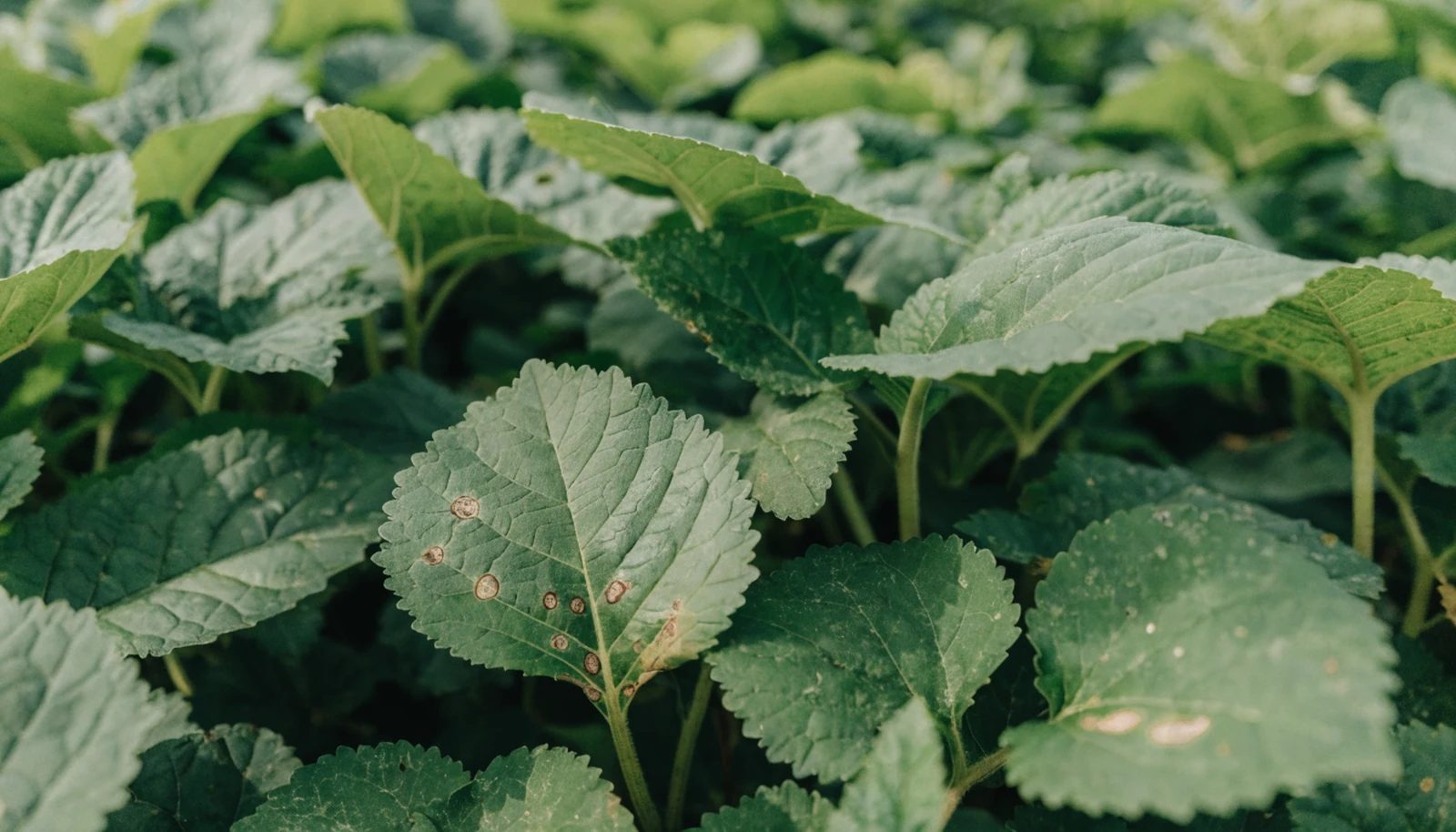
Crops affected
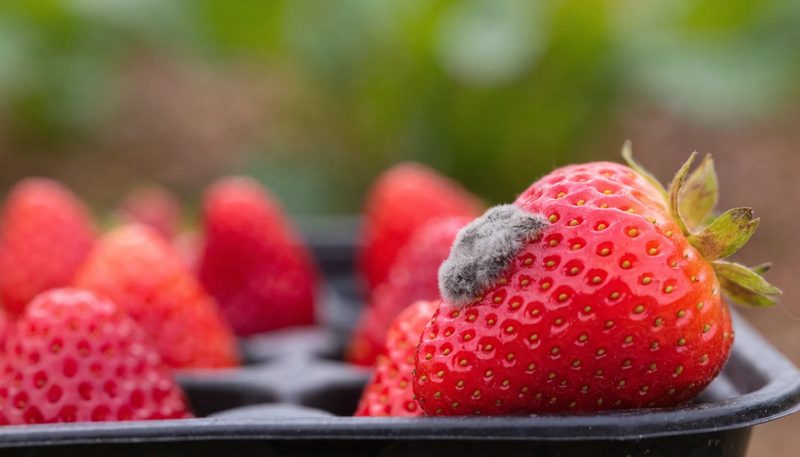
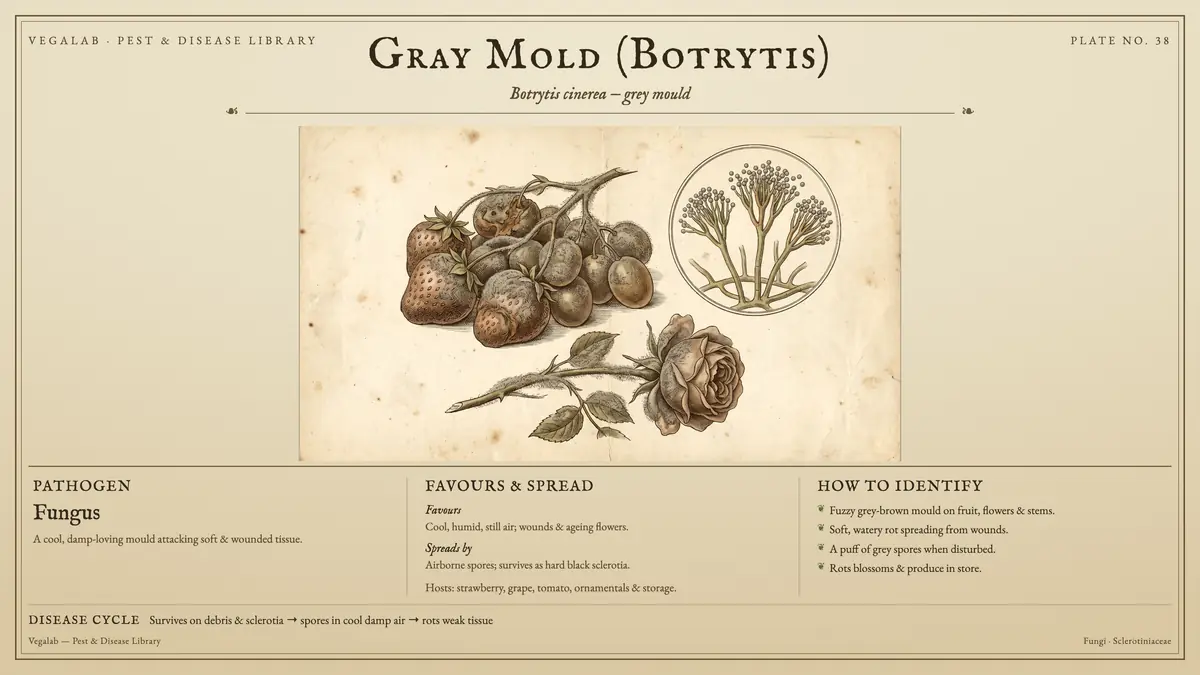
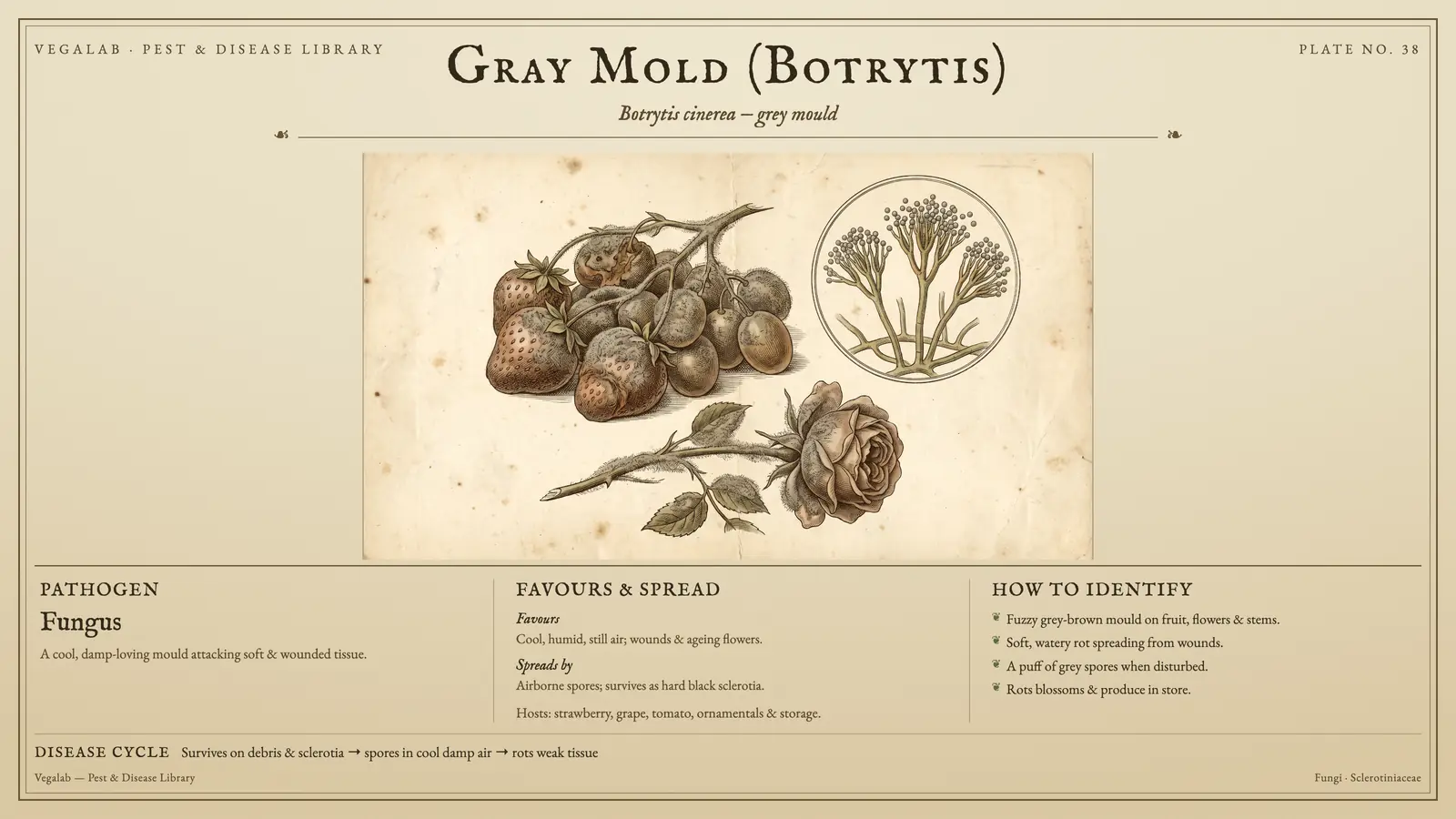
How to identify gray mold (botrytis)
- Soft, watery rot spreading from wounds.
What is it?
Botrytis is a fungus that attacks soft, aging, wounded, or senescing tissue and spreads from there into healthy plant parts. It produces masses of gray, dusty spores and thrives in cool, humid, poorly ventilated conditions - making greenhouses, dense canopies, and storage especially vulnerable.
How to identify it
- Tan, water-soaked lesions on ripening fruit and flowers
- Gray, dusty sporulation on rotting tissue
- Blighted flowers and dried calyxes
- Rapid post-harvest breakdown; worst in cool, wet, humid conditions
Life cycle & spread
*Botrytis cinerea* is a generalist that survives as sclerotia and mycelium in crop debris and produces enormous numbers of airborne spores. Those spores are present in essentially every growing environment all the time - which reframes the problem: you are not trying to exclude the fungus, you are trying to deny it the conditions it needs.
It needs free moisture and a way in. Wounds, pruning scars, senescing petals, split fruit and insect damage are all entry points, and cool humid conditions - roughly 15–20 °C with high humidity - favour it most. The petal route is the important one in soft fruit and grapes: the fungus colonises the flower, goes quiet, and expresses later in the ripening fruit.
Latency is what makes botrytis a post-harvest problem as much as a field one. Fruit infected at flowering can look sound at picking and break down in a cold chain days later.
Conditions that favour it
Cool and humid is the signature: roughly 15–20 °C with high humidity and free moisture on the tissue. Unlike most fungal diseases it also progresses slowly at refrigeration temperatures, which is why it remains a problem after the crop has left the field.
The fungus needs a way in more than it needs ideal weather. Senescing petals, pruning scars, harvest wounds, split or cracked fruit and insect damage are all entry points, so anything that damages tissue raises risk. Dense canopies, blocked ventilation and irrigating late in the day all extend the wet period it needs.
Damage and how it spreads
Gray mold causes major losses in soft fruit (strawberries, grapes, brambles), flowers, and greenhouse vegetables, and is a leading cause of post-harvest rot. Because it spreads from dying or damaged tissue and produces enormous numbers of spores, a single infected fruit can spread rot through a whole batch. Sanitation and early protection are essential.
Monitoring & scouting
Watch the humidity rather than the crop. A canopy that stays wet overnight is the leading indicator, and a simple hygrometer in the crop at night is a more useful instrument than a hand lens.
Inspect senescing flowers and any damaged or touching fruit first - that is where lesions begin. Look for water-soaked areas turning brown, then a grey-brown dusty sporulation that puffs visibly when disturbed.
Track post-harvest breakdown by batch. A rise in grey mould appearing in transit or storage, from fruit that looked sound at picking, points back to flowering-period infection and tells you where next season's programme needs to sit.
How to control it
- Remove and destroy infected and dead tissue and fallen debris promptly.
- Improve airflow and reduce humidity; avoid overhead watering and dense canopies.
- Handle fruit gently to avoid wounds, and cool produce quickly after harvest.
- Apply a protective natural fungicide during cool, damp, high-risk periods.
How to get rid of grey mould
- Manage humidity above all. Ventilate, heat-and-vent under protection, avoid dense canopies, and irrigate so the crop is dry going into the night. Botrytis needs free moisture; removing it does more than any product.
- Minimise wounds. Handle fruit less, harvest into rigid trays, prune cleanly in dry weather, and control the insects and cracking that open tissue.
- Remove infected material immediately · an active lesion is a sporulation factory, and dropping infected fruit onto the floor of a tunnel simply reloads the air.
- Protect the flowering period in soft fruit and grapes, since petal infection sets up the latent fruit rot months ahead.
- Cool fast and hold cold after harvest. Botrytis grows slowly at 0–2 °C and quickly at ambient temperature; the cold chain is a control measure.
- Rotate modes of action. Botrytis is notorious for developing resistance, including multiple resistance to several fungicide groups within a single season of repeated use.
Because the spores are ubiquitous, the levers that actually move botrytis are humidity, wounding and airflow - not eradication.
Grey mould, bunch rot and noble rot
In grapes the same fungus is either a disaster or an asset. Grey rot on intact ripening bunches in wet weather destroys quality. Noble rot - the same Botrytis cinerea infecting healthy, ripe white grapes under alternating humid nights and dry days - concentrates sugars and produces the botrytised dessert wines. The difference is entirely fruit condition and weather pattern, not a different organism.
Elsewhere it goes by the crop: grey mould in strawberry and tomato, blossom blight and fruit rot in soft fruit, and simply botrytis under protection.
Where botrytis is confused with other rots
- **vs. white mold (Sclerotinia):** sclerotinia is bright white and cottony and forms hard black sclerotia in the stem; botrytis is grey-brown, dusty and sporulates visibly when disturbed.
- **vs. Rhizopus soft rot:** rhizopus is faster, wetter and leaks; it needs warmth, while botrytis will progress under refrigeration.
- vs. powdery mildew: powdery mildew is a dry white surface coating on living tissue; botrytis colonises dying and damaged tissue.
- vs. anthracnose: anthracnose lesions are sunken and firm with concentric fruiting bodies.
See Sclerotinia (White Mold) and Powdery Mildew.
Recommended Vegalab solution: Spore Control
Vegalab Spore Control · Spore Control (thyme oil), preventative and curative; apply from early bloom through fruiting, tighten in humid weather, and improve airflow.
Observed results: in an independent contract-research efficacy trial on strawberry, Spore Control demonstrated roughly 79% control of gray mold; the product guide also specifies a dedicated active-Botrytis clean-up rate.
| Role | Product | Use |
|---|---|---|
| Primary control | Spore Control | Broad-spectrum protective fungicide |
| Companion / broader pressure | Rigid Boost | Pre-harvest cell-wall support |
| Plant support | Armour Boost | Silica for tissue resilience |
See crop-specific solutions
Preventing it next season
Keep the crop clean and open, manage humidity, handle fruit carefully, and protect preventively during damp spells. Strong cell walls resist invasion - Rigid Boost and Armour Boost support firmer, more resilient tissue.
Claims and product availability vary by jurisdiction. Always read and follow the product label.