

Crops affected
How to identify late blight
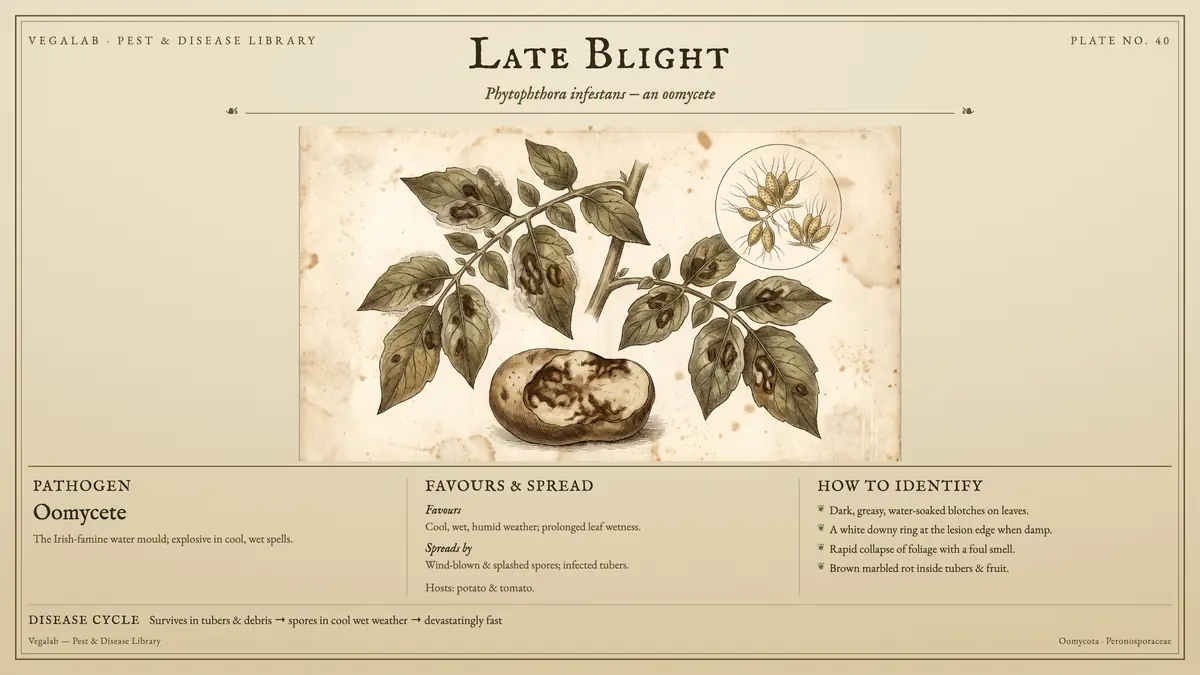
- Rapid collapse of foliage with a foul smell.
What is it?
Late blight is caused by Phytophthora infestans, a water mould (oomycete). It thrives in cool, wet, humid conditions and spreads explosively on wind and rain. It infects leaves, stems, fruit, and tubers, and can move through a crop with alarming speed once established.
How to identify it
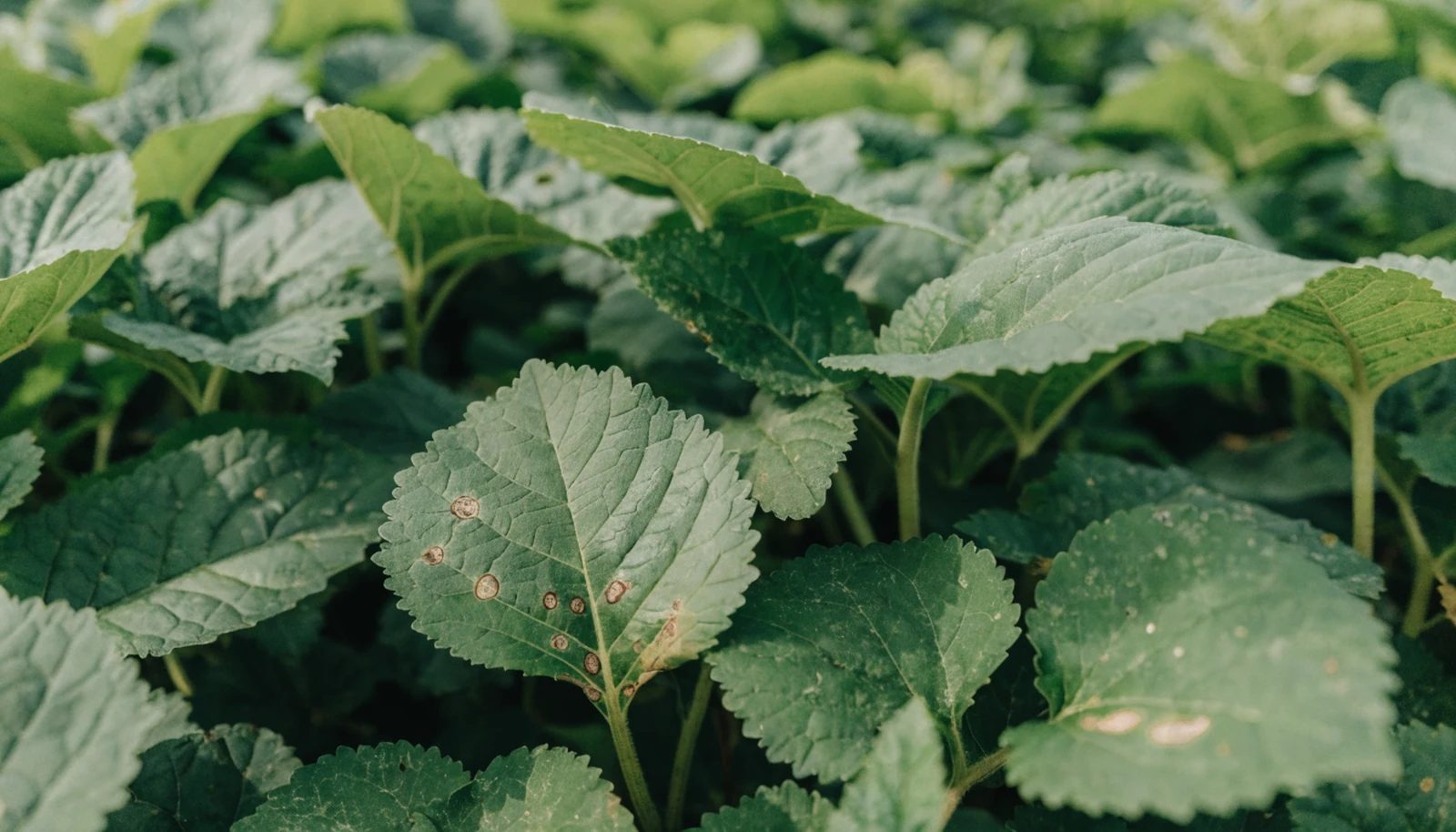
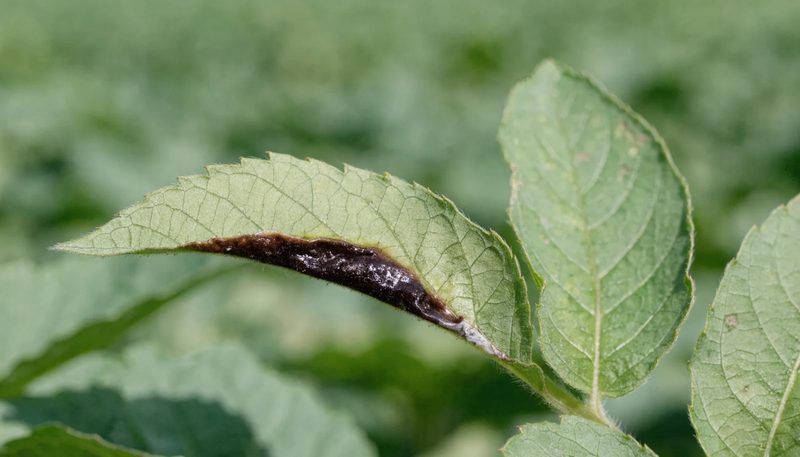
- Large, irregular, water-soaked dark lesions on leaves and stems
- White fuzzy growth on the underside of lesions in humid conditions
- Rapid browning and collapse of foliage
- Firm brown rot on fruit and tubers
- Explosive spread in cool, wet weather
Life cycle & spread
*Phytophthora infestans* is an oomycete - a water mould, not a true fungus. It survives between crops in living tissue: infected potato tubers in cull piles, volunteers and stored seed, and in some regions as oospores in soil where both mating types are present. It does not survive well in dry debris, which is why cull piles and volunteers matter so much.
From an infected sprout or lesion, sporangia are produced in vast numbers and carried by wind and rain, sometimes for kilometres. In cool wet conditions each sporangium releases swimming zoospores that infect through the leaf surface directly. A new generation of spores can be produced within three to five days.
That combination - long-distance airborne dispersal, direct infection needing only free water, and a three-to-five-day cycle - is what makes late blight the most explosive disease in this library. A crop can go from a few lesions to complete canopy destruction inside seven to ten days, and this is the pathogen that caused the Irish potato famine.
Conditions that favour it
Cool and wet: roughly 10–21 °C with leaf wetness or humidity above about 90% for several consecutive hours. Extended overcast, drizzly weather with cool nights and heavy dew is the classic outbreak pattern. Hot dry weather stops it, and above roughly 30 °C it effectively shuts down.
Risk models - Smith periods, blight units and their regional equivalents - are built directly on these temperature-and-humidity thresholds and are genuinely reliable for this disease. Alongside weather, the risk drivers are proximity to infected cull piles or volunteers, dense canopies that hold moisture, and regional outbreak reports, since inoculum arrives from outside the farm.
Damage and how it spreads
Under cool, wet, highly conducive conditions, late blight can destroy a canopy within roughly 7–10 days. Treat suspected outbreaks as urgent, confirm diagnosis where feasible, and use local forecasts to time labeled preventive or protectant programs.
Monitoring & scouting
Follow regional blight warnings and forecast models, and act on them ahead of symptoms. This is the one disease in this library where a protective application made on a forecast rather than on an observation is unambiguously the right call.
Scout the low-lying, slow-drying parts of the block after a cool wet spell, and inspect the underside of lesion margins in the early morning for a fine white ring of sporulation - the confirming sign.
Report and act immediately. A single infected plant is a regional inoculum source, and this disease moves between farms. Late blight is one of the few problems where a same-day response is proportionate.
How to control it
- Choose resistant varieties and certified clean seed or tubers.
- Maximize airflow, avoid leaf wetness, and never work plants when wet.
- Remove and destroy infected plants immediately - do not compost.
- Apply protective natural fungicide ahead of and during cool, wet weather.
How to manage late blight
- Eliminate the inoculum sources. Destroy cull piles, control volunteers, and use certified clean seed. Almost every local outbreak traces back to one of these.
- Act on forecasts. Apply protectively ahead of predicted blight periods and shorten intervals as risk rises and the canopy grows.
- Use resistant varieties, while recognising that new aggressive genotypes have repeatedly overcome single-gene resistance.
- Manage the canopy and irrigate to dry. Avoid dense excessive canopies, avoid overhead irrigation in high-risk periods, and water so foliage dries before nightfall.
- Destroy the haulm before harvest in potato, and allow two to three weeks before lifting so spores on the soil surface die off and tuber skins set. This is the main protection against tuber blight and storage breakdown.
- Remove and destroy infected plants immediately · bag them, do not leave them in the field or on a heap at the edge of it.
- Rotate modes of action. Resistance to specific oomycete-active chemistry is well documented in this pathogen.
Late blight is managed on the forecast, not on the symptom. Once lesions are established in a crop in favourable weather, no product reverses them and the realistic decisions become protecting the remaining canopy and protecting the tubers.
This is a notifiable or reportable disease in some jurisdictions and a regional problem everywhere. If you find it, tell your neighbours and your agronomist - your inoculum becomes theirs within days.
Late blight or early blight? The distinction that matters most
- Late blight: large, irregular, greasy grey-green to brown patches, often starting at leaf tips and margins, with no rings and frequently a pale halo. In humid conditions a fine white sporulation ring appears at the lesion margin on the underside. Stems develop dark brown-black lesions. Spreads in cool wet weather and can destroy a canopy in a week.
- Early blight: smaller, discrete, dark lesions with concentric rings and a yellow halo, starting on the oldest lowest leaves in warm weather, progressing steadily over weeks.
- On tubers: late blight gives a firm reddish-brown granular rot spreading irregularly inward from a sunken purplish-brown surface patch, and it invites secondary soft rot in store. Early blight gives shallow, dark, sharply sunken lesions that stay superficial.
Confusing these two is the costliest misdiagnosis in solanaceous crops, because the correct response differs in urgency by an order of magnitude.
White sporulation at the margin plus fast spread in cool wet weather means late blight, and it means act today. See Early Blight.
Tomato late blight and tuber blight
In tomato the disease behaves the same way on foliage and adds a fruit phase: firm, greasy, brown-green lesions on green and ripening fruit that make them unmarketable and rot quickly. Outdoor tomato crops in cool wet regions are at high risk, and tomato and potato share the pathogen - an infected potato crop nearby is a direct threat to a tomato block and vice versa, so they should not be grown adjacent where late blight is regionally active.
In potato, tuber blight is the loss that persists past harvest. Spores wash from the canopy into the soil and infect tubers, most heavily during lifting. Haulm destruction well before harvest, lifting in dry conditions, letting skins set, and drying and cooling tubers rapidly are the measures that keep a field problem from becoming a store-emptying one - because a small number of infected tubers going into store can seed a general breakdown.
Also affects aubergine and petunia and other solanaceous ornamentals, which can act as an overwintering bridge in mild climates.
Recommended Vegalab solution: Spore Control
Vegalab Spore Control (Thymol) lists phytophthora among its targets; it forms a protective cuticle film and inhibits spore germination and mycelium proliferation. Late blight is best managed preventively - apply as a foliar spray ahead of cool, wet weather, diluted 1:1,000 (1 mL/L), with full coverage, and remove infected plants promptly. Pair with resistant varieties and strict sanitation for a robust program.
| Role | Product | Use |
|---|---|---|
| Primary control | Spore Control | Broad-spectrum protective fungicide |
| Companion / broader pressure | Armour Boost | Silica for tissue resilience |
See crop-specific solutions
Preventing it next season
Use resistant varieties and clean seed, maximize airflow, avoid leaf wetness, scout intensively in cool wet weather, and protect preventively before outbreaks. Vigorous, well-supported plants resist stress better with Armour Boost.
Claims and product availability vary by jurisdiction. Always read and follow the product label.