

Last updated:
Cabbage worms are the velvety green caterpillars of the imported cabbageworm (Pieris rapae), the white butterfly with black wing spots.2 To get rid of them, handpick caterpillars and crush the single pale eggs, cover plants with fine row cover, and clean up debris after harvest.3 Bacillus thuringiensis var. kurstaki (Bt) controls small caterpillars well; follow the product label.1,3
How do you identify cabbage worms?
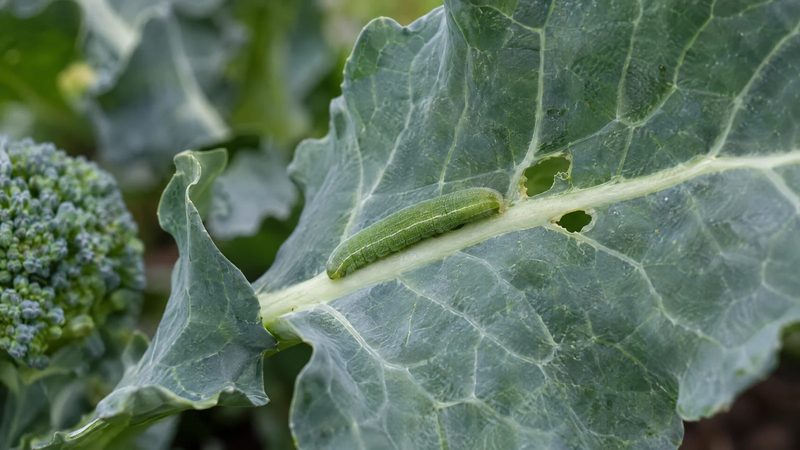
The imported cabbageworm (Pieris rapae) is the larva of the cabbage white butterfly and the most important pest of cole crops in Wisconsin.3 The caterpillars are green and velvety, up to about 1 inch long, with a faint yellow stripe down the back and broken yellow lines or spots along each side.1,2 They move slowly and are well camouflaged, often resting along the midrib of a leaf.1,2
The adults are the white butterflies seen flying over gardens on warm days. They have black wingtips, and females carry two black spots on each forewing while males have one.2,3 Females lay single, bullet-shaped eggs, usually on the undersides of outer leaves; the eggs start pale white and turn yellowish.2 The chrysalis is the overwintering stage and is attached to the plant or nearby debris by silk, with no cocoon.1,2
Cabbage loopers and diamondback moth larvae also feed on cole crops.3 Cabbage loopers move by arching the middle of the body and have two pairs of prolegs in the middle of the abdomen, while imported cabbageworms have four pairs.8 UC IPM advises monitoring imported cabbageworm and cabbage looper together and basing treatment decisions on their combined count.1
| Feature | Imported cabbageworm | Cabbage looper |
|---|---|---|
| Larva skin | Velvety, finely haired, green | Smooth, few bristles, green |
| Markings | Faint yellow line down the back | White stripe along each side |
| Movement | Slow, sluggish crawl | Looping, arches its body |
| Mid-body prolegs | Four pairs | Two pairs |
| Adult | White butterfly, black wing spots | Mottled brown or gray moth with silver mark |
| Pupa | Bare chrysalis held by silk | Silken cocoon on leaves |
In North America butterflies emerge from overwintering pupae in spring, and caterpillar pressure builds through summer, with the mid-July generation the most damaging in Wisconsin; the number of generations rises from two or three in Canada to six to eight in the southern United States, and the pest is present year round in Florida2,3. In the Southern Hemisphere the same build-up follows the warm season, with peak caterpillar feeding from about December to February.
What damage do cabbage worms do to broccoli and kale?
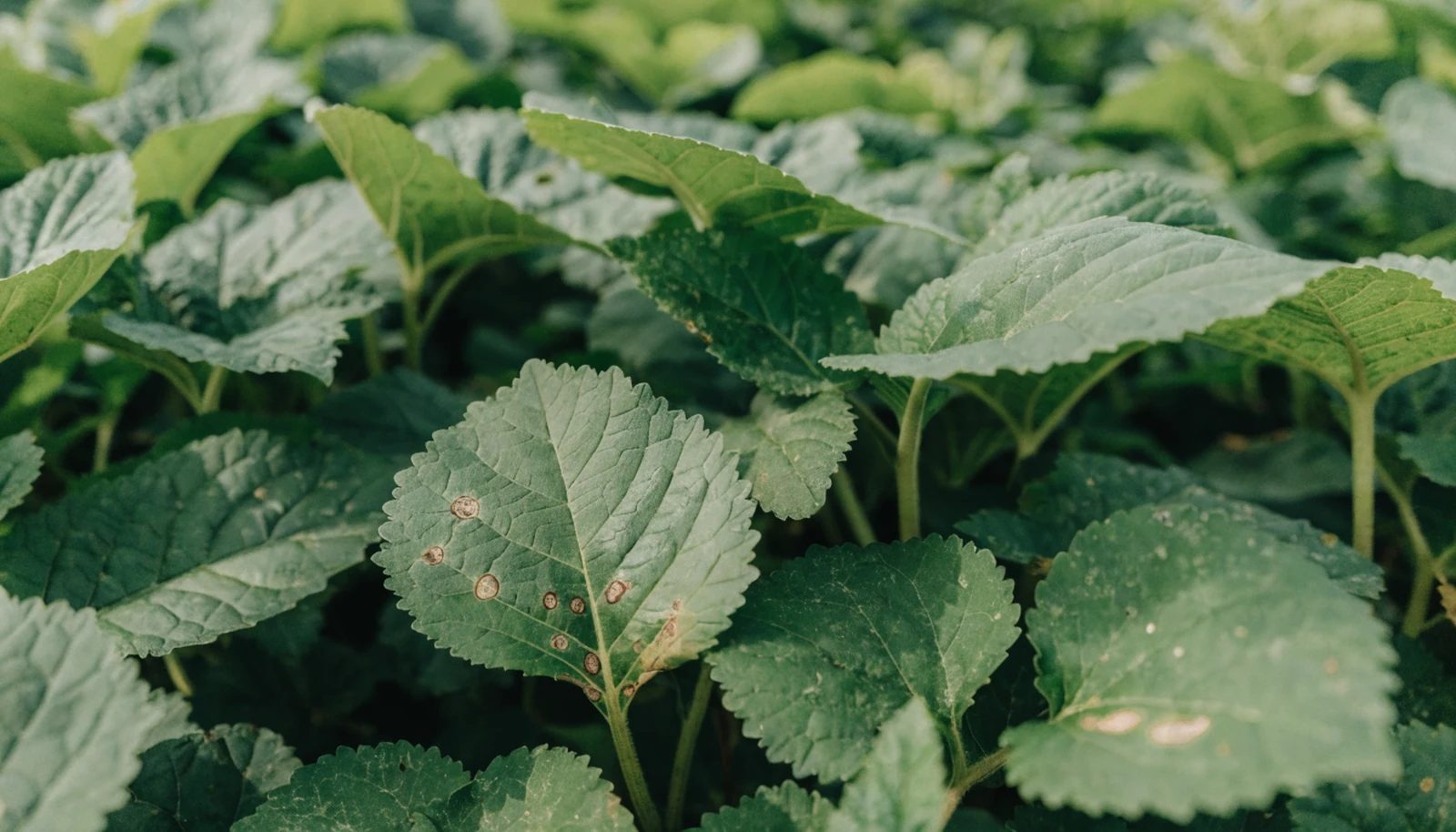
Larvae chew large, irregular holes in leaves and can reduce mature plants to stems and large veins if left unchecked.2 As they grow they move toward the center of the plant and bore into the heads of broccoli and cabbage.2,3 Severe feeding stunts cabbage and cauliflower heads, and damage to the buds of young cabbages can cause heads to abort.3 The last larval stage does most of the eating, an estimated 85% of total feeding.4
The droppings matter too. Larvae produce large amounts of greenish-brown frass that stains and contaminates heads and leaves, and caterpillars hidden in broccoli are easily missed when produce is washed.1,2
Crops differ in how much they attract the pest. Chinese cabbage, turnip, mustard, rutabaga and kale are less preferred than cabbage, collards, Brussels sprouts, broccoli and cauliflower.2 Young cole crops tolerate considerable leaf feeding between transplanting and heading, but once heads form, even low numbers can cause serious damage.1
When are cabbage worms worst?
Imported cabbageworms overwinter as pupae on plant debris, and butterflies emerge in spring to lay eggs on cruciferous weeds and early cole crops.3 A female lays 300 to 400 eggs, adults live about three weeks, and larvae need about 15 days to develop in August.2 The full life cycle takes three to six weeks, depending on weather.2
The number of generations grows with the length of the season: two to three a year in Canada, three in New England, three to five in California and six to eight in the southern United States.2 In Wisconsin there are usually three generations, and the second, with butterflies emerging in mid-July, does the most damage to cole crops.3 The pest can be found year round in Florida.2
How do you get rid of cabbage worms naturally?
Prevention and hand removal go a long way in a home garden, and natural enemies often keep numbers down when broad-spectrum sprays are avoided.3
- Cover young plants with fine mesh row cover to keep butterflies from laying eggs; paper caps work early in the season.2,3
- Check plants weekly, including the undersides of leaves, for the tiny pale eggs and small caterpillars.3
- Handpick and squish caterpillars or knock them into soapy water, and crush eggs by hand.3
- Look for dark green droppings under feeding holes to find hidden larvae.4
- Control mustard-family weeds that host the pest.1
- Clean up plant debris in fall, since pupae overwinter there.3
- Soak harvested heads in salty water so hidden larvae float out.4
What natural enemies attack cabbage worms?
Parasitic wasps are the main natural check. Cotesia glomerata (listed in older sources as Apanteles glomeratus) attacks young larvae and later emerges from the mature caterpillar, leaving clusters of 20 to 30 small cocoons on the dead larva.2 Larvae parasitized by Cotesia glomerata do not die until the fifth instar, after most feeding is done, while those parasitized by Cotesia rubecula die in the fourth instar.4 In Massachusetts, a Chinese strain of Cotesia rubecula released in 1988 became the dominant parasitoid, with an average of 75% parasitism, and displaced Cotesia glomerata.6
Other natural enemies include the pupal parasite Pteromalus puparum, tachinid flies, egg-parasitic Trichogramma wasps, predatory bugs, vespid wasps and birds.1,2 A granulosis virus is the main natural disease; it is most common at high larval densities, and natural outbreaks causing more than 90% larval mortality have been reported.2 Insectary plants that attract natural enemies, and avoiding broad-spectrum insecticides, help these allies.1
Do Bt and homemade sprays work on cabbage worms?
Bacillus thuringiensis is very effective against imported cabbageworm and cabbage looper, especially when applied to young larvae, and it spares natural enemies.1 Bt kurstaki targets the caterpillars of moths and butterflies: the larva must eat the treated leaf, the toxin is activated in its alkaline gut, and death follows in 1 to 5 days.5 Sunlight breaks Bt down on leaves, with typical foliage half-lives of 1 to 4 days.5 Spinosad is another option that UC IPM lists for organically certified crops.1 Other home garden options include insecticidal soaps, horticultural oils such as neem oil, and pyrethrins.3 Target small larvae, cover the plant well, and follow the product label.3
Homemade sprays have limited evidence. In a field trial in Ghana, garlic and hot pepper extracts reduced diamondback moth, cabbage aphid, cabbage webworm and cabbage looper on cabbage compared with untreated plants, but imported cabbageworm was not among the pests studied.7 Some gardeners blend virus-killed caterpillars in water and spray the suspension; how much control this gives is unclear, and Bt products reduced caterpillar numbers more in one study.2,4 A University of Florida profile rates botanical insecticides as fairly effective against cabbageworm.2
Key takeaways
- Cabbage worms are imported cabbageworm larvae (Pieris rapae), velvety green caterpillars of the white cabbage butterfly.
- Row covers, handpicking, crushing eggs and fall cleanup are the core home garden controls.
- Bt kurstaki works best on small caterpillars that eat treated leaves; follow the product label.
- The parasitic wasp Cotesia rubecula averaged 75% parasitism of cabbageworms in Massachusetts cole crops.
- Kale, mustard and Chinese cabbage are less preferred than broccoli, cabbage and cauliflower.
References
- Imported Cabbageworm: Agriculture: Cole Crops Pest Management Guidelines
- Imported Cabbageworm, Pieris rapae (Linnaeus) (Insecta: Lepidoptera: Pieridae) (EENY-126/IN283)
- Imported Cabbageworm (XHT1032)
- Imported cabbageworm, Pieris rapae
- Bacillus thuringiensis (Bt) General Fact Sheet
- Biological Control of Pieris rapae in New England: Host Suppression and Displacement of Cotesia glomerata by Cotesia rubecula (Hymenoptera: Braconidae)
- Comparing the Effectiveness of Garlic (Allium sativum L.) and Hot Pepper (Capsicum frutescens L.) in the Management of the Major Pests of Cabbage Brassica oleracea (L.)
- Cabbage Looper: Agriculture: Cole Crops Pest Management Guidelines