

Crops affected
How to identify canopy blight & leaf spot complex
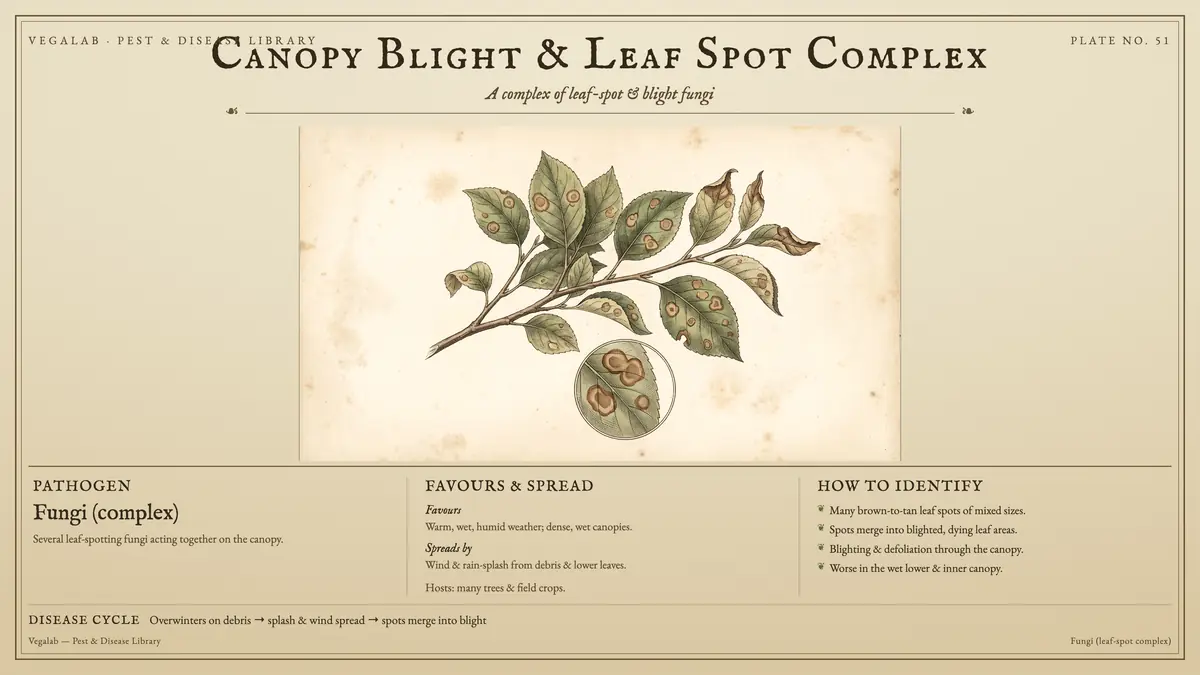
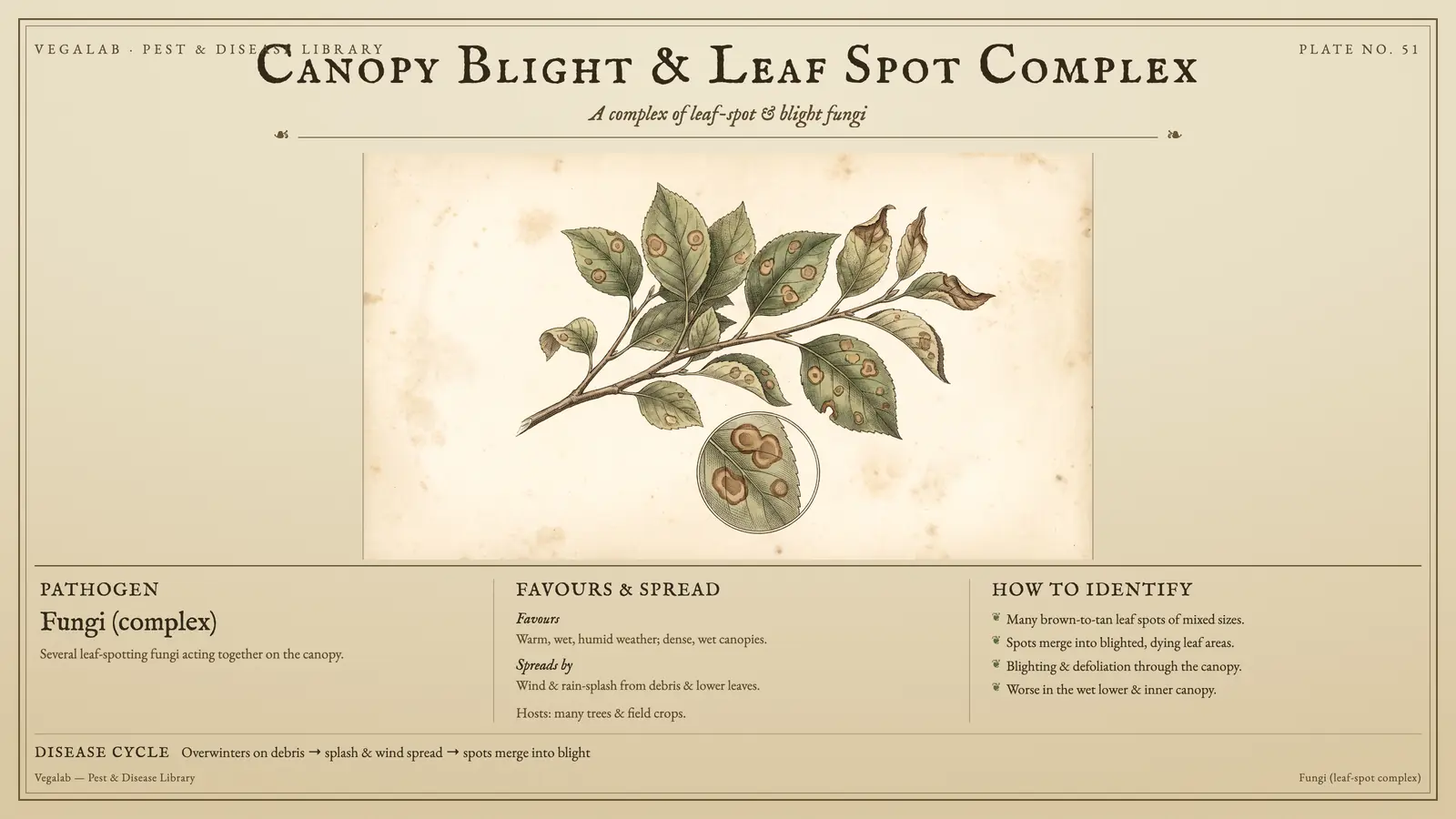
Pathogen. Fungi (complex) Several leaf-spotting fungi acting together on the canopy.
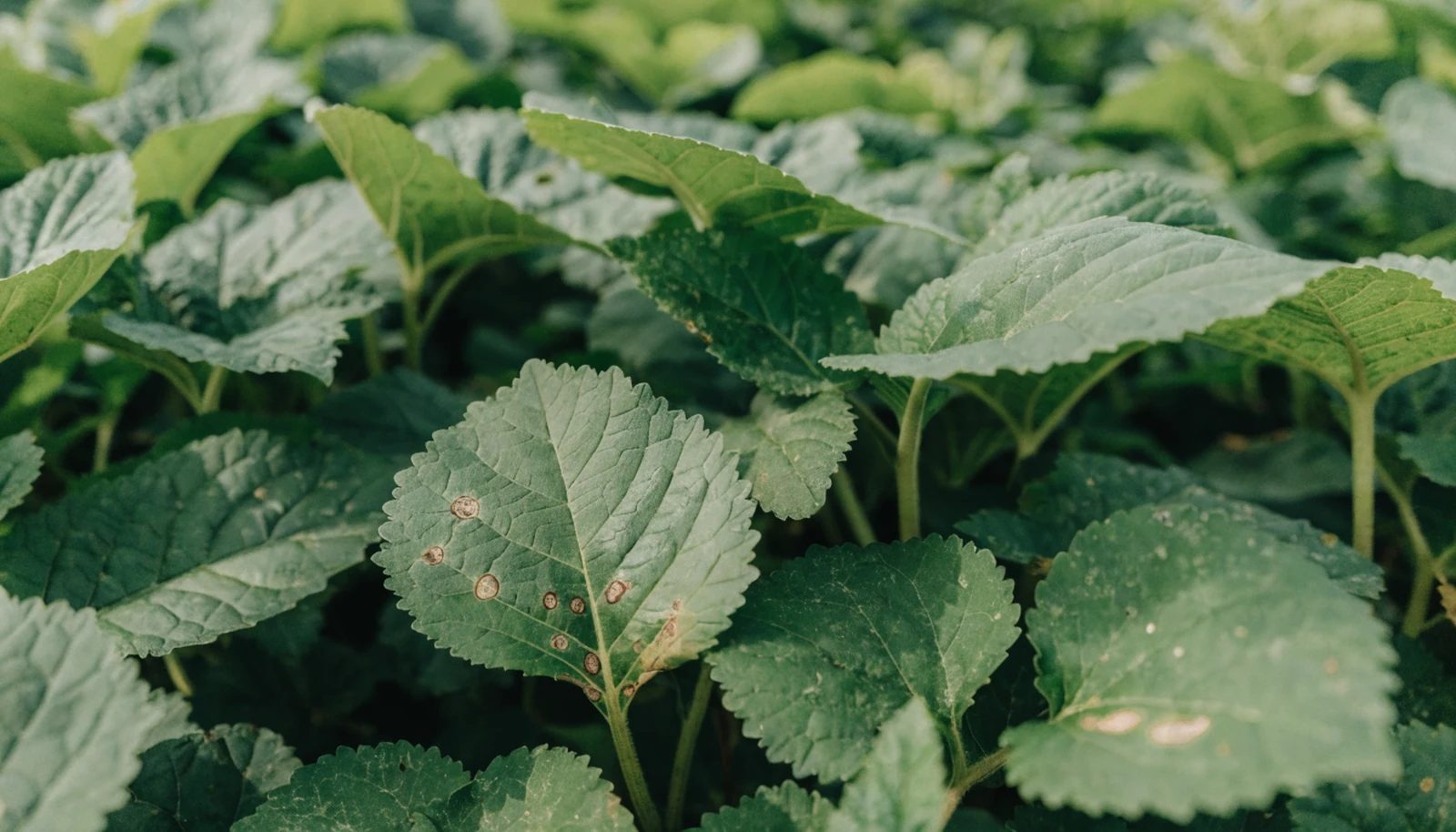
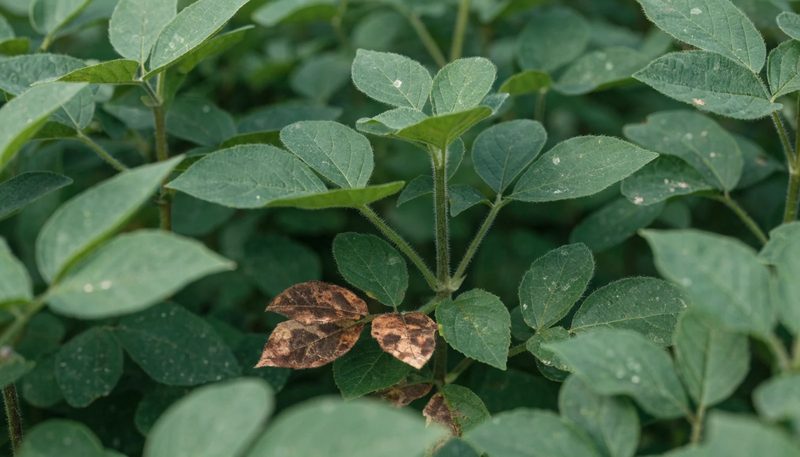
- Many brown-to-tan leaf spots of mixed sizes.
- Worse in the wet lower & inner canopy.
What is it?
This is a complex of common foliar fungi that infect leaves (and sometimes stems and fruit), producing spots that enlarge and merge into blighted, dying tissue. They survive in debris and spread by splash and wind in wet conditions.
How to identify it
- Round to angular leaf spots, often with concentric rings (Alternaria) or pale centres with dark borders (Cercospora).
- Spots enlarging and coalescing into blighted, dying areas; lower/older leaves first.
- Premature yellowing and defoliation from the bottom of the canopy upward.
- Reduced canopy and exposed/sun-damaged fruit in severe cases.
Life cycle & spread
Survives in crop debris and seed; spores spread by rain splash and wind to new foliage; cycles rapidly in warm, wet, humid weather with repeated leaf wetness.
Conditions that favour it
Warm temperatures, frequent leaf wetness/humidity, dense canopies, and carry-over inoculum in debris.
Damage and how it spreads
Progressive defoliation reduces photosynthesis, yield and fruit quality, and exposes fruit to sunscald.
Monitoring & scouting
Scout lower/older leaves first in warm wet spells; act preventively as conditions favour disease rather than waiting for heavy blighting.
How to control it
- Improve airflow, manage leaf wetness and canopy density, remove debris, and apply protectant programs preventively and at first symptoms.
How to manage the leaf spot complex
- Mulch and remove the lowest leaves. The inoculum is at ground level and travels upward by splash; a physical barrier plus removal of the first infected tissue interrupts the cycle at its source.
- Switch to drip and water in the morning. Rain you cannot control; irrigation you can, and overhead irrigation both wets leaves and splashes spores upward.
- Space, stake and prune for airflow so the canopy dries quickly after rain and dew.
- Keep nutrition adequate. These fungi favour senescing and stressed tissue, so a crop short of nitrogen or carrying a heavy load loses its lower canopy faster.
- Rotate two to three years away from susceptible hosts and control volunteer and weed hosts that carry the complex between crops.
- Protect the canopy through wet periods from fruit set onward, renewing after rain and after significant new growth - applications are preventive and cannot clear existing lesions.
- Do not work a wet crop. Machinery, hands and clothing move these spores as effectively as rain.
- Incorporate or remove debris after harvest rather than leaving it on the surface.
Because this is a complex rather than a single pathogen, identification to species matters less for the cultural measures - which are identical for all of them - than for product selection.
Telling the components apart
- Alternaria · dark lesions with concentric rings (target spot), often a yellow halo; attacks stems and fruit as well as leaves; favours warm wet weather
- Septoria · many small spots with grey or tan centres and dark borders, with black pinprick pycnidia visible in the centre; rarely on fruit
- Cercospora · small circular spots with pale grey centres, dark or reddish-purple borders, sometimes with a thin chlorotic halo; often on beet, carrot, celery and peppers
- Colletotrichum (anthracnose) · sunken lesions with concentric fruiting structures, and a latent phase expressing after harvest
- Bacterial spot · angular, water-soaked, greasy lesions with yellow halos and no fungal fruiting bodies
Deeper entries: Early Blight, Septoria Leaf Spot, Anthracnose, Bacterial Spot & Speck.
Why 'blight' is a confusing word
Blight is one of the least precise terms in plant pathology, and the confusion has practical consequences because the diseases it covers differ enormously in urgency.
In common use, blight simply means rapidly developing foliar death. It is applied to Alternaria early blight (a slow, weeks-long defoliation), Phytophthora late blight (a crop-destroying emergency that moves in days), bacterial fire blight (a woody-tissue bacterial disease), Septoria leaf blight, and this leaf spot complex - organisms from three different kingdoms with nothing in common but the symptom name.
The practical rule is to identify the causal group before responding, because the response differs completely: late blight demands same-week action and oomycete-specific chemistry, early blight and leaf spot complexes are managed over weeks with canopy and nutrition measures, and fire blight is a pruning and bloom-protection problem in an orchard. Treating any of them as though it were another is a reliable way to lose either the crop or the money.
See Late Blight (Phytophthora) and Fire Blight for the two most urgent things called blight.
Deciding whether to treat
The economics of a leaf spot complex depend almost entirely on how much canopy the crop still needs, and on that basis the same level of disease can be worth treating or worth ignoring.
Lower-canopy defoliation on a crop that has finished sizing its yield costs very little - those leaves were senescing anyway, and the plant has already banked what it needed from them. The same percentage on a crop in early fruit fill is a direct yield reduction, because the leaf area lost is the leaf area that would have filled the fruit, and there is neither time nor resource to replace it.
In determinate crops with a defined harvest, the useful question is how many weeks of active canopy remain. In indeterminate and multiple-pick crops, the calculation shifts because protecting the canopy protects every subsequent pick, so intervention is justified for longer.
This also means the highest-value intervention is almost always early and preventive: mulching and irrigation changes made before the disease starts cost less and achieve more than any application made once the lower third is lost.
Recommended Vegalab solution: Spore Control
Spore Control · natural broad-spectrum fungicide (thymol) applied preventively under favourable conditions and at first symptoms, with thorough canopy coverage; combine with airflow and sanitation.
| Role | Product | Use |
|---|---|---|
| Primary control | Spore Control |
Preventing it next season
Airflow/canopy management, leaf-wetness reduction, debris sanitation, crop rotation and preventive sprays in warm wet periods.
Claims and product availability vary by jurisdiction. Always read and follow the product label.