

Crops affected
How to identify leaf blister & leaf curl
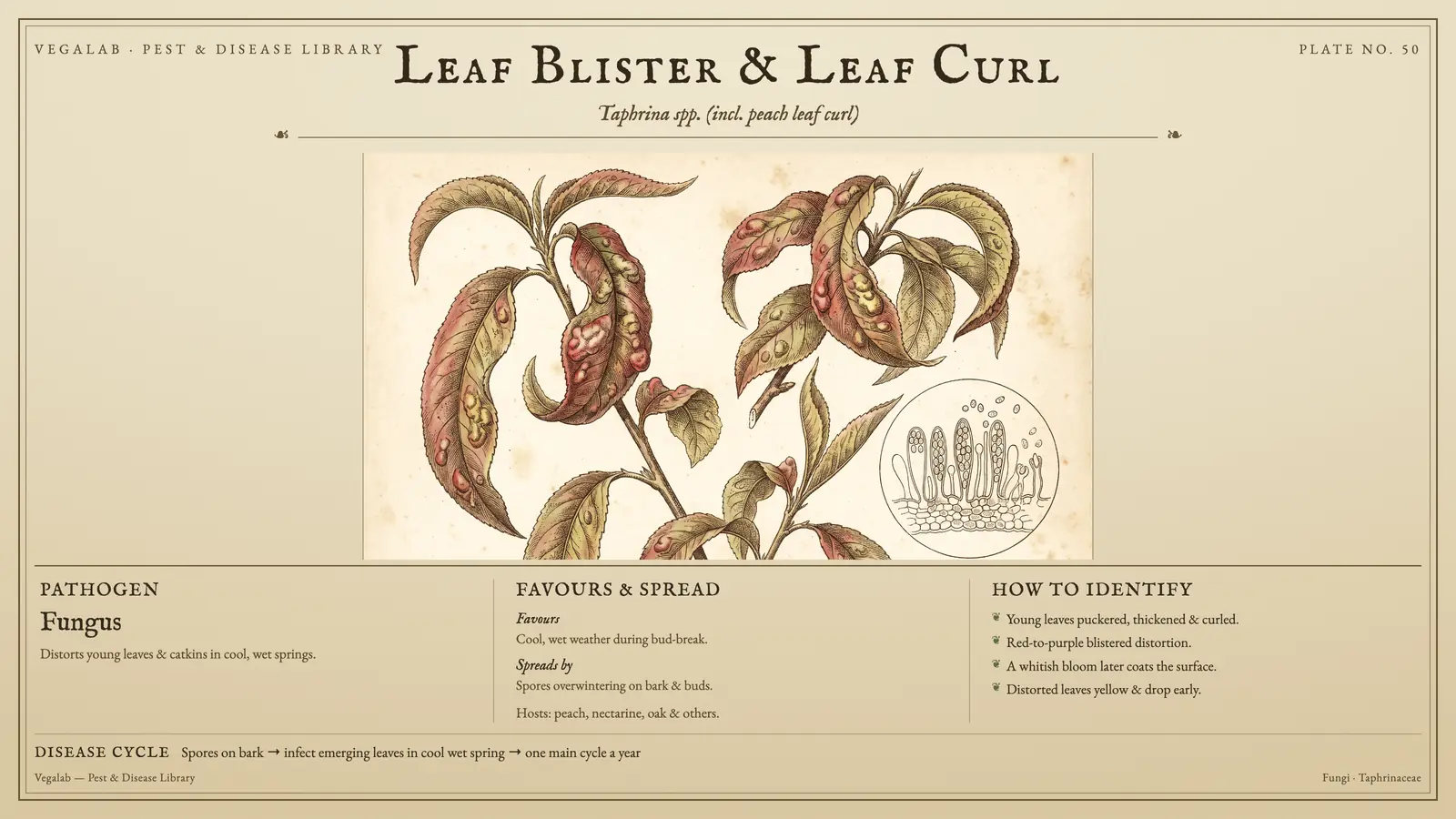
Pathogen. Fungus Distorts young leaves & catkins in cool, wet springs.
What is it?
Taphrina fungi infect young, expanding leaves (and sometimes shoots and fruit) in cool, wet spring conditions, causing the characteristic puckered, blistered, discoloured distortion.
How to identify it
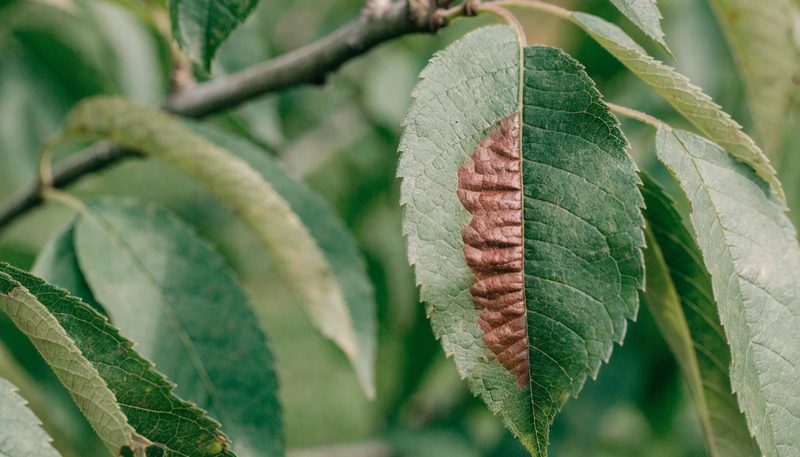
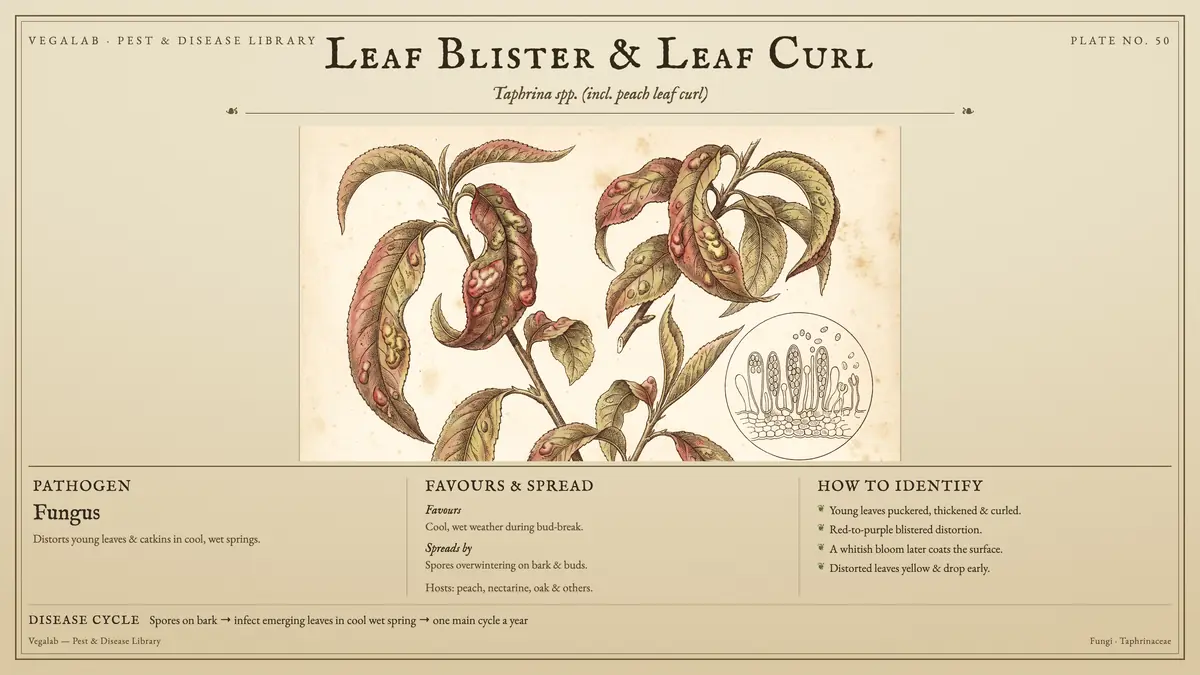
- Thickened, puckered, blistered areas on expanding leaves.
- Red, pink or purple discoloration turning grey/white as spores form.
- Curled, distorted leaves that later yellow and drop.
- Reduced canopy, weakened trees and lower fruit set after severe years.
Life cycle & spread
Spores overwinter on bark and bud scales and infect young leaves at bud-swell/emergence in cool, wet weather; there is essentially one main infection period per season, which is why dormant/early timing is key.
Conditions that favour it
Cool, wet spring weather during bud-swell and leaf emergence; carry-over spores on bark and buds.
Damage and how it spreads
Loss of functional leaf area weakens the tree, reduces fruit set and size, and can cause defoliation in severe years.
Monitoring & scouting
Calendar/phenology-based: the critical action window is dormancy to bud-swell, before leaves emerge - not after symptoms appear.
How to control it
- Apply preventively in the dormant/bud-swell window;
- remove and destroy infected leaves;
- the disease can't be reversed on infected tissue, so prevention is everything.
How to manage peach leaf curl and leaf blister
- Apply protection in dormancy, before bud swell. This is the whole programme. A dormant application timed to late winter, before buds begin to open, protects the emerging tissue. Many growers apply at leaf fall in autumn and again before bud swell in spring.
- Do not treat after symptoms appear. Once leaves are curled the infection is complete for the year and no application will reverse it or prevent further infection, because there is no further infection to prevent.
- Remove and destroy affected leaves where practical, which reduces the spore load lodging in buds for next year - a modest but real effect.
- Keep the tree covered during a protracted bud break. In a cool, drawn-out spring, bud swell can extend over weeks and a single early application may not last; a second before full bud break may be justified.
- Choose resistant cultivars where available, and site trees to avoid the dampest, most sheltered positions.
- Protect tree vigour. Severe defoliation weakens the tree and reduces the following year's crop, so nutrition and irrigation after a bad year help it recover.
- Consider physical protection on small plantings · keeping rain off the tree during bud swell, using a temporary cover, is genuinely effective for garden and small-scale growers.
This disease has the most unforgiving timing in the library and the most reliable outcome when the timing is right. There is a single annual infection window at bud swell, and protection applied before it works while protection applied after it does nothing at all.
The most common mistake with this disease is spraying in spring when the curled leaves appear. It feels like the right response and achieves nothing - the decision that mattered was made weeks earlier.
Leaf curl or something else?
- ***Taphrina* leaf curl: thickened, puckered and blistered leaf tissue, often red or purple, with a whitish bloom later; appears on the first flush** of spring growth; later growth is normal
- Aphid damage: curled and distorted leaves but not thickened or blistered, and aphids or their cast skins and honeydew are present; affects growing points through the season
- Herbicide injury: strapped, twisted, cupped growth affecting all new growth and often a whole block uniformly
- Powdery mildew: distortion with a white powdery surface coating rather than blistering
- Frost injury: puckering and marginal necrosis on tissue that was exposed at a specific event, with a clear date and a distribution following cold air
The combination of thickened blistered tissue, red colouration and confinement to the first spring flush is diagnostic. See Aphids and Powdery Mildew.
Why one infection cycle changes everything
Most diseases in this library have repeating cycles: infection produces spores, those spores cause new infections, and the epidemic compounds through the season. That is why most programmes involve renewing protection after rain and after new growth.
Taphrina does not work that way. The spores that infect in spring came from last year's leaves and overwintered in the buds. The spores produced on this year's curled leaves do not reinfect this year's foliage - they lodge in buds and wait for next spring. There is exactly one infection event per season.
Two consequences follow, and they are the opposite of standard practice. First, the whole outcome is determined by whether protection was in place before bud swell · a single well-timed dormant application can give near-complete control, which is unusually favourable. Second, in-season applications are pointless, because there is no ongoing infection to interrupt; money spent on them is wasted entirely.
It also means a bad year does not indicate a management failure in that year. It indicates either that the dormant timing was missed, or that the spring was unusually wet during bud swell - and the response is to plan next winter's timing, not to spray now.
Recovering a tree after a bad year
- Thin the crop on a heavily defoliated tree rather than carrying a full load
- Keep irrigation consistent through the summer to support the second flush
- Maintain balanced nutrition, avoiding a heavy late nitrogen push that produces soft growth
- Do not spray in season · there is nothing left to prevent this year
- Diarise the dormant application for late winter, before bud swell, for next season
Severe leaf curl defoliates a tree early in the season, at precisely the point when it should be building the reserves that carry it through the summer and set next year's crop. The tree usually produces a second flush of healthy leaves - that flush is not infected, because the single infection window has passed - but it does so at a cost, and the consequences run into the following season.
What follows a heavy infection is typically reduced shoot growth, smaller and fewer fruit, increased susceptibility to other stresses, and a weaker bud set for next spring. On young trees repeated severe years can compromise establishment. So the year after a bad infection deserves deliberate support rather than being treated as a fresh start.
The measures are straightforward: reduce the crop load so the tree is not simultaneously carrying fruit and rebuilding canopy, keep irrigation consistent through the summer, and maintain balanced nutrition to support the second flush and reserve accumulation. Thinning harder than usual is often the single most useful decision, because a defoliated tree cannot fill a full crop and attempting it depletes reserves further.
And then the actual fix: plan the dormant application timing before bud swell for the following winter, because that is the only lever that prevents a repeat.
The second flush of leaves is healthy and does not need protecting. The work that matters is supporting the tree's recovery now and getting the timing right next winter.
Recommended Vegalab solution: Spore Control
Spore Control · natural broad-spectrum fungicide (thymol) applied preventively in the dormant to bud-swell window, before leaves emerge, with thorough coverage of bark and buds.
| Role | Product | Use |
|---|---|---|
| Primary control | Spore Control |
Preventing it next season
Dormant/bud-swell preventive application, sanitation of fallen infected leaves, and good tree vigour.
Claims and product availability vary by jurisdiction. Always read and follow the product label.