

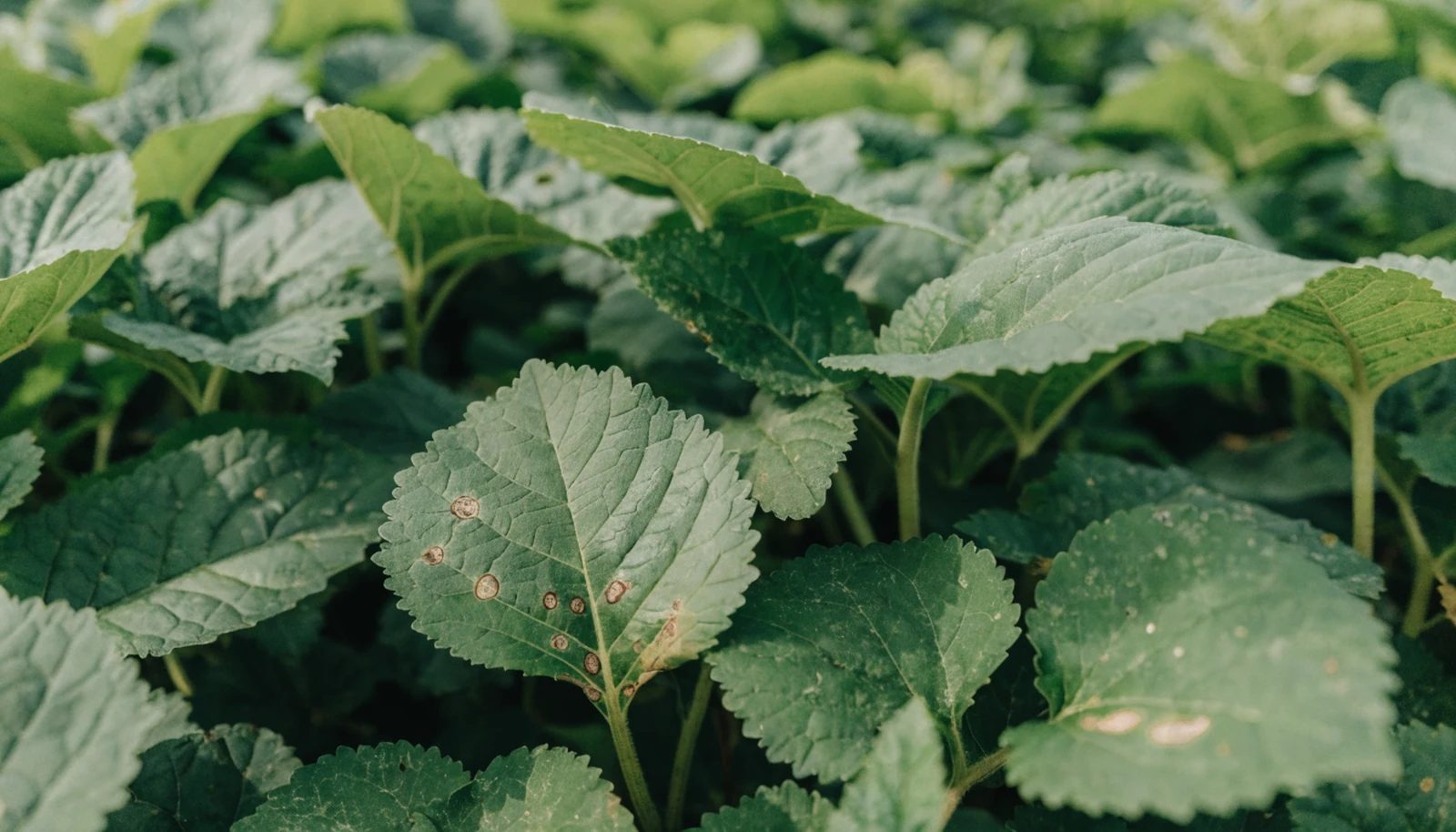
Crops affected
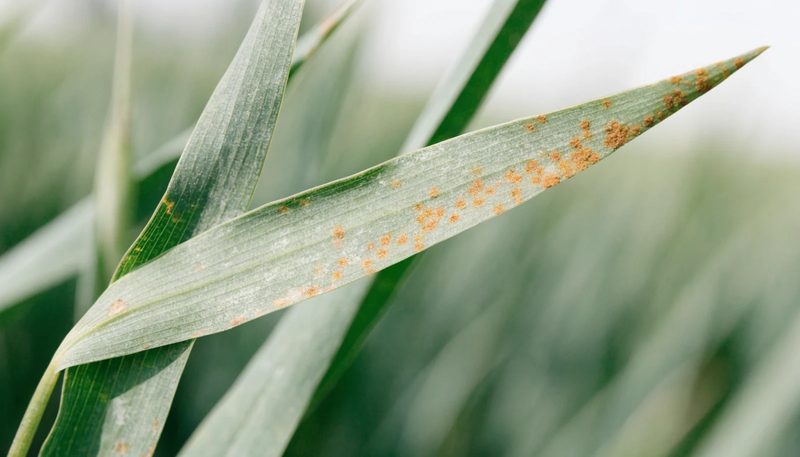
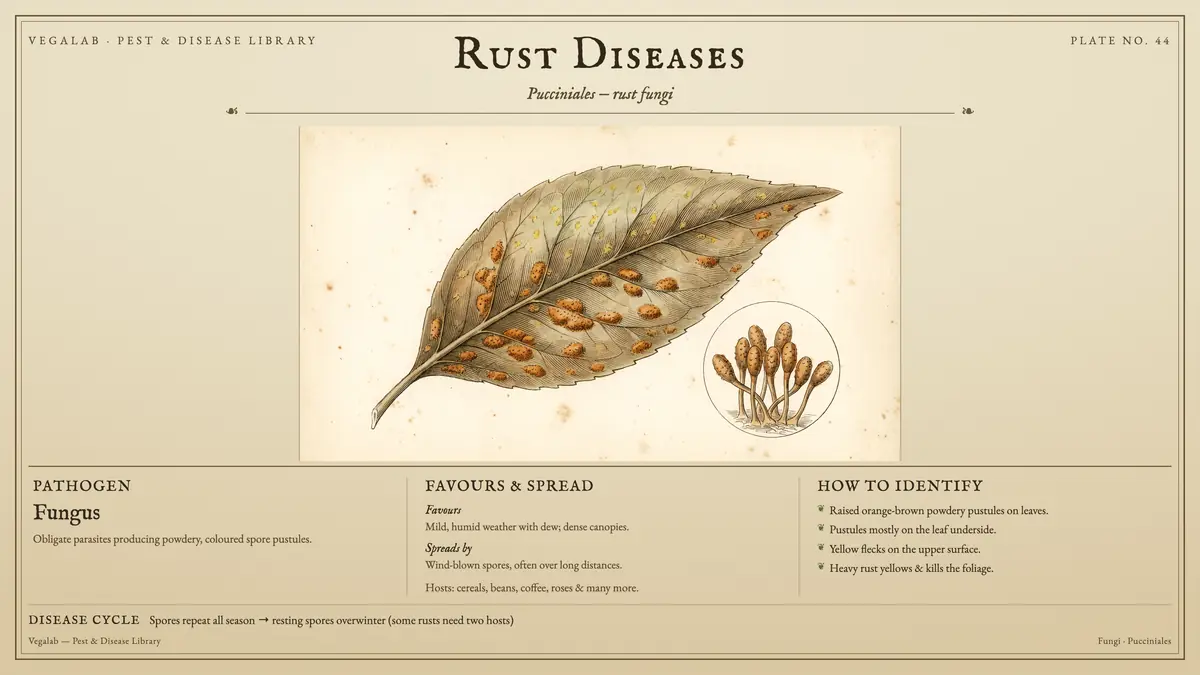
How to identify rust diseases
Pathogen. Fungus Obligate parasites producing powdery, coloured spore pustules.
- Heavy rust yellows & kills the foliage.
What is it?
Rusts are caused by a large group of highly specialized fungi. They produce powdery pustules of spores - usually orange, yellow, or brown - on leaves and stems. Many rusts spread on wind over long distances, and some, such as cedar-apple rust, require an alternate host (junipers/cedars) to complete their life cycle, which is why nearby host plants matter.
How to identify it
- Orange, yellow, or rusty-brown powdery pustules, often on leaf undersides
- Yellow spots on the upper leaf surface above the pustules
- Premature yellowing and leaf drop in heavy infections
- For cedar-apple rust: bright orange galls or gelatinous horns on nearby junipers/cedars
Life cycle & spread
Rusts are obligate biotrophs - they cannot survive without living host tissue - and many have the most complicated life cycle of any plant pathogen, passing through up to five distinct spore stages and, in some species, requiring two unrelated host plants to complete it.
The stage that matters agronomically is the urediniospore: the orange-brown powdery spore produced in the pustules you see on leaves. These are produced in vast numbers, are wind-dispersed over very long distances, and can reinfect the same host species immediately - so a rust epidemic compounds through repeated cycles within one season, roughly every one to two weeks in favourable weather.
Overwintering varies by species and climate: as mycelium in living hosts and volunteers where winters are mild, as resistant teliospores in debris, or on an alternate host such as barberry for wheat stem rust or eastern red cedar for cedar-apple rust. In warm regions, wind-borne spores arriving from lower latitudes start the season, which is why regional rust forecasts exist and are worth watching.
Conditions that favour it
Most rusts need several hours of leaf wetness or very high humidity to germinate, with moderate temperatures - roughly 15–25 °C for the common cereal and bean rusts. Heavy dew is often sufficient; rainfall is not required.
Dense canopies, high nitrogen driving soft growth, susceptible varieties and a nearby inoculum source are the main risk multipliers. Because spores travel so far, your own sanitation matters less for rusts than for most diseases and varietal resistance matters much more.
Damage and how it spreads
By covering and killing leaf tissue, rusts reduce photosynthesis, weaken plants, and lower yield and fruit quality. Heavy infections cause defoliation. Because many rusts blow in on the wind and some rely on alternate hosts, managing both nearby hosts and protecting susceptible crops is important.
Monitoring & scouting
Scout the lower and middle canopy weekly through the season, checking both leaf surfaces. Pustules erupt through the epidermis and feel slightly raised and rough to the fingertip.
Powdery yellow, orange, or brown spores that rub from pustules are a strong field clue for rust, not a definitive test. Confirm the host, pustule pattern, and - when management, regulatory, or high-value decisions depend on it - laboratory diagnosis.
Note the pustule colour and whether they are on the upper or lower surface, since that separates the species and, in cereals, determines which resistance genes and which products are relevant. Track the percentage of leaf area affected on the upper leaves - in cereals the top two leaves carry most of the yield.
How to control it
- Remove and destroy infected leaves and, for cedar-apple rust, nearby alternate-host galls where feasible.
- Improve airflow and avoid prolonged leaf wetness.
- Choose resistant varieties where available.
- Apply a protective natural fungicide at first sign and during high-risk weather.
How to manage rust disease
- Start with resistant varieties. For rusts this outranks every other measure. Be aware that rust populations evolve to overcome single resistance genes - the wheat stem rust Ug99 lineage is the standard example - so varietal choice needs refreshing, not setting once.
- Protect the upper canopy in cereals. The top two leaves and the flag leaf contribute the majority of grain fill; protecting them through the critical window is where the return is.
- Reduce leaf wetness. Wider spacing, canopy management, avoiding overhead irrigation in the evening, and orienting rows for airflow all shorten the wet period rust needs.
- Moderate nitrogen. Lush, soft, dense canopies are both more susceptible and slower to dry.
- Remove the green bridge. Volunteers and self-set plants carry rust between seasons in mild climates; controlling them before the new crop emerges cuts the local inoculum.
- Remove the alternate host where relevant. Barberry eradication for wheat stem rust and removing junipers near apples for cedar-apple rust both interrupt the cycle at a stage that has no alternative route.
- Watch regional forecasts and act on incoming inoculum reports rather than waiting for local symptoms.
- Support tissue resilience as part of the programme - silica and balanced nutrition contribute to firmer epidermal tissue, alongside rather than instead of the measures above.
- Rotate modes of action. Rust populations have developed resistance to several fungicide groups through repeated solo use.
Rusts are wind-dispersed over hundreds of kilometres, so exclusion is not available as a strategy. Management rests on genetics, canopy conditions and well-timed protection of the leaves that matter.
Identifying rust, and what it is confused with
- Rust: raised pustules that rupture the leaf surface and release orange, yellow or brown powder that stains a finger or tissue. This is unmistakable once you have done it once.
- Leaf spots (septoria, alternaria, cercospora): flat lesions with defined margins, no powder, sometimes with visible black fruiting specks.
- Powdery mildew: a white, dry, talc-like coating that smears rather than staining, and sits on the surface rather than erupting through it.
- Downy mildew: angular yellow patches with grey fuzz on the leaf underside, again no powder.
- Edema and physiological spotting: raised bumps with no spore mass at all - they will not stain.
- Spider mite bronzing: diffuse discolouration with no discrete pustules and, on close inspection, visible mites and webbing.
See Powdery Mildew, Downy Mildew and Septoria Leaf Spot. If it makes an orange stain, it is rust.
The rusts that matter by crop
- Wheat and cereals: stripe/yellow rust (Puccinia striiformis), leaf/brown rust (P. triticina) and stem/black rust (P. graminis) · the most economically significant rusts worldwide
- Coffee leaf rust (Hemileia vastatrix) · yellow-orange sporulation on leaf undersides causing defoliation; historically the most destructive disease in the crop
- Soybean rust (Phakopsora pachyrhizi) · small tan pustules on lower leaves, capable of rapid defoliation
- Bean rust (Uromyces appendiculatus) · reddish-brown pustules with a chlorotic halo
- Apple and pear: cedar-apple rust and pear trellis rust - need the juniper alternate host, so removing nearby junipers works
- Alliums: leek and onion rust (Puccinia allii) · bright orange elongated pustules on leaves
- Maize: common and southern rust · southern rust is the more aggressive in warm conditions
Identify to crop before choosing a programme: the cereal rusts, coffee leaf rust and the alternate-host rusts of pome fruit need quite different timing, and varietal resistance carries more of the load here than in most diseases. Crop-specific programmes are linked above where we have one.
Recommended Vegalab solution: Spore Control
Vegalab Spore Control (Thymol) provides broad-spectrum protective action against fungal pathogens by forming a cuticle film and inhibiting spore germination and mycelium proliferation. Apply as a foliar spray at first sign of rust, diluted 1:1,000 (1 mL/L), covering leaf undersides where pustules form, and maintain protection through the susceptible period. Combine with sanitation and host management for cedar-apple rust.
| Role | Product | Use |
|---|---|---|
| Primary control | Spore Control | Broad-spectrum protective fungicide |
| Companion / broader pressure | Armour Boost | Silica for tissue resilience |
By crop
See crop-specific solutions
Preventing it next season
Use resistant varieties, manage nearby alternate hosts (for cedar-apple rust), improve airflow, avoid leaf wetness, and protect preventively in high-risk weather. Strong foliage resists infection - support it with Armour Boost.
Claims and product availability vary by jurisdiction. Always read and follow the product label.