

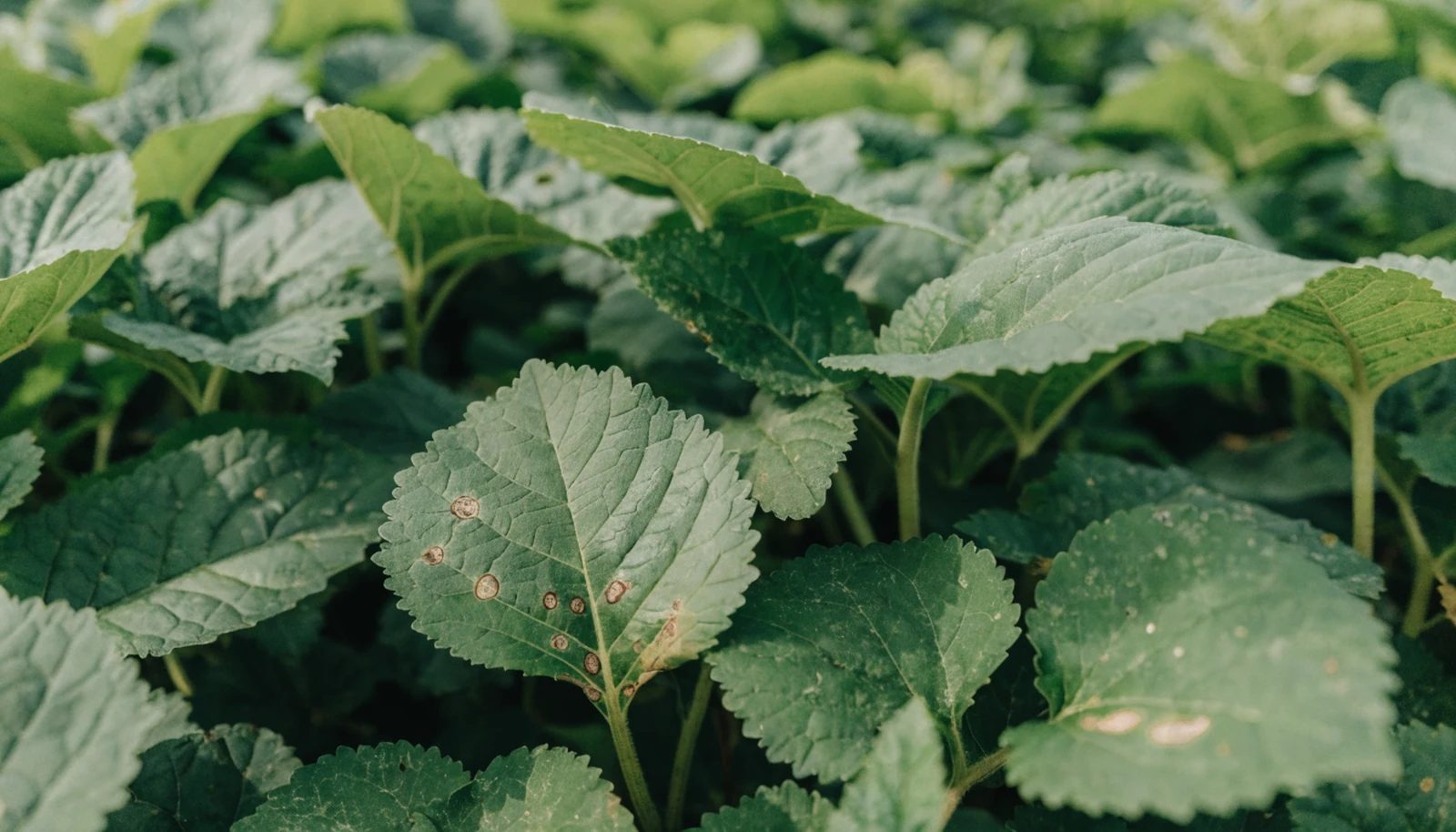
Crops affected
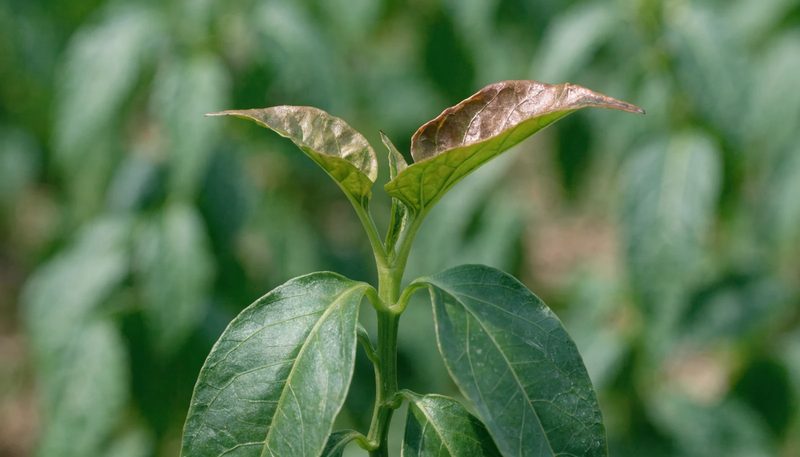
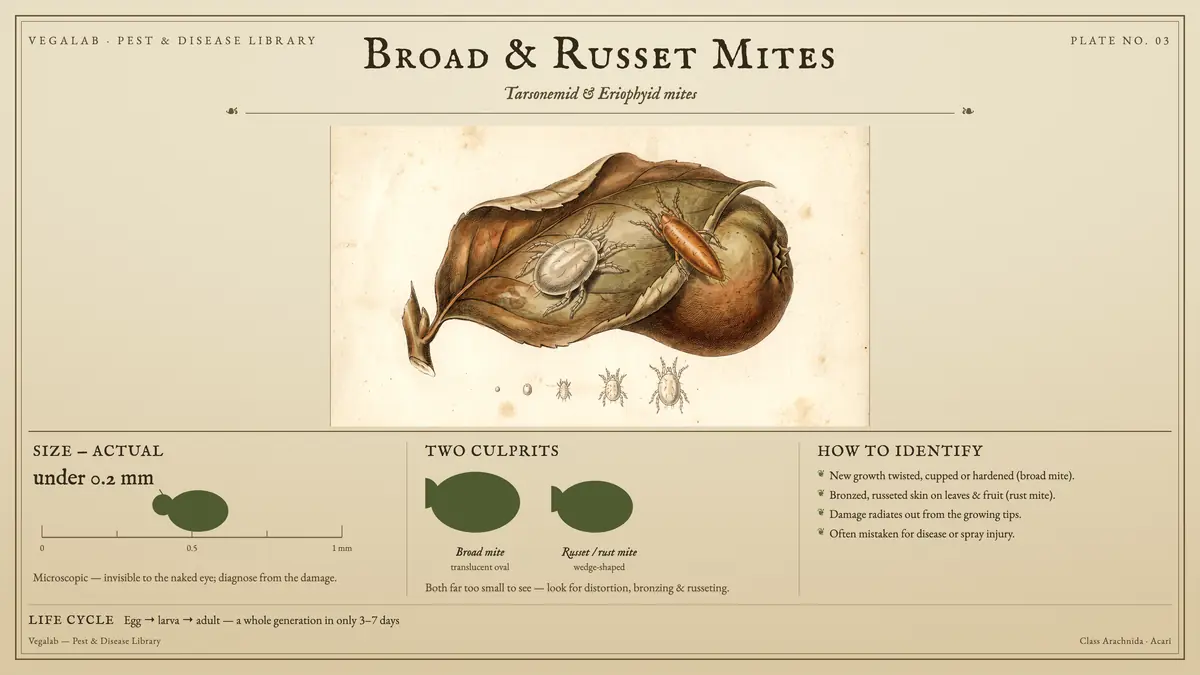
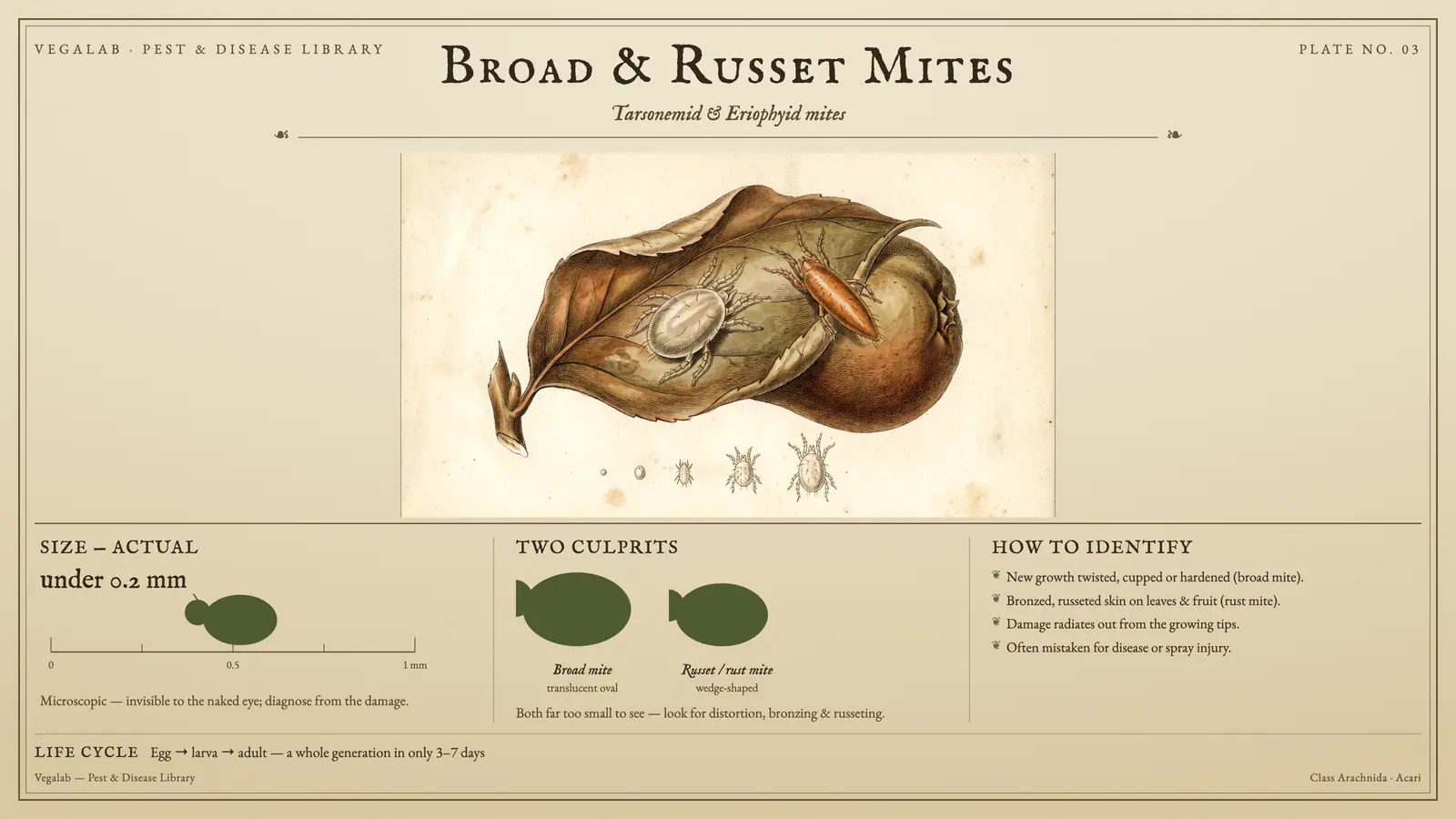
How to identify broad & russet mites
Life cycle. Egg → larva → adult - a whole generation in only 3 - 7 days
What is it?
Broad mites and russet mites are tiny eriophyid and tarsonemid mites - far smaller than spider mites and invisible to the naked eye. They inject toxic saliva as they feed on tender new growth, distorting and discoloring leaves, buds, and fruit. Unlike spider mites, they usually produce no webbing, which is part of why they are so often missed.
How to identify it
- Twisted, cupped, brittle, or bronzed new growth at the shoot tips
- A glazed, russeted, or coppery sheen on leaves, stems, or fruit
- Stunted, distorted buds and flowers
- Damage concentrated on the newest growth, with no visible webbing
- Symptoms that resemble disease or nutrient disorder but do not respond to those treatments
Life cycle & spread
Broad mite (*Polyphagotarsonemus latus*) and tomato russet mite (*Aculops lycopersici*) are both microscopic - around 0.15–0.2 mm - and invisible without magnification. Broad mite is a tarsonemid, oval and translucent; russet mite is an eriophyid, elongate and wedge-shaped with four legs.
Both reproduce extremely quickly, completing a generation in roughly a week in warm conditions, and both feed by puncturing cells and injecting saliva. Broad mite concentrates on the **growing point and youngest tissue**, and its saliva is toxic - a very small number of mites produces severe distortion far out of proportion to the population.
Russet mite typically starts low on the plant and moves upward, bronzing stems and leaves progressively. Broad mite is often moved between plants by whiteflies and on workers' hands and clothing; both disperse on wind and equipment.
Conditions that favour it
Warm, humid conditions favour broad mite; warm dry conditions favour russet mite. Both are far worse under protection than in the open field, and both build fastest on vigorous young growth.
Broad mite arrives most often on infested propagation material, which is the single most common introduction route into a clean house. Loss of predatory mites to broad-spectrum sprays raises populations of both.
Damage and how it spreads
Broad and russet mites stunt and deform growing points, downgrade fruit with russeting, and can collapse the productive parts of a plant. Because populations build invisibly and the damage mimics other problems, growers often lose time on the wrong diagnosis while the mites spread. Early identification and treatment of new growth is essential.
Monitoring & scouting
Neither mite is visible at 10×. Diagnose from the **symptom pattern** and confirm with 40× magnification or a laboratory - this is the practical reality, and treating on symptom pattern is normal.
**Broad mite:** distorted, thickened, brittle, downward-curled young leaves; bronzed or purpled tissue at the growing point; flower and fruit distortion; the plant looks like it has herbicide or virus damage.
**Russet mite:** bronzing and greasy discolouration progressing up the stem from the base, with leaves drying and stems taking on a rusty sheen. Check the boundary between healthy and affected tissue, where mites concentrate.
How to control it
- Inspect distorted new growth with a strong hand lens or take a sample to a lab to confirm.
- Remove and destroy the most heavily distorted growing tips.
- Isolate affected plants · these mites spread on hands, tools, and wind.
- Apply a natural miticide thoroughly to new growth, repeating to catch successive generations.
How to manage broad mite and russet mite
- Start with clean propagation material. Broad mite is most often introduced on cuttings and transplants, and inspecting or treating incoming material prevents the majority of outbreaks.
- Act on the symptom pattern without waiting for confirmation. Because the mites cannot be seen at normal magnification, waiting for a positive identification usually means losing another week of growing points. Distorted, brittle, bronzed new growth in a warm protected crop should be treated as broad mite until proven otherwise.
- Treat the growing point and young tissue for broad mite, and the stem and lower canopy upward for russet mite - the placements differ because the mites occupy different parts of the plant.
- Use sulphur or oils where the crop tolerates them, both of which have genuine activity against these mites; observe the temperature and tank-mix restrictions.
- Introduce predatory mites under protection, where Neoseiulus and Amblyseius species are effective against broad mite in particular.
- Remove and destroy severely distorted growth, which carries the highest mite densities.
- Raise temperature-based hot-water treatment for propagation material where the protocol exists for the crop - an effective way to clean incoming stock.
- Handle clean crops before affected ones, and change gloves and clothing between houses; both mites move on people.
Broad mites inject toxic saliva and can cause severe distortion even when mites are hard to find. Because symptoms persist after mites are gone and resemble herbicide, virus, or nutrient injury, base action on active mites or eggs plus new-growth damage - not distortion alone.
Broad mite damage looks like herbicide or virus damage
This is the single most common diagnostic error with broad mite, and it wastes a great deal of time. Because the toxic saliva disrupts cell development at the growing point, the resulting symptoms - twisted, thickened, brittle, cupped and distorted new leaves, shortened internodes, bronzed or purpled tissue - look strikingly like growth-regulator herbicide injury or a systemic virus.
Three checks separate them. Distribution: broad mite damage typically appears on scattered individual plants and spreads to neighbours over weeks; herbicide drift affects a block or a field edge more or less uniformly and often with a gradient. Progression: broad mite damage keeps advancing into successive new leaves and worsens; herbicide injury is a single event that the plant grows out of if the dose was sublethal. Response: broad mite damage responds to miticide or predator introduction; herbicide and virus damage do not.
Where a crop shows distorted growing points and there is no plausible herbicide exposure, broad mite is the more likely explanation, particularly in a warm protected crop that received new propagation material recently.
See Mosaic Virus for the virus differentials and Micronutrient Deficiency for the nutritional ones.
Broad mite or russet mite?
- Broad mite: damage at the top of the plant · growing points, youngest leaves, flowers and fruit; severe distortion disproportionate to mite numbers; favours humid warmth; common in ornamentals, peppers, cucumber, strawberry, cannabis
- Tomato russet mite: damage starts at the bottom and moves up; bronzing and greasy rustiness of stems and leaves rather than distortion; favours warm dry conditions; tomato, potato, pepper, aubergine, petunia
- Practical consequence: the two need opposite spray placement. Treating a russet mite infestation at the growing point, or a broad mite infestation at the stem base, misses the population.
Both are treated as urgent because both build in about a week and both cause damage before they are visible.
Recommended Vegalab solution: MultiMite Control
Vegalab MultiMite Control is a natural broad-spectrum mite control that covers the wider mite complex, including broad and russet mites. Used with Spider Mite Control where mixed mite pressure occurs, it gives strong coverage of new growth. Target the shoot tips and undersides of young leaves where these mites concentrate, and repeat applications to break the life cycle. Avoid peak sunlight when applying oil-based sprays.
| Role | Product | Use |
|---|---|---|
| Primary control | MultiMite Control | Broader mixed mite & insect pressure |
| Companion / broader pressure | Spider Mite Control | Contact miticide / insecticide |
See crop-specific solutions
Preventing it next season
Scout new growth regularly, sanitize tools and hands between plants, and quarantine incoming plants. Keep plants vigorous so they can push past minor early damage; Armour Boost supports resilient tissue.
Claims and product availability vary by jurisdiction. Always read and follow the product label.