

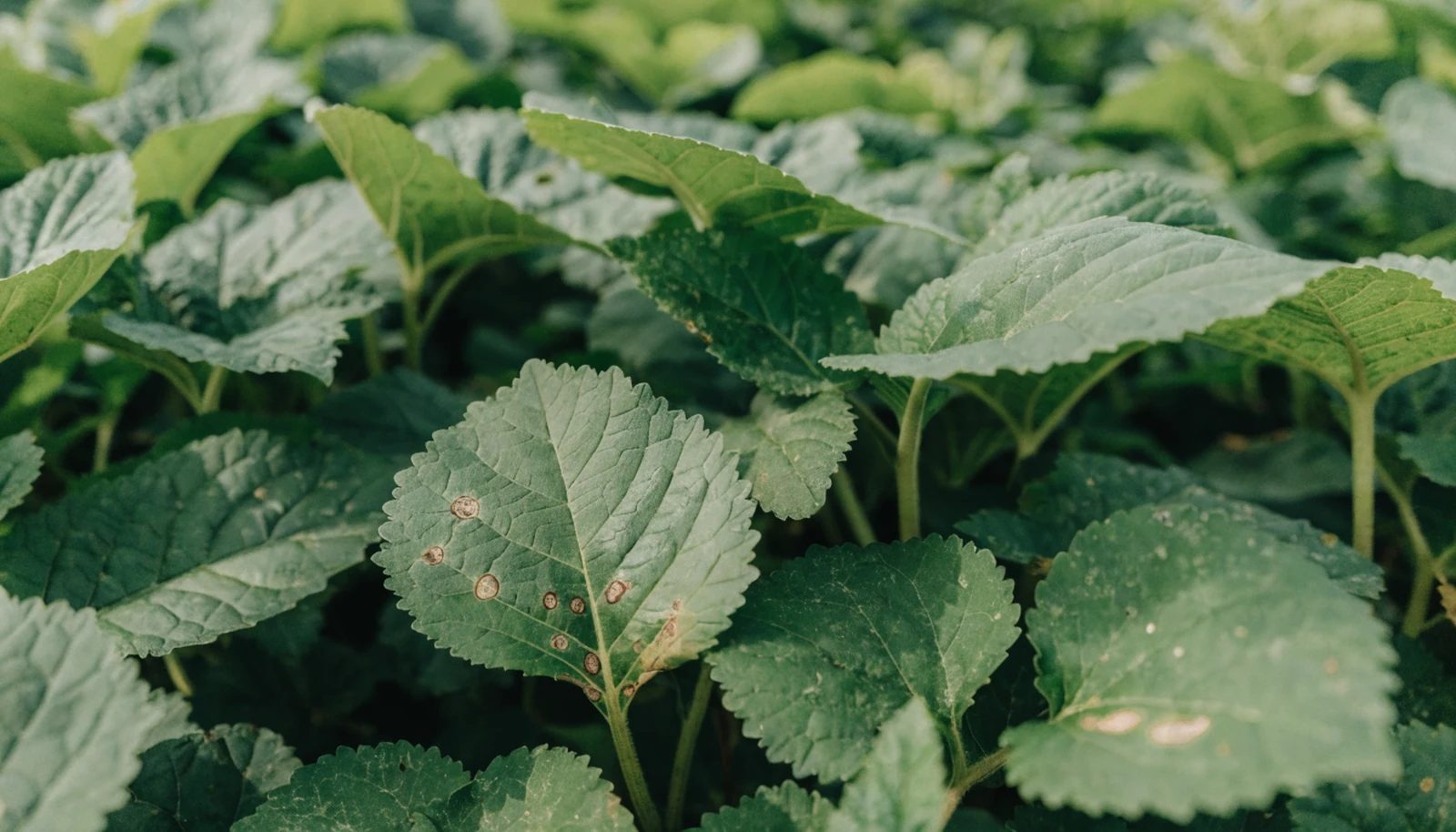
Crops affected
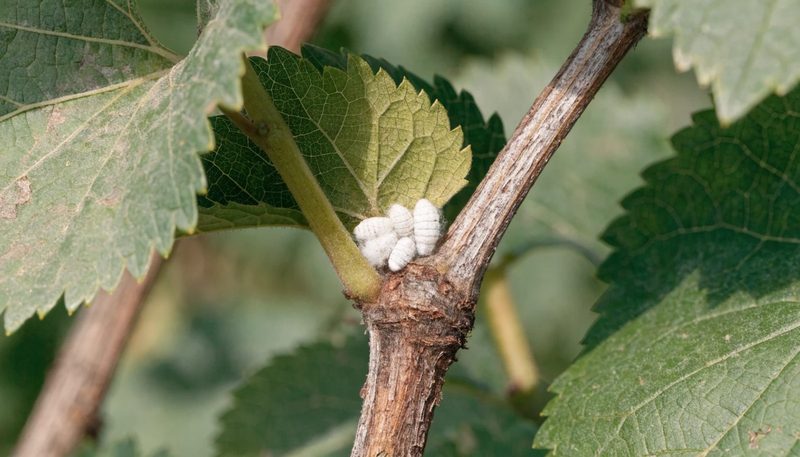
How to identify mealybugs
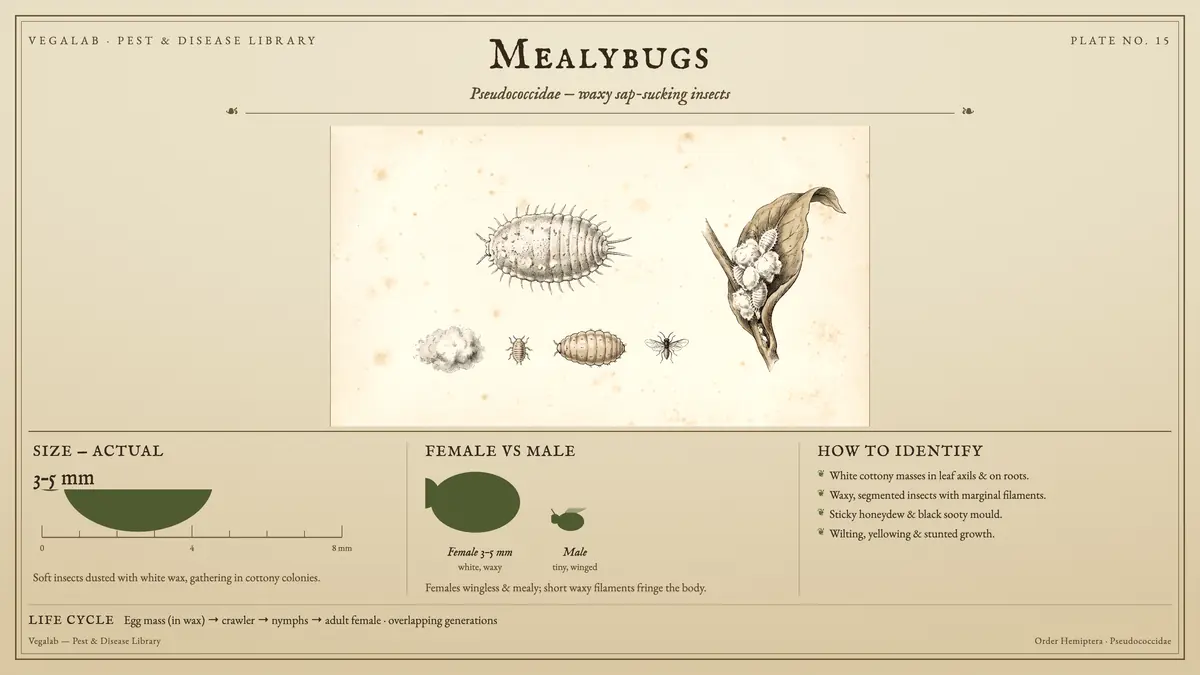
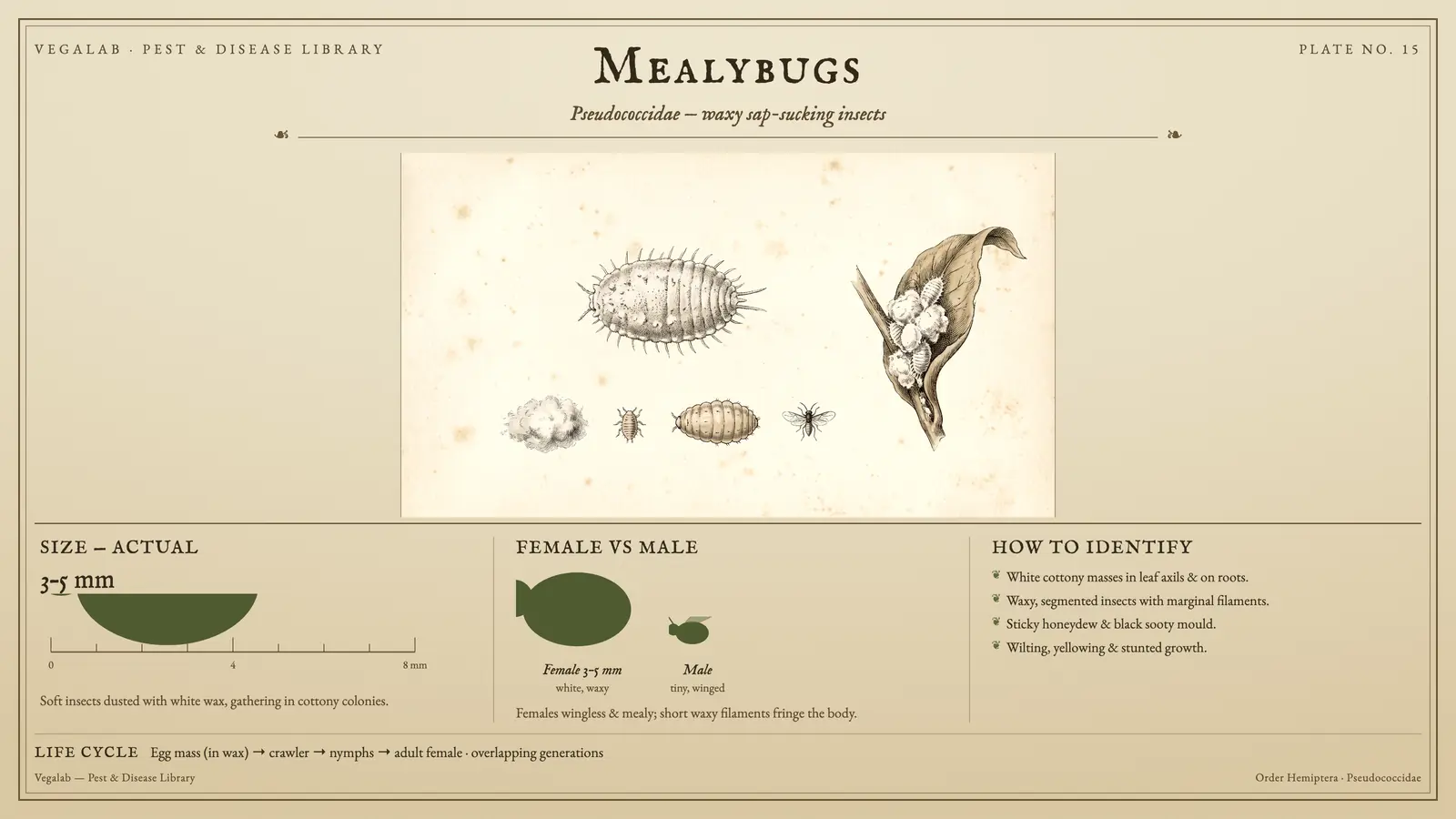
Size. 3 - 5 mm Soft insects dusted with white wax, gathering in cottony colonies.
What is it?
Mealybugs are soft-bodied sucking insects coated in white, water-repellent wax. They shelter in protected sites - leaf axils, under calyxes, in bunch crevices and on roots - which makes spray coverage and timing critical.
How to identify it
- White, cottony masses in leaf axils, on stems, and on or under fruit and bunches.
- Honeydew and black sooty mould on foliage and fruit.
- Stunting, yellowing, leaf drop and fruit contamination in heavy infestations.
- Ant trails moving to and from mealybug colonies.
Life cycle & spread
Females lay eggs in waxy ovisacs; mobile nymphs (crawlers) disperse and settle in protected sites; several overlapping generations occur, especially under warm/greenhouse conditions.
Conditions that favour it
Warm, sheltered conditions; dense canopies and bunch crops; ant activity that protects colonies and spreads them.
Damage and how it spreads
Sap feeding weakens plants and downgrades fruit; honeydew and sooty mould foul produce (a major issue in table grapes and citrus). Some species also transmit viruses.
Monitoring & scouting
Inspect protected sites and bunches; watch for ant activity and honeydew; target the exposed crawler stage.
How to control it
- Treat the exposed nymph/crawler stage with thorough coverage of hidden sites;
- manage ants that protect and move colonies;
- conserve natural enemies;
- inspect incoming plant material.
How to get rid of mealybugs
- Add a wetter or use an oil. Horticultural oil, or a spray plus an appropriate adjuvant, penetrates the wax where a plain aqueous spray beads off. This is the single most important change for anyone who has tried spraying and seen no effect.
- Find and treat the hidden colonies. Mealybugs shelter in leaf axils, under bark and calyxes, in bud scales, between touching fruit, in the crown and on roots. A canopy spray that misses those refuges leaves the population intact.
- Spot-treat with alcohol on small plantings. A cotton bud with 70% isopropyl alcohol dissolves the wax and kills on contact - laborious but genuinely effective on ornamentals and small numbers.
- Repeat every 7–10 days. Eggs in the waxy ovisac are protected, so a single application only removes what is exposed.
- Control the ants. Ants tend mealybugs for honeydew, defend them from predators and carry them to fresh growth. Untended colonies are far easier to suppress.
- Use biological control under protection, where the mealybug destroyer beetle Cryptolaemus montrouzieri and Anagyrus parasitoids are well established and effective.
- Quarantine incoming plants. Mealybugs arrive on new stock, and a fortnight of isolation and inspection prevents most introductions.
- Prune out heavily infested material rather than trying to clean it.
Mealybugs are difficult for one specific reason: the white waxy coating that gives them their name repels water-based sprays. Any programme that does not address that wax will underperform regardless of what is in the tank.
Check the roots if the above fails. Root mealybugs live on roots in the medium, produce identical symptoms of decline with nothing visible on the foliage, and no foliar programme touches them.
Mealybug or something else white?
- Mealybugs: oval, soft, distinctly segmented bodies under white mealy wax, often with waxy filaments around the margin; they move slowly if disturbed; cottony egg sacs in axils
- Woolly aphids: white waxy masses too, but on stems and roots of apple and other woody hosts, and the insects beneath are aphid-shaped and often in dense colonies with visible legs
- Whitefly nymphs: flat, scale-like, translucent and immobile on the leaf underside, with tiny white winged adults flying up when disturbed
- Soft scale: a hard or leathery immobile dome, no mealy wax and no segmentation; cannot be moved at all
- Powdery mildew: a dry surface coating with no insects in it - rub it and it smears rather than crushing
See Scale Insects, Whiteflies and Powdery Mildew. Segmented body plus slow movement plus cottony egg sacs means mealybug.
Why mealybugs matter in vines and citrus
Beyond the direct feeding and the honeydew that supports sooty mould, mealybugs carry a specific commercial risk in perennial crops. The vine mealybug (Planococcus ficus) is the principal vector of grapevine leafroll-associated viruses, which reduce yield and delay ripening permanently and cannot be cured - the only remedy is replanting. That makes vector control in vineyards a long-term asset-protection decision rather than a seasonal pest decision.
In citrus, mealybug feeding plus honeydew and sooty mould downgrades fruit cosmetically, and infestations in the navel and under the calyx are both hard to reach and hard to detect at packing, creating rejection risk. In both crops the economics justify monitoring at low population levels - pheromone traps exist for the main species - rather than waiting for visible colonies.
See Sooty Mould for the secondary problem honeydew creates.
Root mealybugs: the infestation you cannot see
- Inspect on repotting, and inspect any incoming plant's root ball before it joins a block - this is how root mealybugs arrive
- Drenches rather than foliar sprays are the only application route that reaches them, and the medium must be wetted through
- Discard heavily infested medium rather than trying to salvage it; wash roots clean before repotting into fresh medium
- Sanitise containers and benches, since the waxy egg masses persist on surfaces
- Isolate affected plants · spread between neighbouring pots happens through drainage water and contact
If a plant is declining with all the signs of mealybug stress but the foliage is clean, check the roots. Root mealybugs live entirely below the surface, feeding on roots inside the growing medium, and they are the reason a lot of foliar mealybug programmes appear to fail on a plant that never had a foliar infestation in the first place.
The symptoms above ground are non-specific: gradual loss of vigour, wilting despite adequate water, pale or yellowing foliage, and poor response to feeding. The diagnosis is made by lifting the plant and inspecting the root ball, where you will find the same white mealy wax coating roots and the inside face of the container, often with the insects clustered against the container wall.
In container and protected production this is a common and commonly missed problem. A plant declining for no visible reason justifies looking at the roots before changing the feed programme.
Recommended Vegalab solution: Spider Mite Control
Spider Mite Control · all-natural contact product (geraniol with peppermint, cottonseed and rosemary oils) applied with thorough coverage of leaf axils, stems and fruit clusters; repeat per pressure and manage ants.
| Role | Product | Use |
|---|---|---|
| Primary control | Spider Mite Control |
By crop
Preventing it next season
Inspect incoming plant material, control ants, open up dense canopies, and treat early before colonies build in protected sites.
Claims and product availability vary by jurisdiction. Always read and follow the product label.