

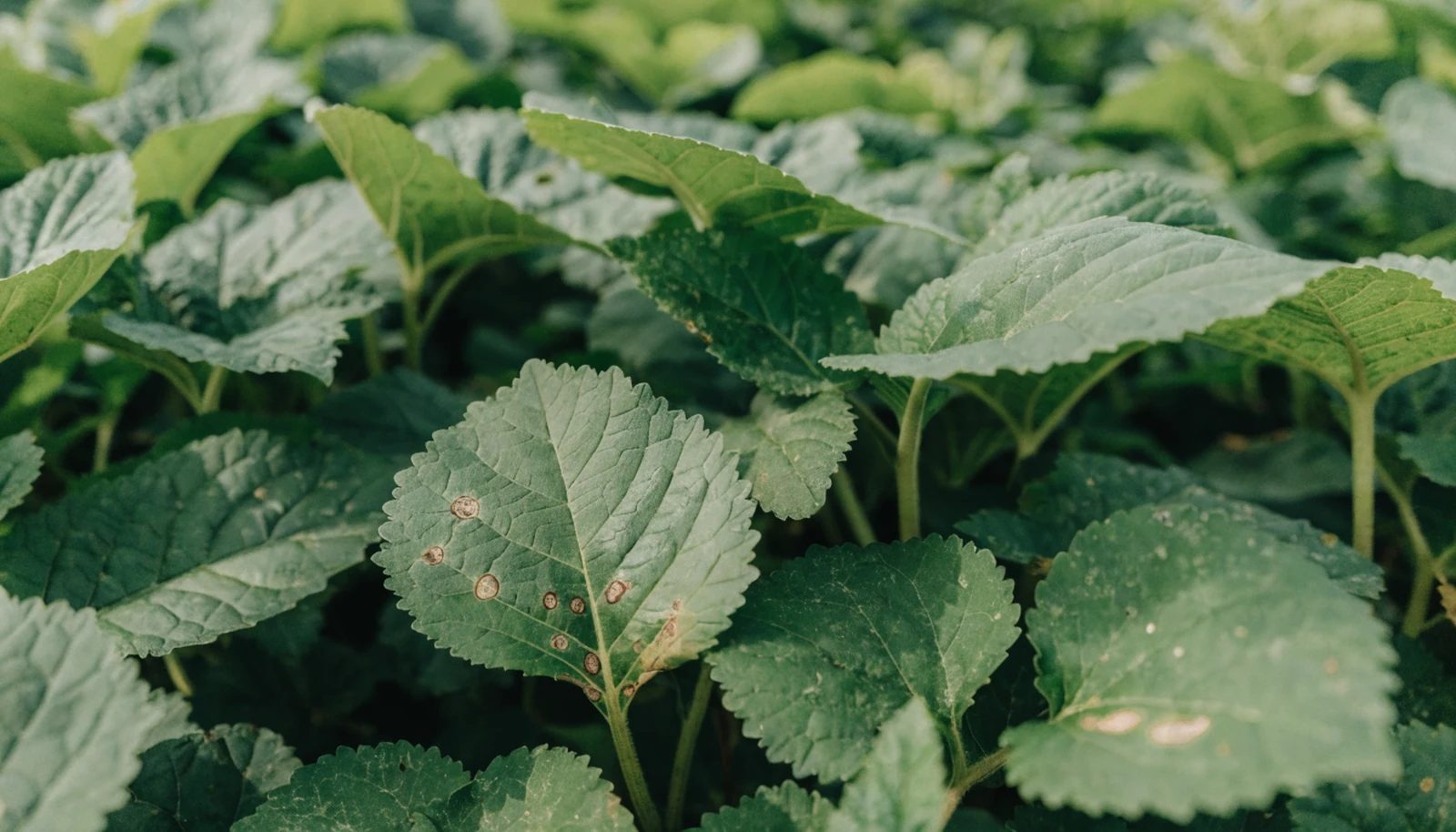
Crops affected
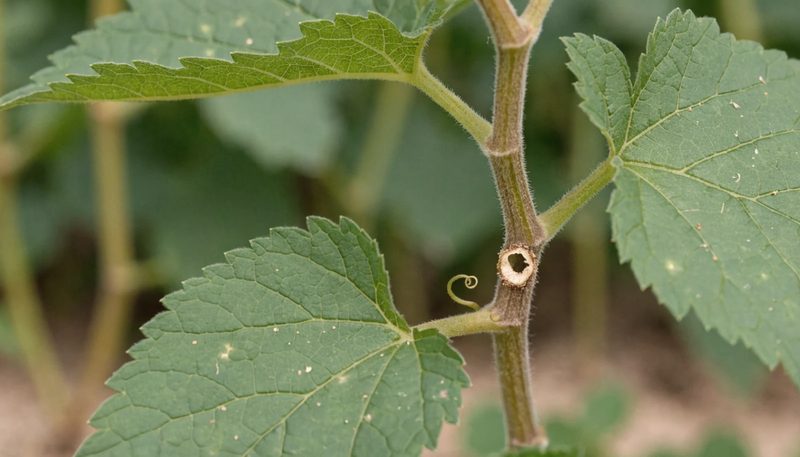
How to identify melonworm & pickleworm
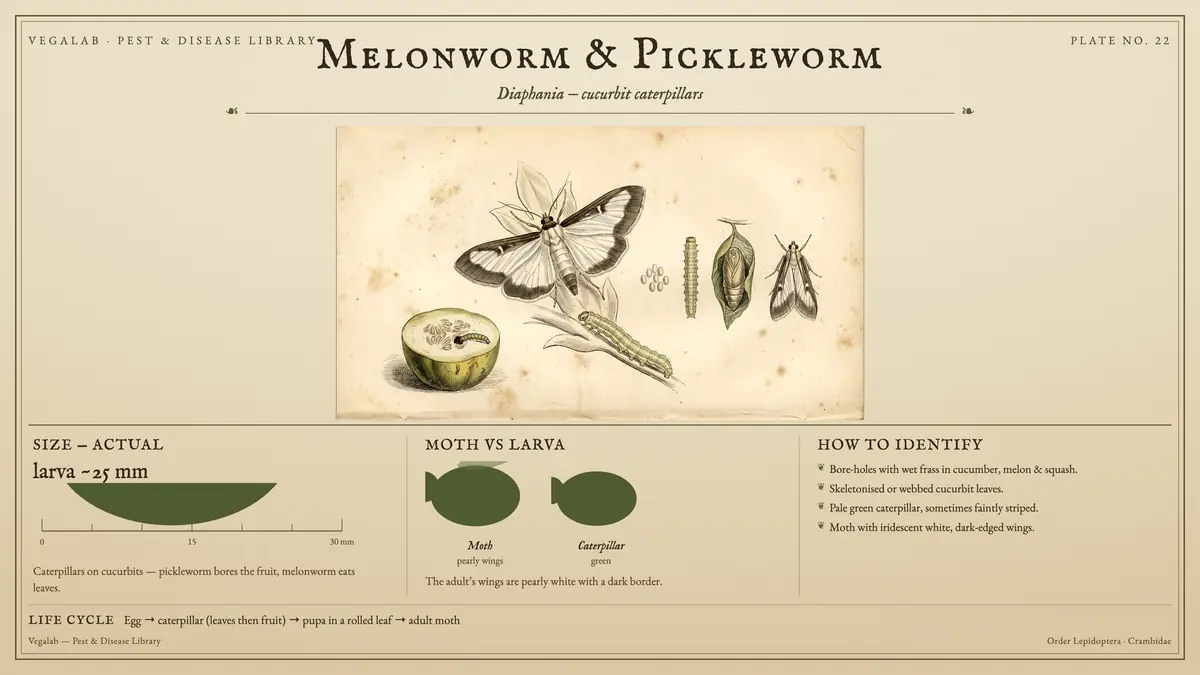
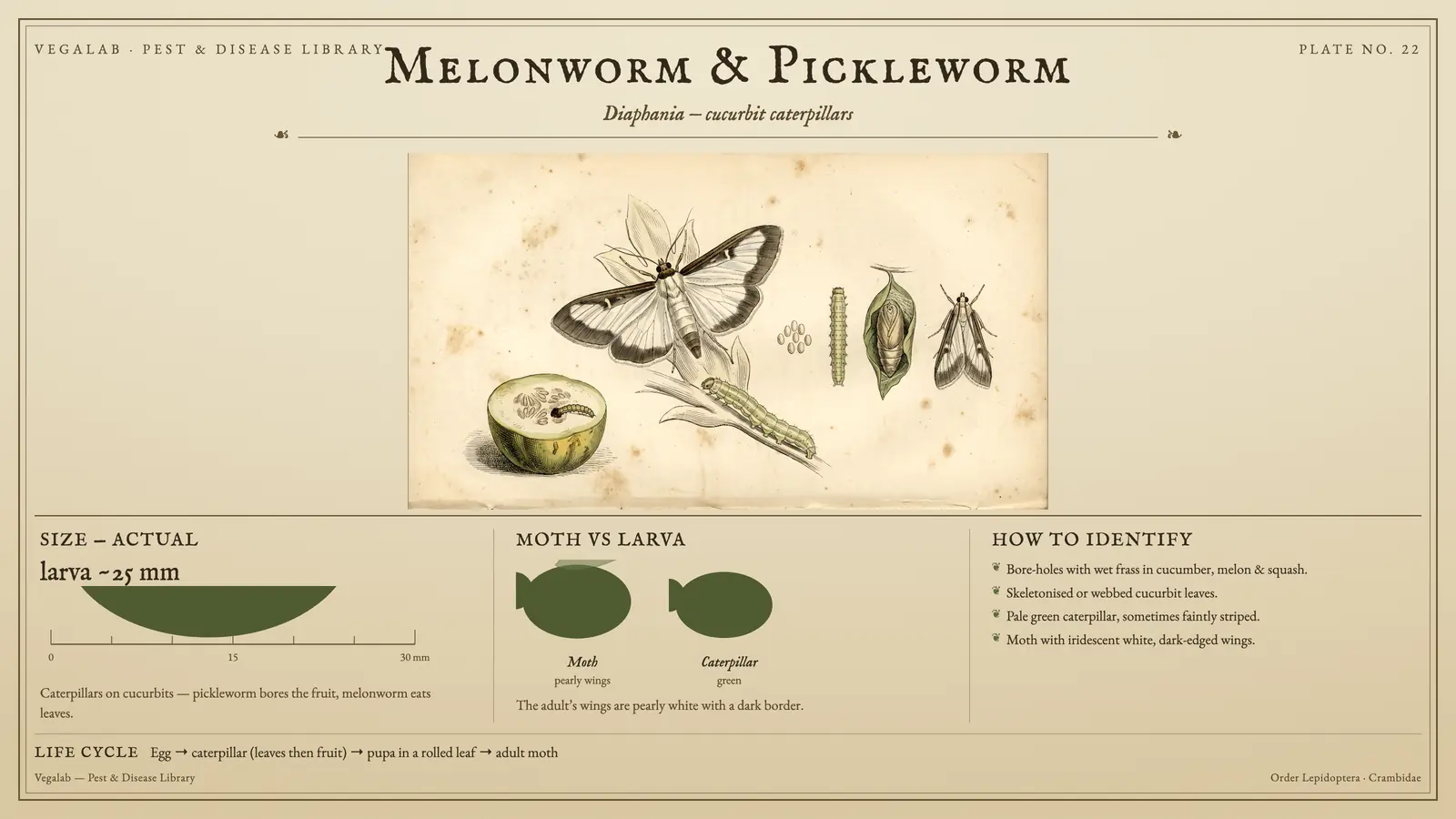
Size. larva ~25 mm Caterpillars on cucurbits - pickleworm bores the fruit, melonworm eats leaves.
Moth and larva. Moth, pearly wings; Caterpillar, green.
- Pale green caterpillar, sometimes faintly striped.
- Moth with iridescent white, dark-edged wings.
What is it?
Diaphania larvae first feed on foliage - webbing and rolling leaves - then bore into developing fruit and shoots. Once inside the fruit they are protected, so early timing on foliar-stage larvae is key.
How to identify it
- Webbed, rolled or folded leaves with larvae and frass inside.
- Entry holes in fruit with frass, internal tunnelling and rot.
- Green larvae with pale longitudinal stripes; rapid feeding on tender growth.
- Damaged shoot tips and scarred, unmarketable fruit.
Life cycle & spread
Moths lay eggs on foliage and fruit; larvae feed on leaves then bore into fruit/stems; multiple overlapping generations occur in warm cucurbit-growing seasons.
Conditions that favour it
Warm conditions and continuous cucurbit cropping sustain pressure; dense canopies shelter larvae.
Damage and how it spreads
Leaf webbing reduces photosynthesis; fruit boring causes direct cullage and rot entry, the main economic loss in cucurbits.
Monitoring & scouting
Scout for webbed leaves and early larvae; check developing fruit for entries; act on foliar-stage larvae before fruit boring.
How to control it
- Target young larvae on foliage before they enter fruit;
- ensure coverage of sheltered, webbed growth;
- sanitation of infested fruit.
How to manage melonworm and pickleworm
- Plant early where the pest migrates in. In regions where populations arrive rather than overwinter, early plantings often escape the peak entirely - this is the single most effective cultural measure and it costs nothing.
- Target small larvae before fruit entry. Once a pickleworm is inside a fruit that fruit is lost, so the programme has to act on eggs and neonates on buds and flowers.
- Treat blooms and fruit, not just foliage, for pickleworm · the placement follows the pest, and a foliage-directed application misses the structures being attacked.
- Use Bt for melonworm, which feeds openly on foliage and is well suited to it; Bt is much less useful against pickleworm because the larva is inside the fruit within hours.
- Harvest frequently and remove infested and cull fruit from the field, which removes larvae before they complete development.
- Destroy crop residue promptly after final harvest, and control volunteer cucurbits.
- Use row covers on early plantings, removing them at flowering for pollination - a practical compromise that protects the vulnerable establishment period.
- Protect natural enemies, particularly parasitic wasps, which take a useful share of larvae.
The two species need different priorities from the same programme: melonworm is a foliage problem best handled with Bt and tolerance, pickleworm is a fruit problem where prevention before entry is the only option.
Melonworm or pickleworm?
- Melonworm larva: slender, pale yellow-green with two thin white stripes running the length of the body; feeds on foliage, skeletonising leaves and leaving veins; enters fruit only late
- Pickleworm larva: plump, whitish to pale green with dark spots in early instars (spots fade later); bores into buds, flowers and fruit with wet frass at the entry
- Damage signature: skeletonised leaves means melonworm; a small hole in a fruit with wet greenish frass means pickleworm
- Practical consequence: melonworm damage is often tolerable on a vigorous crop; pickleworm damage is a direct loss of marketable fruit
Both frequently occur together. Where both are present the programme should be built around pickleworm, since its damage is unrecoverable.
Why late plantings suffer most
In temperate cucurbit production the seasonal pattern of this pest is the reverse of most: risk increases through the season rather than peaking early. Neither Diaphania species survives frost, so in cooler regions each year's population arrives by northward migration from frost-free areas, builds through successive generations, and reaches its peak in late summer and autumn.
That has a straightforward planning consequence. Early plantings frequently mature before significant numbers arrive and may need no treatment at all, while late plantings - particularly autumn squash and cucumber - face the accumulated population and need protection from bud stage onward. Where a grower has flexibility on planting date, shifting the crop earlier is more effective than any input.
In frost-free and tropical production the pest is present year-round and this escape strategy is not available, so continuous management and residue destruction between crops carry the load instead.
Protecting fruit without losing pollination
- Row covers from planting to first flower, then remove for pollination
- Apply late afternoon or evening, after cucurbit flowers have closed
- Prefer Bt for melonworm · effective on foliage feeders and safe for bees
- Avoid persistent broad-spectrum products during flowering entirely
- Check local pollinator-protection requirements, which may be mandatory rather than advisory
Cucurbits present a specific tension: the crop depends on insect pollination, and the measures that keep egg-laying moths off the plant also keep bees off it. Managing that trade-off well is most of the practical skill with this pest.
Row covers exclude Diaphania moths completely and are highly effective during establishment and early vine growth, when the plant is most vulnerable and not yet flowering. They must come off at first flowering, or the crop sets no fruit. That still buys weeks of protection at the stage when a damaged growing point costs most.
Application timing is the other lever. Bees forage in the morning on cucurbits, and cucurbit flowers typically close by midday. Applying in the late afternoon or evening - which also suits the pest, since larvae are active then and UV degradation is lower - largely avoids overlap with foraging. Products with short residual and low bee toxicity, applied outside foraging hours, are compatible with pollination in a way that a mid-morning application of a persistent broad-spectrum product is not.
Bt deserves specific mention here: it affects only Lepidoptera larvae and is not toxic to bees, which makes it the most pollinator-compatible option for melonworm.
Poor fruit set from lost pollination can cost more than the borer would have. Any programme in a flowering cucurbit crop has to be judged on both counts.
Recommended Vegalab solution: Larva Control
Larva Control · natural broad-spectrum larvicide (oxymatrine) applied at early-instar stage to foliage and developing fruit zones, before larvae bore into the fruit.
| Role | Product | Use |
|---|---|---|
| Primary control | Larva Control |
By crop
Preventing it next season
Early scouting, prompt treatment of foliar-stage larvae, canopy management, and sanitation of infested fruit.
Claims and product availability vary by jurisdiction. Always read and follow the product label.