

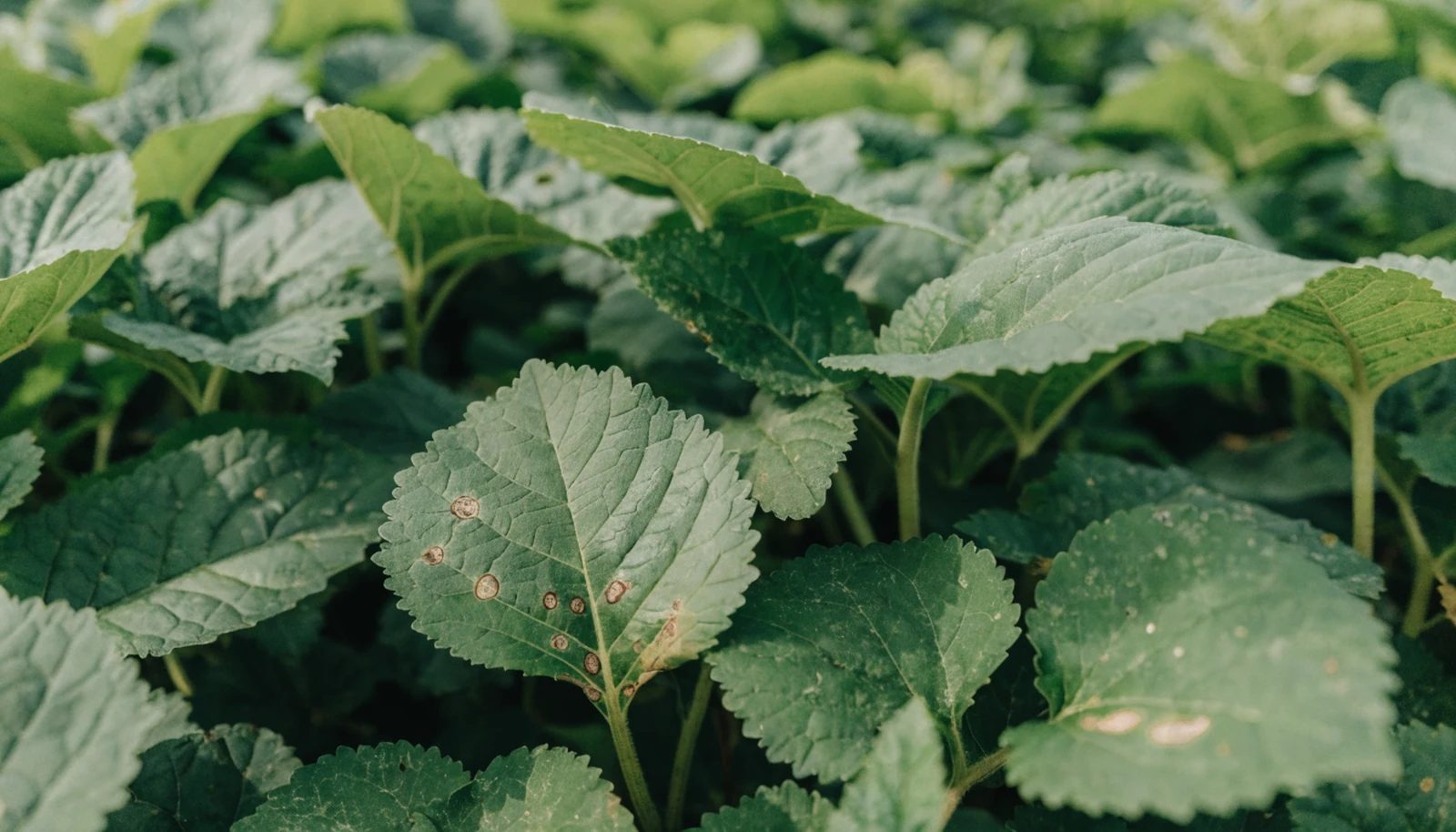
Crops affected
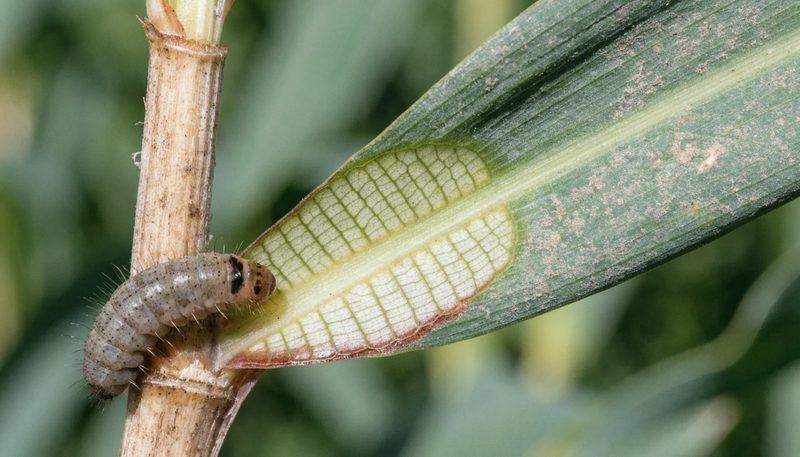
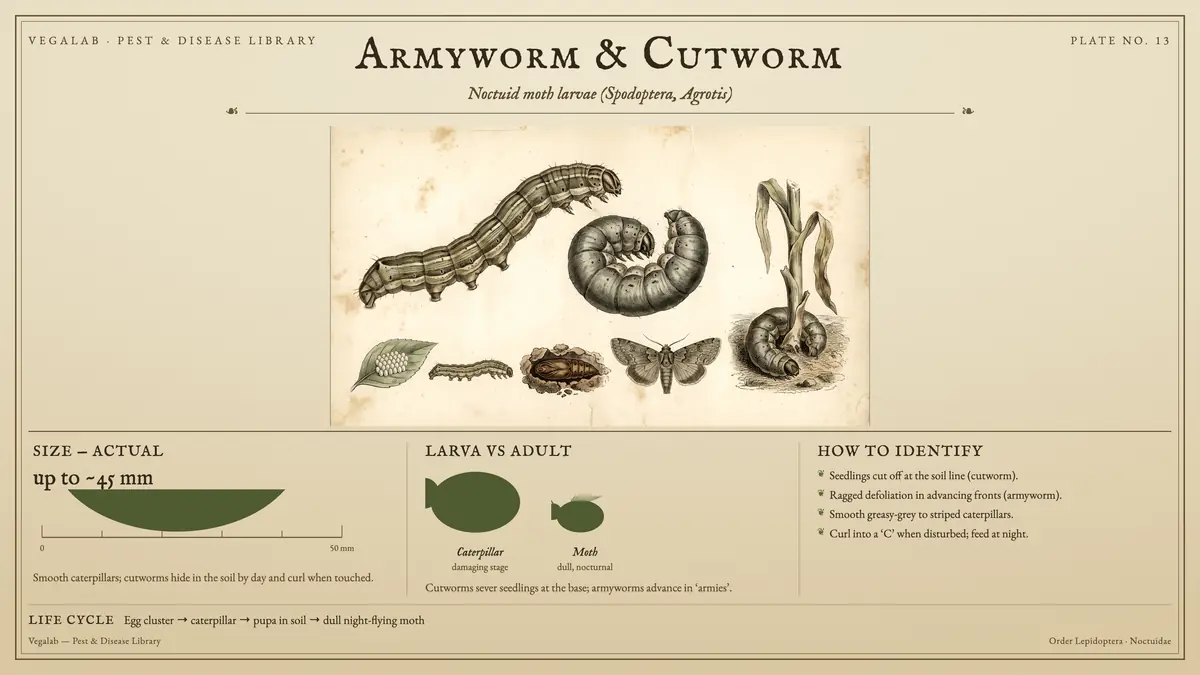
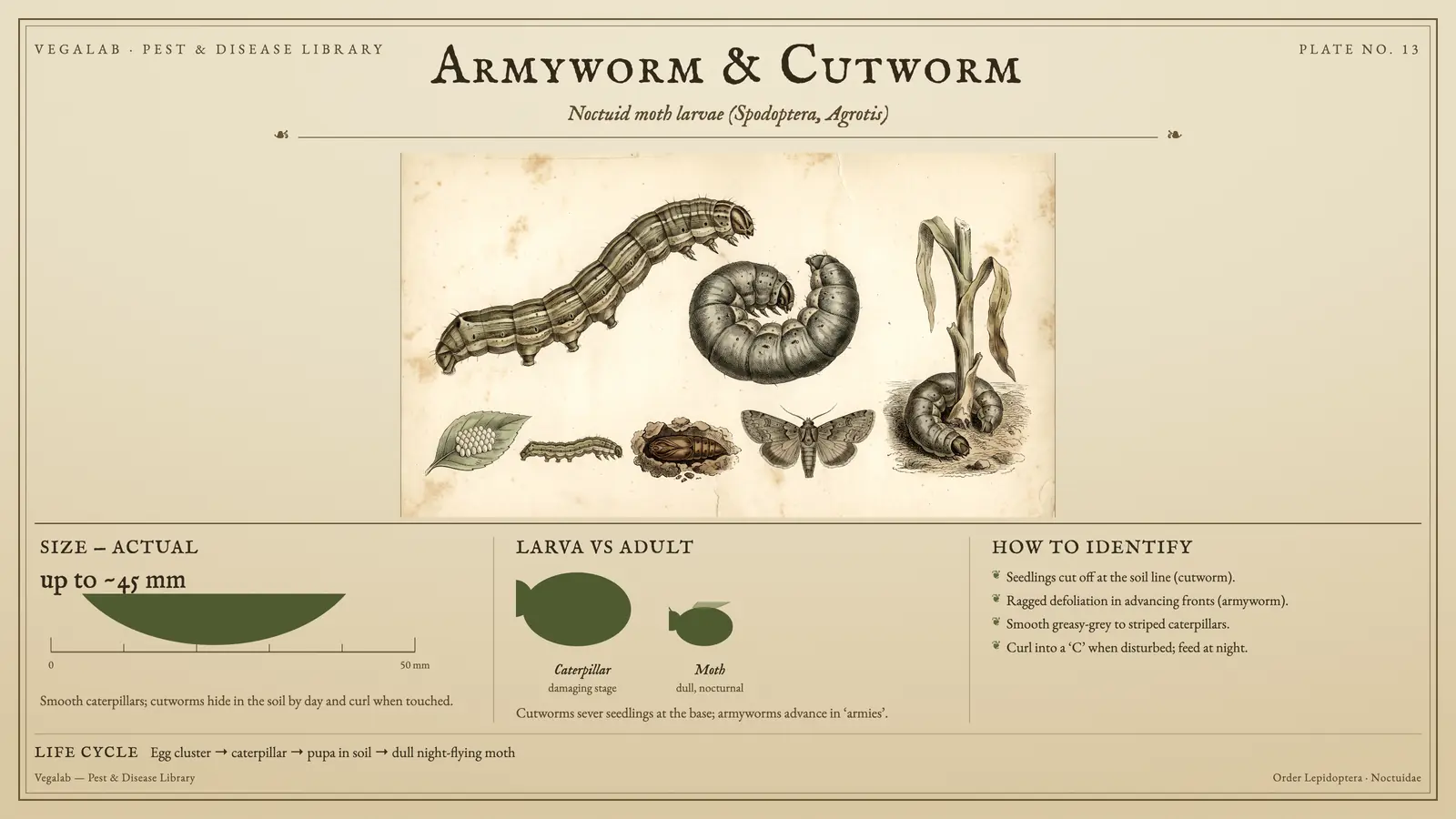
How to identify armyworm & cutworm
Size. up to ~45 mm Smooth caterpillars; cutworms hide in the soil by day and curl when touched.
Larva and adult. Caterpillar, damaging stage; Moth, dull, nocturnal.
- Ragged defoliation in advancing fronts (armyworm).
- Smooth greasy-grey to striped caterpillars.
- Curl into a ‘C’ when disturbed; feed at night.
Life cycle. Egg cluster → caterpillar → pupa in soil → dull night-flying moth
What is it?
Armyworms (Spodoptera and relatives) feed gregariously on foliage and can strip a crop in days; cutworms (Agrotis) feed at night and cut seedlings off at the base. Both are moth larvae whose populations can erupt after migratory moth flights.
How to identify it
- Seedlings cut off at the soil line
- Ragged, rapid defoliation in patches
- Larvae hiding in soil/debris by day
- Frass near damaged plants
Life cycle & spread
Moths migrate and lay egg masses; larvae develop over 2-4 weeks, then pupate in the soil. Several generations occur per season, and outbreaks often follow weather that concentrates moth flights.
Conditions that favour it
Outbreaks follow heavy moth flights, mild wet springs (cutworm) and lush early growth. Weedy fields and debris give larvae shelter.
Damage and how it spreads
Armyworms cause rapid defoliation; cutworms cause stand loss by severing seedlings - both can happen overnight, sometimes requiring replanting.
Monitoring & scouting
Scout at dusk or early morning; check soil and debris near cut plants; use pheromone traps for moth flights. Target early instars before they disperse.
How to control it
- Treat early instars promptly;
- address both the foliar and soil stages where present;
- keep field margins and debris clean to reduce shelter.
How to get rid of armyworms and cutworms
- Scout at the right time of day. Armyworms are found in the canopy at dawn and dusk; cutworms are found by scratching the soil around a damaged plant, not by looking at the plant.
- Treat small larvae. This is the single biggest determinant of success. Larvae in the first three instars are far easier to control than late instars, and most of the crop damage is done by the last two instars - so waiting costs twice.
- Time applications to the evening. Both pests feed at night, and many of the products used degrade in sunlight.
- Direct the application where the pest is. For cutworms that means a soil-surface and stem-base placement with enough water volume to reach it; a canopy spray largely misses them.
- Control weeds pre-plant and manage residue. Weedy and trashy fields attract egg-laying moths, and a green bridge carries larvae into an emerging crop.
- Use pheromone traps to time the programme. Traps catch the moths before the larvae exist, which is the warning you actually want.
- Protect the natural enemies. Parasitic wasps and predatory beetles suppress a great deal of the population; a broad-spectrum application that removes them tends to be followed by a worse second flight.
Both are caterpillars, but they behave differently enough that the same programme rarely suits both. Armyworms feed on foliage, often in visible numbers, and move through a crop as a front. Cutworms feed at night at the soil line and hide in the top few centimetres of soil by day, so the first sign is usually seedlings cut off at the base with no insect in sight.
Fall armyworm, beet armyworm and true armyworm
The species matter for crop and severity. Fall armyworm (Spodoptera frugiperda) is the most damaging globally, feeds down into the whorl of maize where sprays struggle to reach, and has spread across Africa and Asia since 2016 with documented resistance to several insecticide groups. Beet armyworm (S. exigua) is a warm-climate pest of vegetables and cotton. True armyworm (Mythimna unipuncta) attacks cereals and grasses in outbreak years.
Among cutworms, black cutworm (Agrotis ipsilon) is the one that cuts seedlings at the base in row crops; variegated and dingy cutworms are more often climbing, foliage-feeding species. If seedlings are being severed at the soil line, treat for black cutworm behaviour regardless of the exact identification.
Whorl-feeding fall armyworm in maize is the hardest placement problem of the group: the larva sits in a protected funnel. High water volume directed into the whorl is what makes a difference.
Bt, neem and what each reaches
- Bt: must be ingested; small larvae only; short residual; no soil activity
- Neem / azadirachtin: antifeedant and moult disruption; short residual; needs contact with the larva
- Pheromone trapping: monitoring and timing, not control
- Cultivation and weed control: reduces egg-laying sites and destroys pupae - one of the few measures reaching that stage
Bacillus thuringiensis is the most-used biological for caterpillars and it is genuinely effective within its limits: the larva must eat treated tissue, the toxin then stops it feeding, and death follows over one to three days - so the crop keeps its leaves but the insects do not disappear on contact. It works best on small larvae, has no activity on eggs or pupae, degrades in sunlight within a couple of days, and does nothing to a cutworm hiding in soil that never eats the treated leaf.
Neem's azadirachtin acts as an antifeedant and growth regulator rather than a knock-down, so it too suits small larvae and repeated application. Neither reaches the pupal stage in the soil, which is why cultural measures - cultivation, weed control, residue management - carry more of the load against these pests than against a foliar-only pest.
Recommended Vegalab solution: Larva Control
Vegalab Larva Control · Larva Control (oxymatrine), targeting young larvae at dusk before they grow and disperse; repeat on the label interval through the generation.
Observed results: Larva Control (oxymatrine) has been university-evaluated against beet armyworm (Spodoptera exigua), and field-trialled against caterpillar pests versus conventional standards.
| Role | Product | Use |
|---|---|---|
| Primary control | Larva Control | |
| Also apply | Larva BioControl |
By crop
Preventing it next season
Early scouting after moth flights, clean field margins and debris, and prompt treatment of early instars before stand loss.
Claims and product availability vary by jurisdiction. Always read and follow the product label.