

Crops affected
How to identify brown spot & cork spot
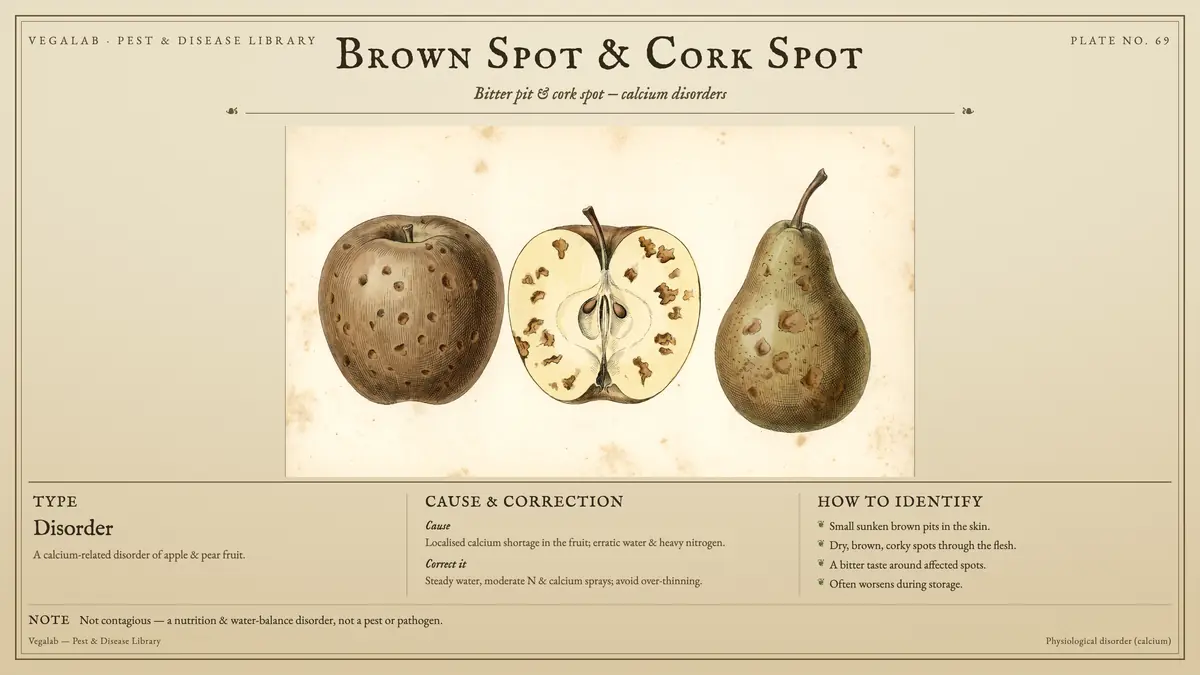
- A bitter taste around affected spots.
What is it?
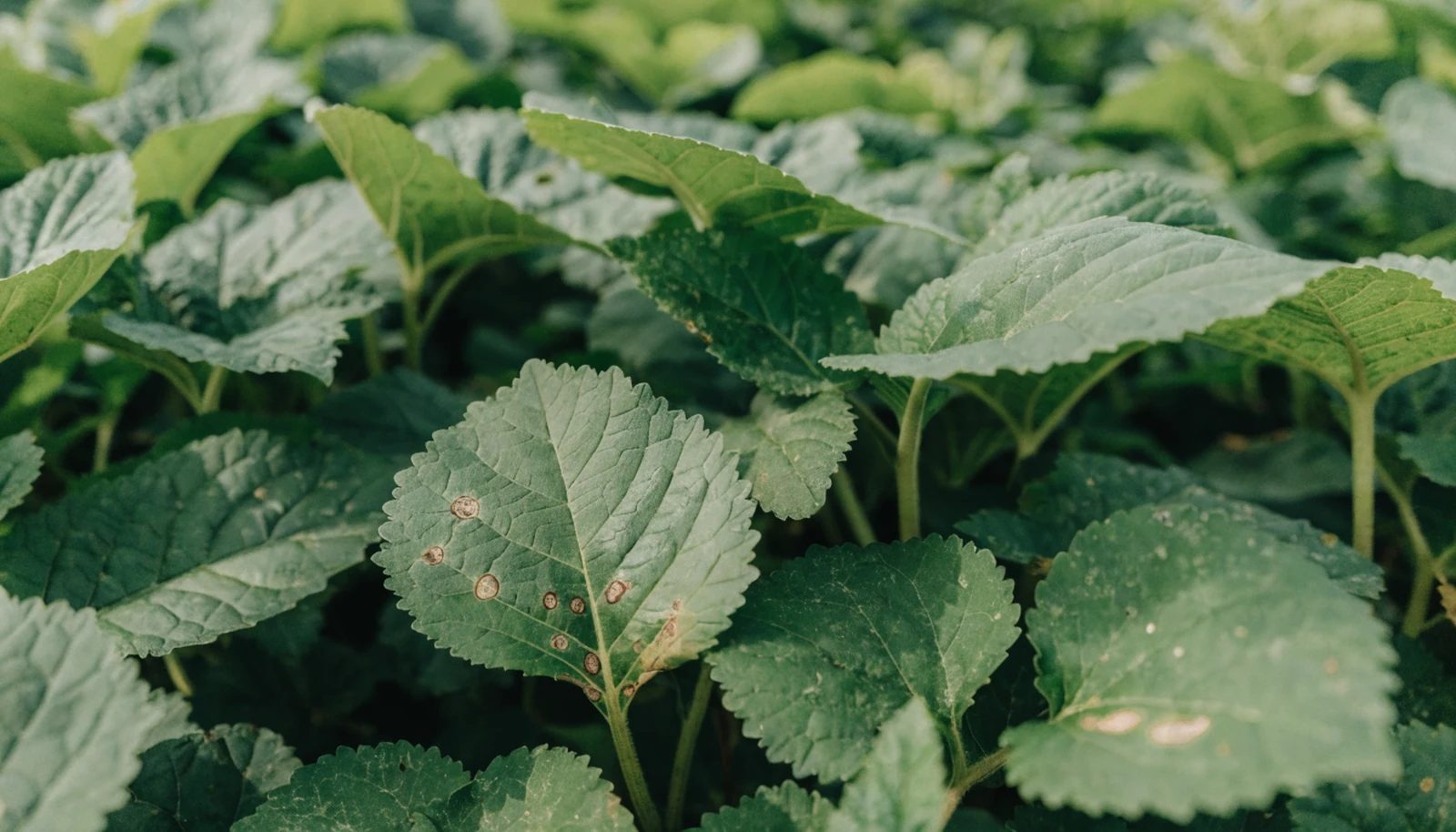
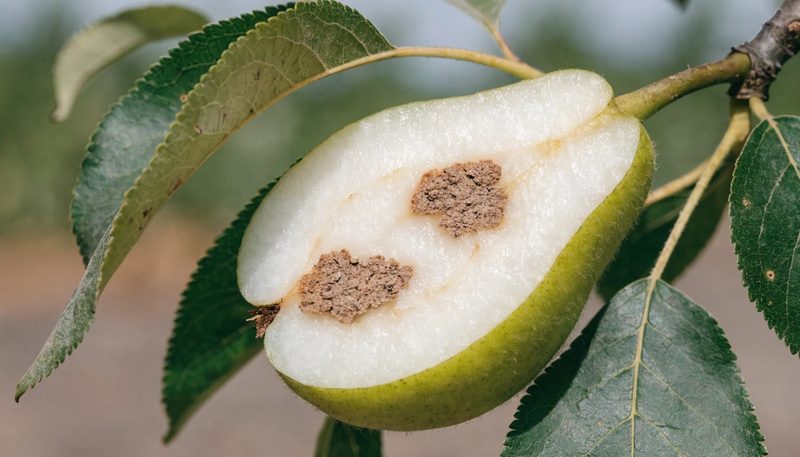
Brown spot generally refers to pathogen-caused spotting (fungal or bacterial, depending on crop) that produces brown lesions on leaves and fruit, favored by warm, wet conditions. Cork spot, by contrast, is a physiological disorder linked to calcium imbalance in the fruit (common in pears and apples), producing hard, corky, sunken areas in the flesh - not caused by an organism.
How to identify it
- Brown spot: brown lesions on leaves and fruit, often spreading in warm, wet weather
- Cork spot: hard, corky, brown, sunken areas in the fruit flesh, often without surface rot
- Cork spot tends to follow calcium imbalance and uneven growing conditions
- Brown spot tends to follow wet weather and shows on foliage as well as fruit
Conditions that favour it
Brown spot and cork spot are localised tissue disorders of fruit, closely related to bitter pit, arising from calcium and boron imbalance in developing fruit rather than from any pathogen. Affected cells die and the surrounding tissue becomes corky, producing sunken brown or corky areas in the flesh and under the skin.
The mechanism is the same transport problem that produces bitter pit: calcium moves only in the xylem with the transpiration stream and is not re-translocated, so rapidly expanding fruit tissue with low transpiration receives little. Boron interacts with calcium in cell wall structure, and boron imbalance - deficiency or excess - produces similar corky breakdown.
Risk factors follow from that: large fruit, light crop loads producing rapid fruit growth, vigorous vegetative growth competing for calcium, irrigation fluctuation, and high potassium, magnesium or nitrogen antagonising calcium uptake. Symptoms frequently develop or worsen in storage, so the disorder is often discovered after the crop has been packed.
Damage and how it spreads
Both downgrade fruit, but for different reasons: brown-spot pathogens spread and recur in wet conditions, while cork spot reflects how calcium is moving (or not) into the fruit. Treating cork spot like a disease - or brown spot like a nutrient problem - wastes effort, so correct diagnosis is the first priority.
Monitoring & scouting
Assess **risk factors before harvest** rather than waiting for symptoms: crop load, fruit size, vigour, and calcium, boron and potassium status in fruit and leaf analysis.
Cut a representative fruit sample at harvest and again after a period of storage, since much of the expression is post-harvest and a clean assessment at picking is not conclusive.
Track the disorder by block, cultivar, crop load and fruit size band across seasons, since it recurs in predictable combinations and that record is the basis for prevention.
How to control it
- Confirm which problem you have - pathogen (brown spot) vs calcium disorder (cork spot).
- For brown spot: improve airflow, avoid leaf wetness, sanitize debris, and protect in wet weather.
- For cork spot: stabilize watering and correct calcium availability through the season.
- Keep overall plant health and nutrition balanced.
How to reduce brown spot and cork spot
- Manage crop load. Light crops produce large, fast-growing fruit that dilute calcium and are markedly more affected. Adequate cropping is a prevention measure, which is counter-intuitive but well established.
- Control vegetative vigour. Shoot tips compete with fruit for calcium, so excessive vigour - from heavy nitrogen or hard pruning - increases the disorder. Moderating nitrogen and pruning is a direct lever.
- Keep irrigation consistent, since calcium delivery depends on a steady transpiration stream.
- Moderate potassium and magnesium, which antagonise calcium uptake; a fruit-quality potassium programme can produce a calcium-related disorder.
- Apply calcium through fruit development where a programme is warranted, timed across the season rather than as a single late application - because calcium is not re-translocated, it must land on the fruit while the tissue is developing.
- Manage boron carefully. Both deficiency and excess produce corky breakdown, and the margin is narrow - apply on the basis of analysis, not routinely.
- Choose less susceptible cultivars where the disorder is chronic; susceptibility varies substantially.
- Harvest at the right maturity and store correctly, since much of the expression is post-harvest and storage conditions influence it.
As with bitter pit, the fruit most at risk is the fruit that looks best - large, from a lightly cropped vigorous tree. Managing that combination is the prevention.
Distinguishing it from disease and injury
- Cork spot / brown spot: sunken, corky, brown areas in the flesh and beneath the skin, often in the outer third of the fruit; no pathogen present; frequently develops in storage; associated with large fruit on vigorous lightly cropped trees
- Bitter pit: essentially the same disorder expressed as small distinct sunken dark pits, usually towards the calyx end; see Calcium Deficiency (Tip Burn)
- Brown rot and other fungal rots: a spreading soft or firm rot with a defined advancing margin and, in most cases, visible surface sporulation. See Brown Rot of Stone Fruit.
- Bacterial spot: surface lesions that are angular and water-soaked in origin, sometimes cracking; associated with wet windy weather
- Insect feeding (lygus, stink bug): small corky spots or dimples with a feeding puncture at the centre, often with a slight surface depression. See Lygus & Plant Bugs.
- Hail or handling bruise: a datable event, distributed by exposure, with subsurface bruising rather than corky tissue
- Internal breakdown and chilling injury: storage disorders distributed by storage temperature and duration rather than by fruit size and vigour
The absence of any pathogen, combined with the large-fruit and low-crop-load pattern, is what identifies this as a physiological disorder. A puncture at the centre of each spot points to an insect instead.
Why it shows up in storage
One of the more frustrating features of this group of disorders is that a crop can be assessed as sound at harvest and develop significant brown spot or cork spot in storage weeks later. The reason lies in when the damage is actually done.
The calcium shortfall in the affected tissue occurs during fruit development, months before harvest. At that point cells are already compromised but not yet visibly broken down. The tissue holds together while the fruit is on the tree and through picking, and the breakdown becomes visible as the fruit senesces - which for a stored crop means during storage rather than at harvest.
This has three practical consequences. First, a clean assessment at harvest is not a clearance for a crop from a high-risk block, and cutting a sample after a period of storage gives a much better prediction. Second, the decisions that prevent it were made during the season - crop load, vigour, nutrition, irrigation - so a storage problem is a growing-season record, not a storage failure. Third, high-risk fruit should be marketed early rather than committed to long-term storage, which is a commercially useful thing to know in advance.
Storage conditions do modulate expression, so correct temperature and atmosphere management matter, but they cannot prevent a disorder that was set in the orchard.
Keeping records by block, cultivar, crop load and fruit size lets you predict which fruit should go to long storage and which should be sold promptly - often the most valuable output of understanding this disorder.
Recommended Vegalab solution: Spore Control
For pathogen-driven brown spot, Vegalab Spore Control (Thymol) provides broad-spectrum protective action - apply at first sign and during wet weather. For cork spot, which is a calcium-availability disorder, the answer is nutritional: Calcium Boost makes calcium readily available to the fruit. Diagnose first, then match the product to the actual cause.
| Role | Product | Use |
|---|---|---|
| Primary control | Spore Control | Broad-spectrum protective fungicide |
| Companion / broader pressure | Calcium Boost | Soluble calcium correction |
Preventing it next season
Keep watering even and calcium available through the fruiting period to prevent cork spot; manage airflow, sanitation, and wet-weather protection to prevent brown spot. Calcium Boost supports steady calcium nutrition.
Claims and product availability vary by jurisdiction. Always read and follow the product label.