

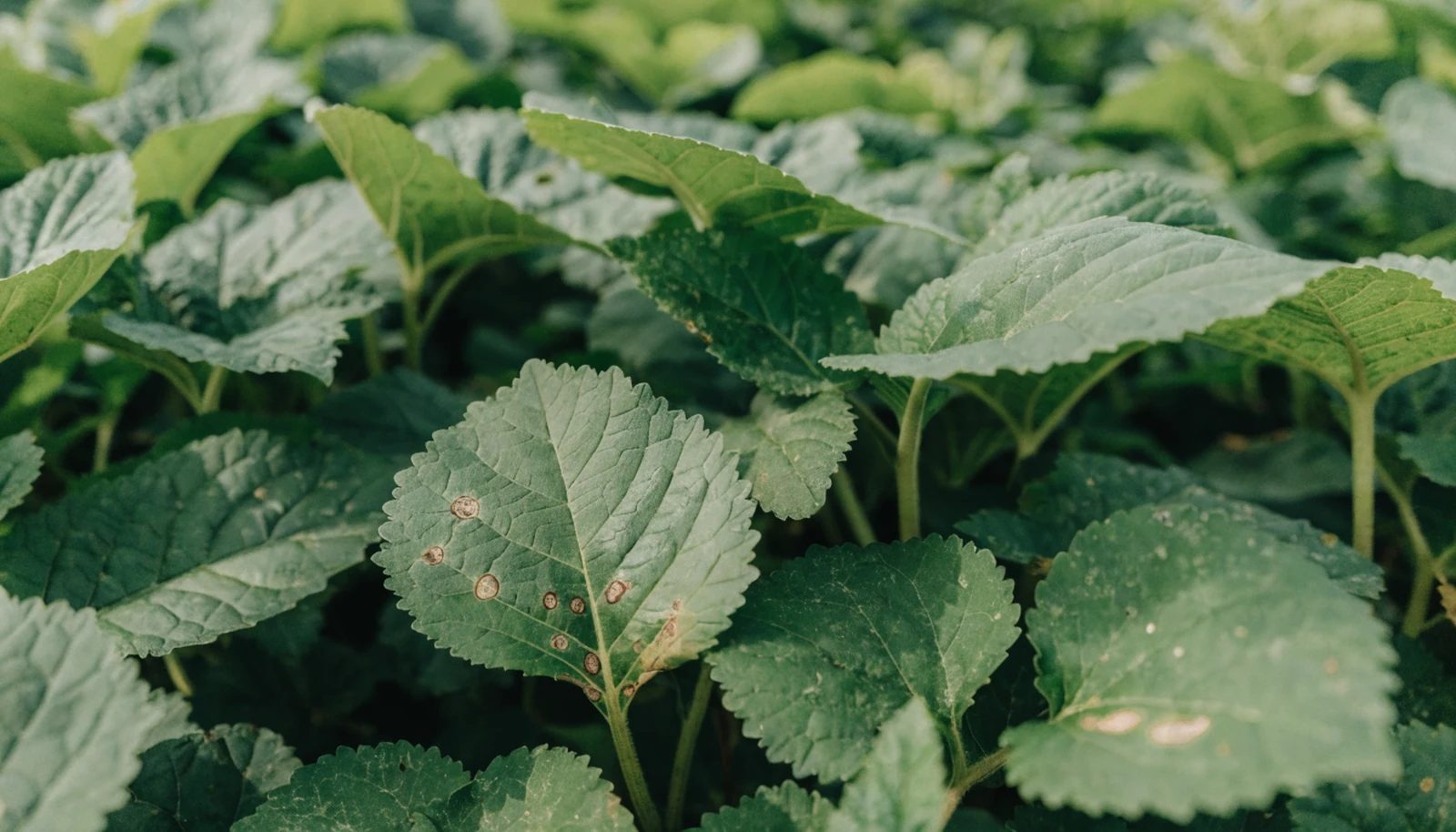
Crops affected
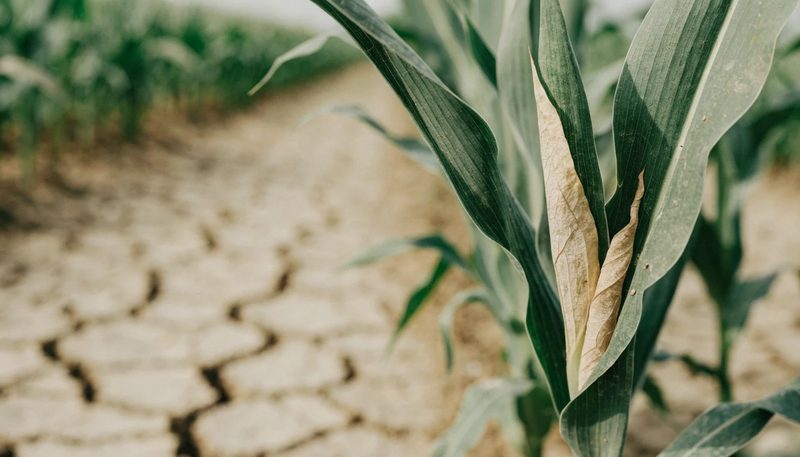
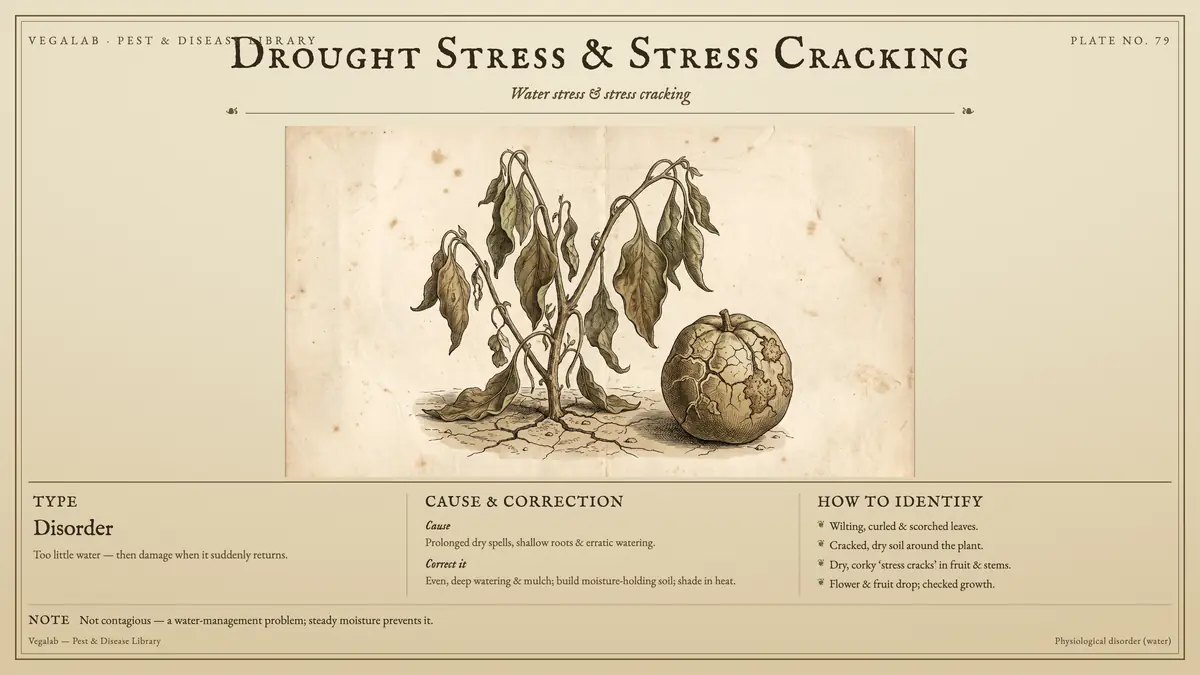
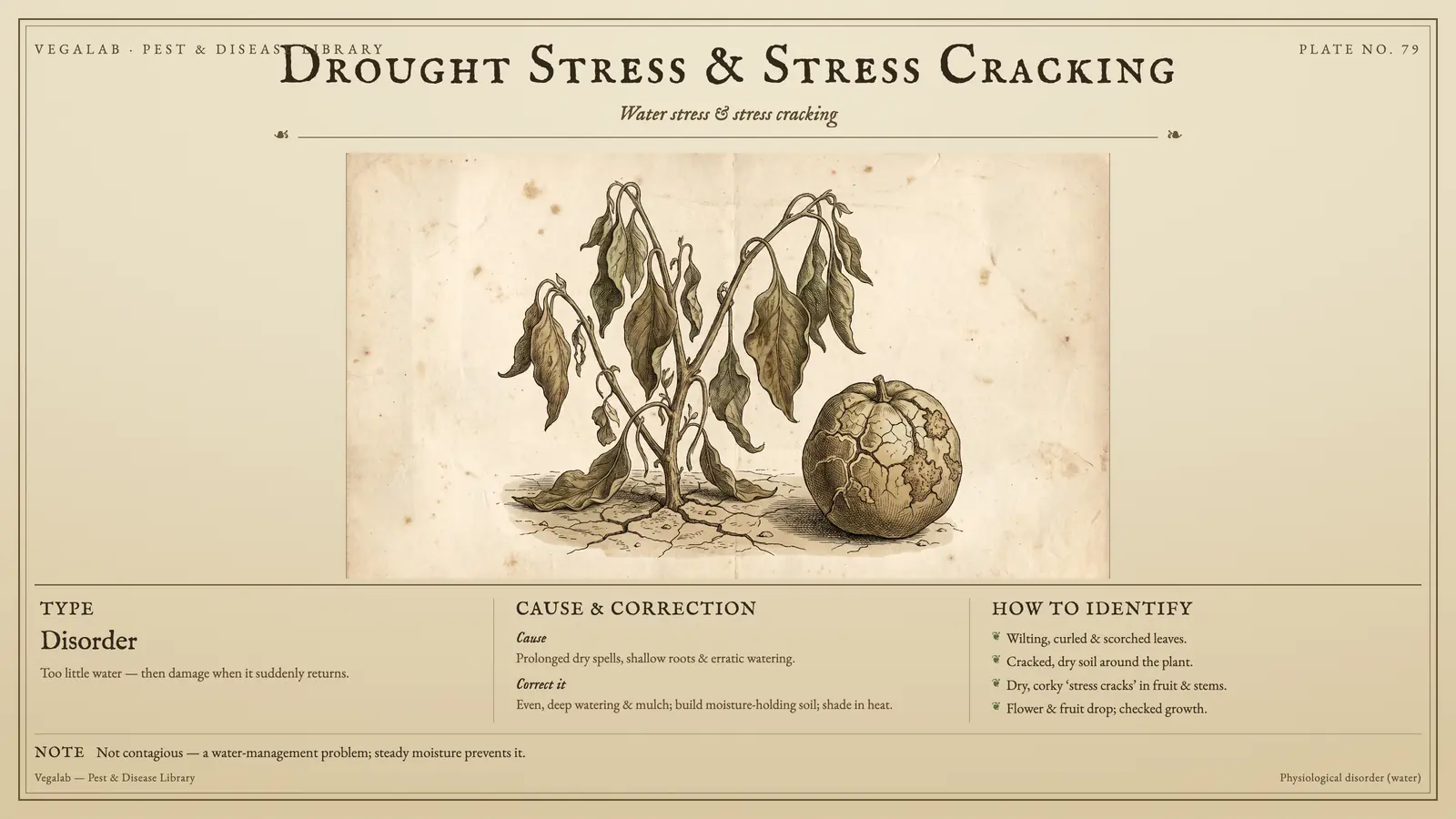
How to identify drought stress & stress cracking
- Cracked, dry soil around the plant.
- Dry, corky ‘stress cracks’ in fruit & stems.
What is it?
Drought stress occurs when water loss outpaces uptake, so the plant wilts, closes its pores, and stops growing to conserve water. Prolonged or repeated stress damages tissue, drops flowers and fruit, and - when followed by a sudden water surge - causes cracking. Cell-wall strength, root depth, and steady moisture all influence how well a plant copes.
How to identify it
- Wilting in the heat of the day, scorched or curled leaf margins
- Flower and fruit drop and slowed growth during dry, hot spells
- Cracking or splitting of fruit when water returns after stress
- Faster recovery in well-rooted, resilient plants
Conditions that favour it
Drought stress is a progression rather than an event, and recognising the stages matters because the responses differ. Mild stress closes stomata, which reduces transpiration and therefore photosynthesis - the plant stops growing before it shows any visible symptom, and this invisible phase is where most yield is quietly lost.
Continued stress causes leaf rolling and wilting, then reduced cell expansion so leaves and fruit are permanently smaller, then abscission of flowers and young fruit as the plant sheds sinks it cannot support. Severe stress produces marginal necrosis, defoliation and, ultimately, death of tissue and plant.
The cracking element comes from the **recovery**, not the drought. A plant that has been water-stressed has often hardened its fruit skin and slowed its growth; when water returns suddenly, rapid uptake and resumed expansion split the skin or the root. So stress cracking is a consequence of the dry-then-wet cycle, and the cycle is more damaging than either condition alone.
Damage and how it spreads
Drought stress reduces growth, yield, and quality, drops flowers and fruit, and the dry-then-wet swing causes cracking that opens fruit to rot. Because the underlying issue is water balance and tissue resilience, the most effective response combines steady moisture management with building stronger, more drought-tolerant plants.
Monitoring & scouting
Monitor soil moisture directly with probes or tensiometers rather than relying on visual symptoms, since the yield-losing phase of stress occurs before anything is visible.
Watch the crop at midday for early leaf rolling and loss of turgor, and compare with early morning - recovery overnight indicates moderate stress, failure to recover indicates severe stress.
Track the **pattern of change** rather than absolute moisture, because it is the fluctuation that causes cracking, abscission and quality defects.
How to control it
- Mulch and manage irrigation to keep soil moisture as steady as possible.
- Build deep, strong roots so plants reach more water.
- Strengthen cell integrity to resist stress and cracking.
- Avoid sudden heavy watering after drought, which triggers cracking.
How to manage water stress and the cracking that follows recovery
- Measure rather than estimate. Soil moisture probes, tensiometers or a simple auger check remove the guesswork, and they detect the stress phase that costs yield without showing symptoms.
- Irrigate to avoid the cycle, not just the drought. The damage comes from swings, so smaller more frequent applications through sensitive periods do more than larger less frequent ones.
- Rewet gradually after a dry period. Where a crop has been stressed, resuming full irrigation abruptly is what splits fruit and roots. Increasing over several irrigations reduces the shock.
- Know the sensitive stages. Flowering, pollination, early fruit set and grain fill are the periods when stress does disproportionate and unrecoverable damage. Protecting those windows matters more than season-long uniformity.
- Mulch to reduce evaporative loss and buffer soil moisture and temperature.
- Improve soil water-holding capacity through organic matter, and relieve compaction so roots can access the water that is there - a compacted soil produces drought stress in a wet field.
- Support root system depth and health, since drought tolerance is largely a function of how much soil volume the roots can exploit.
- Manage crop load in a season of restricted water; a reduced load matched to available water yields better than a full load under stress.
- Use shade or protective structures in extreme heat where the crop and economics justify it.
The costliest phase of drought stress is the one you cannot see. By the time leaves roll, photosynthesis has already been reduced for some time.
Distinguishing drought stress from the problems that mimic it
- Drought stress: soil is genuinely dry when checked at root depth; wilting worst in the afternoon with recovery overnight; improves after irrigation; distributed by soil type and topography
- **Root rot / Phytophthora: wilting in wet soil; roots brown and rotted; gets worse after irrigation** · the single most useful distinction in this list
- **Vascular wilt (Verticillium, Fusarium):** wilting on adequate moisture, often one-sided; brown vascular staining inside the cut stem; no recovery
- Nematode damage: midday wilting on adequate moisture, patchy and recurring annually, with poor response to both water and fertiliser
- Compaction: wilting in a field with moisture present but roots confined to a shallow layer; follows machinery patterns
- Salinity: wilting and marginal scorch with adequate soil water - the water is present but osmotically unavailable; check EC
- Stem or crown damage: sudden wilting of one branch or the whole plant from girdling, borers or mechanical injury
Wilting is not diagnostic of dry soil, and treating every wilt with irrigation makes several problems worse - sometimes dramatically.
The test that separates most of these is whether irrigation helps. If watering makes it worse, suspect root disease. If the soil is wet and the plant wilts, suspect roots, vascular disease or salinity. See Phytophthora, Verticillium & Fusarium Wilt and Salt & pH Soil Imbalance.
Deficit irrigation: using stress deliberately
Not all water stress is a problem to be eliminated. In several crops, controlled mild stress applied at a specific growth stage improves quality, and understanding this is what separates precise irrigation management from simply keeping everything wet.
Regulated deficit irrigation applies less water than full demand during a period when the crop is relatively insensitive - typically after fruit set and before final swell in stone fruit and vines. The plant slows vegetative growth, which reduces canopy management costs, while fruit development continues. In winegrapes, controlled deficit is fundamental to fruit composition: it limits berry size, concentrating sugars, colour and phenolics.
Partial rootzone drying alternates irrigation between sides of the root system, keeping part of the roots wet and part drying. The drying roots signal the plant to moderate vegetative vigour and stomatal behaviour while the wet roots supply water, giving quality benefits with less total water.
Two cautions matter. The technique requires measurement · deficit without monitoring is simply drought, and the margin between beneficial and damaging is narrow. And the stage matters absolutely: the same deficit applied during flowering, pollination, early fruit set or grain fill causes unrecoverable loss rather than quality gain.
So deliberate stress is a tool of precise irrigation, not a licence to under-water. The pre-condition is knowing both the crop's sensitive stages and the actual soil moisture status.
See Poor Fruit Color & Low Brix, where controlled water management is one of the main levers on fruit composition.
Recommended Vegalab solution: Cellular Boost
Vegalab Cellular Boost supports cell integrity and is formulated to prevent drought-induced cracking in fruits and vegetables · the direct tool against stress cracking. Kelp Boost and Vita Boost (kelp extracts with amino acids) support plant resilience under stress, and Root Boost builds deeper roots that reach more water. Combine with steady moisture management.
| Role | Product | Use |
|---|---|---|
| Primary correction | Cellular Boost | Cell integrity / anti-cracking |
| Companion / broader pressure | Kelp Boost | Microbial food / stress support |
| Plant support | Root Boost | Root development / establishment |
Preventing it next season
Mulch, irrigate steadily, build deep roots with Root Boost, and strengthen tissue with Cellular Boost and Kelp Boost ahead of heat. Avoid sudden heavy watering after dry spells to prevent cracking.
Claims and product availability vary by jurisdiction. Always read and follow the product label.