

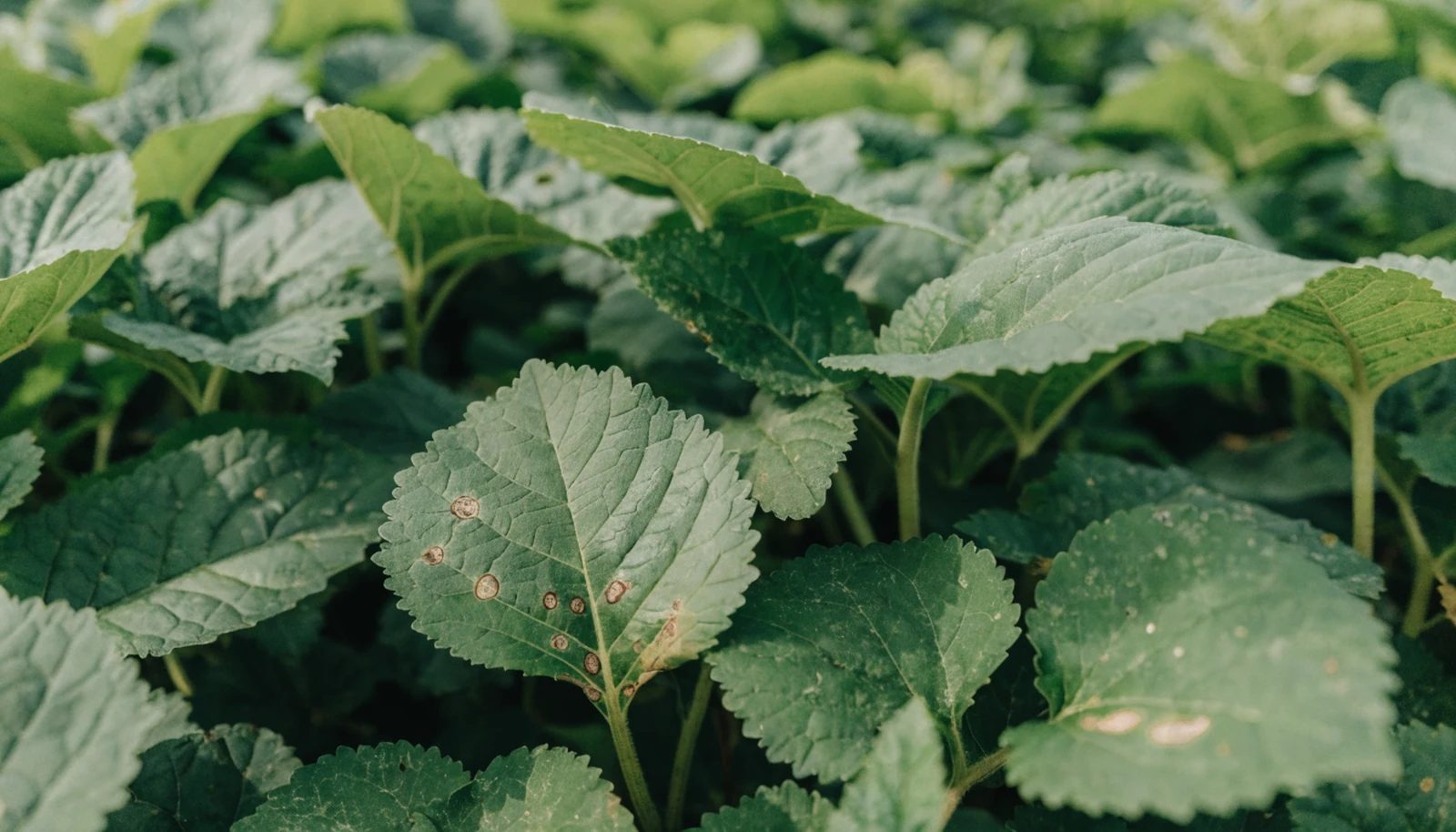
Crops affected
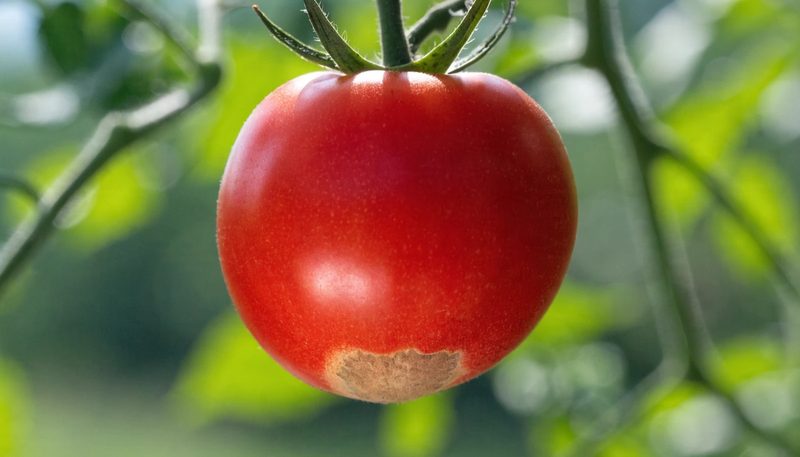
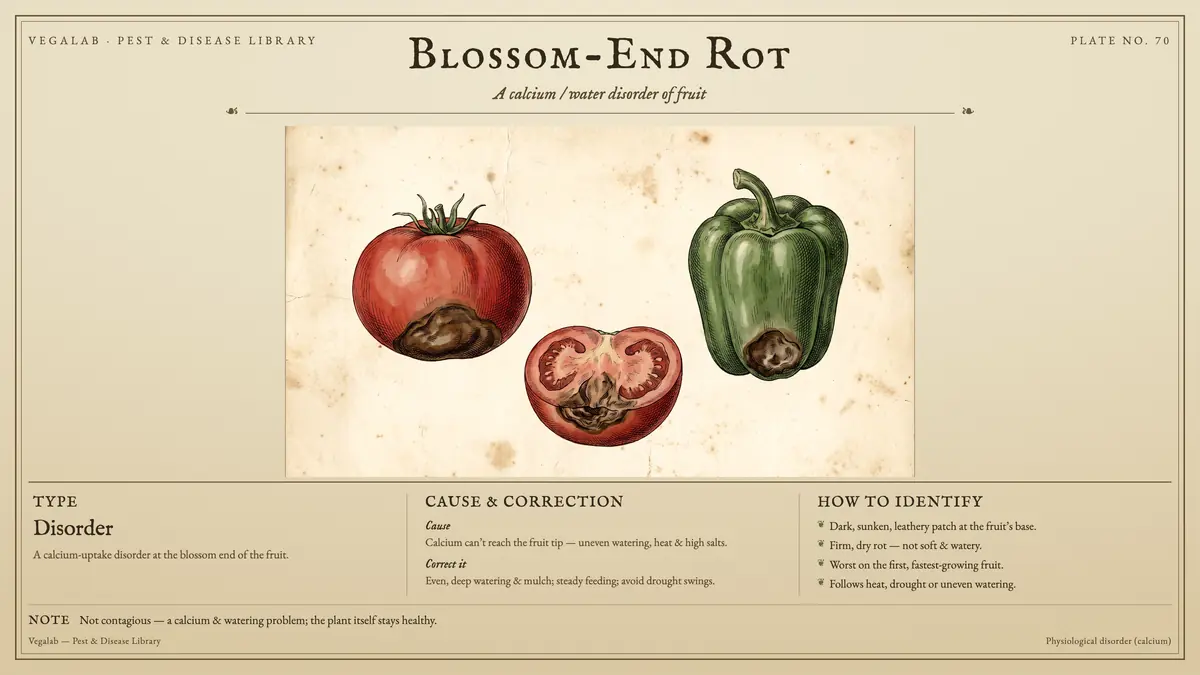
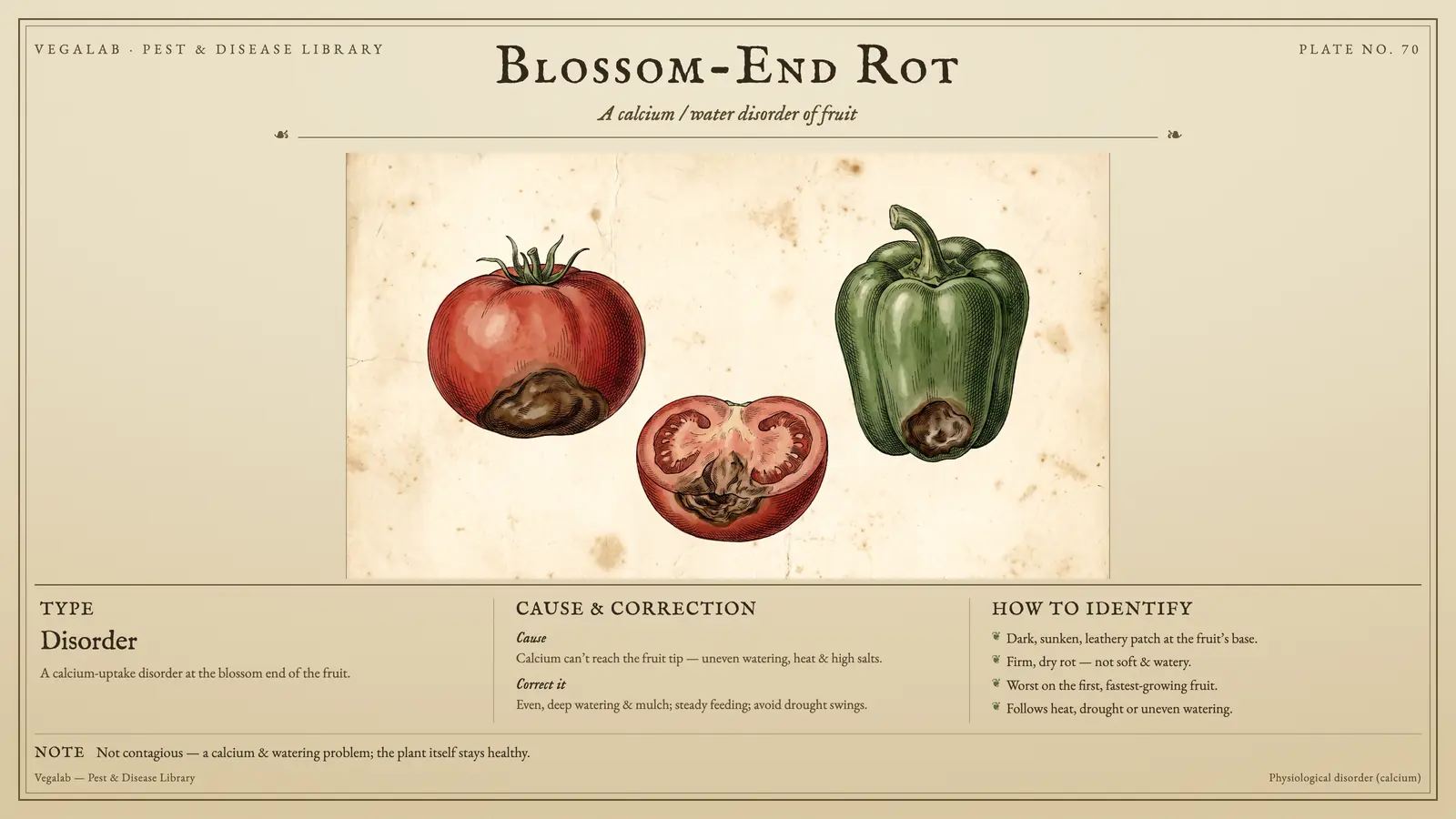
How to identify blossom-end rot
- Firm, dry rot - not soft & watery.
What is it?
Blossom-end rot is a physiological disorder caused by a calcium deficiency in the developing fruit. Often there is enough calcium in the soil, but the plant cannot move it into the fruit fast enough - usually because of inconsistent watering, rapid growth, or root stress that disrupts calcium uptake and transport. It is not contagious and is not caused by a pathogen.
How to identify it
- A water-soaked spot at the blossom (bottom) end of young fruit
- The spot enlarges into a sunken, dark brown to black, leathery patch
- Affects the fruit, not the leaves; first fruits of the season are common victims
- Often follows irregular watering, drought, or heat stress
Conditions that favour it
The disorder is set by fluctuation, not by a level. Alternating wet and dry soil, a heat spike that raises transpiration demand faster than the roots can answer, or very high humidity that suppresses transpiration altogether will all produce it - sometimes on the same crop in the same week.
Soil and nutrition set the baseline. High potassium, magnesium, sodium or ammonium nitrogen all compete with calcium at the root; low soil pH reduces availability; and compacted, waterlogged or container-restricted roots cannot deliver at peak demand however much calcium is present. Fast-growing early fruit on a small root system is the classic combination.
Damage and how it spreads
Affected fruit is unmarketable and usually can't be salvaged, and a bad run early in the season can cost a meaningful share of the first harvest. Because the cause is calcium movement rather than infection, the fix is about correcting calcium availability and stabilizing growing conditions - not spraying a fungicide or insecticide.
Monitoring & scouting
Monitor soil moisture rather than the fruit, because by the time the symptom is visible the damage was done weeks earlier during early fruit development. A moisture probe or simple tensiometer catches the fluctuation that causes it.
Inspect the blossom end of developing fruit while it is still small. Early lesions are a pale, water-soaked patch that later turns tan, then sunken, leathery and black - recognising it at the pale stage tells you the irrigation needs correcting for the fruit still setting.
Record which trusses or flushes are affected. First-flush-only is normal and self-correcting; damage continuing across every flush indicates a structural cause - root restriction, compaction, pH or a genuine nutrient imbalance - and warrants a soil and leaf test.
How to control it
- Keep soil moisture even · mulch and water consistently to avoid drought-then-flood swings.
- Avoid over-fertilizing with high-nitrogen feeds that push fast growth and dilute calcium.
- Correct calcium availability at the root zone and support uptake into the fruit.
- Remove affected fruit so the plant directs resources to healthy fruit.
How to stop blossom end rot
- Make irrigation consistent. Fluctuation between wet and dry is the primary cause. Calcium moves with the transpiration stream, and a dry interval during early fruit development is the moment the damage is set - weeks before the black patch appears.
- Mulch to buffer soil moisture and root-zone temperature.
- Do not over-fertilise with nitrogen, especially ammonium forms. Excess nitrogen drives leafy growth that competes with fruit for calcium, and ammonium directly antagonises calcium uptake.
- Watch the antagonists. High potassium, magnesium and sodium all compete with calcium at the root. A soil test showing adequate calcium alongside very high potassium still explains the symptom.
- Protect the roots. Damaged, waterlogged or restricted roots cannot deliver calcium at peak demand - this is often the real cause in containers and compacted beds.
- Manage humidity and heat spikes under protection: very high humidity slows transpiration, and heat spikes raise demand faster than supply.
- Choose less susceptible varieties. Elongated plum and paste tomatoes are markedly more prone than round types.
Blossom end rot is not a disease and nothing infects the fruit. It is a localised calcium shortage in the fruit tissue at a specific point in its development, and in the great majority of cases the soil has plenty of calcium - the problem is getting it into a fruit that is growing faster than the water flow can supply it. That is why the fix is almost always about water and consistency rather than about adding calcium.
Calcium moves mainly in the xylem and is poorly redistributed through the phloem, so calcium applied to leaves is unlikely to correct fruit calcium deficiency. Direct fruit applications are a separate question and results vary by crop. Maintain root health, adequate soil calcium, balanced nutrition, and consistent water supply.
Why the first fruit is always the worst
The pattern almost every grower sees - the first flush affected, later fruit clean - is diagnostic rather than mysterious. Early fruit set coincides with a small root system, rapid vegetative growth competing for calcium, and often the least stable irrigation of the season. As the root system fills out and growth steadies, supply catches up with demand.
This is why blossom end rot on an early flush is usually not worth treating as an emergency. Remove the affected fruit so the plant stops investing in it, correct the irrigation regime, and the next trusses are typically sound. Persistent blossom end rot across every flush is the signal that something structural is wrong - root damage, compaction, a genuine calcium or pH problem, or a nutrient imbalance.
What blossom end rot is not
- Not a fungal or bacterial disease · no pathogen initiates it, and fungicides do nothing. Secondary fungi do colonise the dead tissue afterwards, which is why it can end up looking mouldy.
- Not the same as fruit cracking · cracking is a growth-rate and water-uptake problem in the skin; see Fruit Cracking & Splitting.
- Not anthracnose · anthracnose lesions are sunken with concentric fruiting structures and can appear anywhere on the fruit, not specifically at the blossom scar.
- Not usually a calcium deficiency in the soil · see Calcium Deficiency (Tip Burn) for the case where the soil genuinely is short.
Affected crops beyond tomato include pepper, aubergine, melon, watermelon, squash and cucumber. The mechanism is identical in all of them.
Recommended Vegalab solution: Calcium Boost
Vegalab Calcium Boost is an advanced soluble calcium supplement that makes calcium readily available to the plant to correct and prevent blossom-end rot. Pair it with Cellular Boost, which supports cell integrity and helps prevent drought-induced disorders in fruit. Apply per label alongside consistent watering.
| Role | Product | Use |
|---|---|---|
| Primary correction | Calcium Boost | Soluble calcium correction |
| Companion / broader pressure | Cellular Boost | Cell integrity / anti-cracking |
By crop
See crop-specific solutions
Preventing it next season
The most reliable prevention is steady soil moisture plus available calcium from early fruit set. Mulch, water evenly, avoid nitrogen spikes, and maintain calcium with Calcium Boost through the fruiting period. Strong roots improve uptake - support them with Root Boost.
Claims and product availability vary by jurisdiction. Always read and follow the product label.