

Crops affected
How to identify phomopsis blight
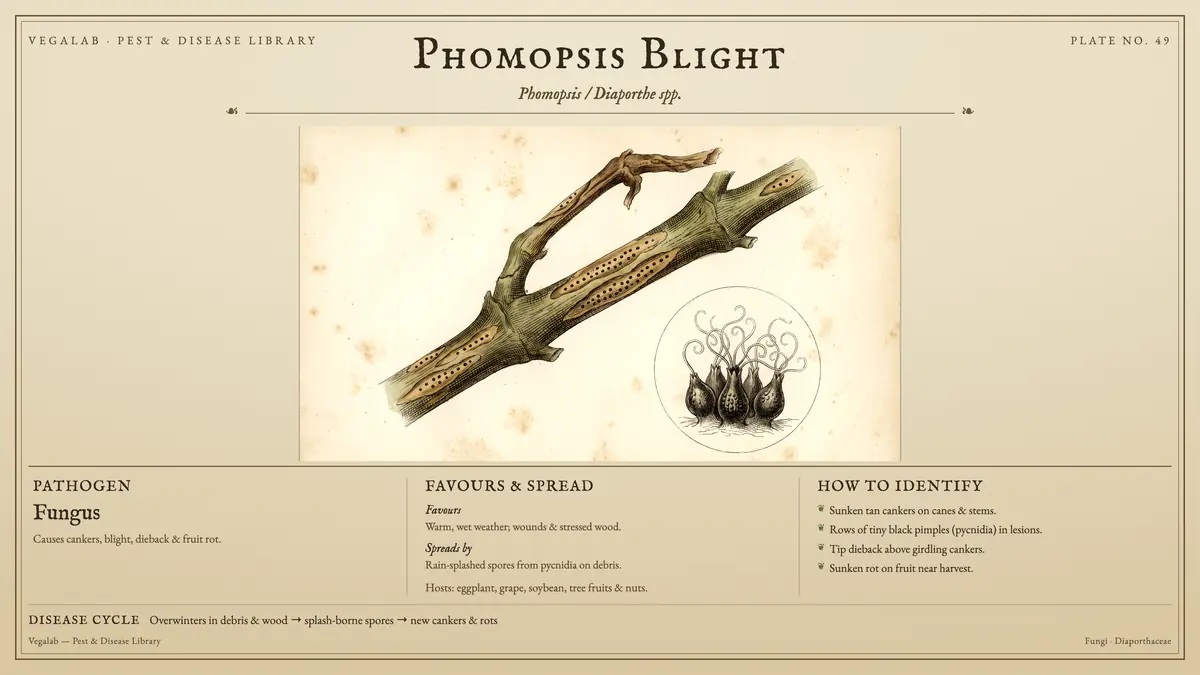
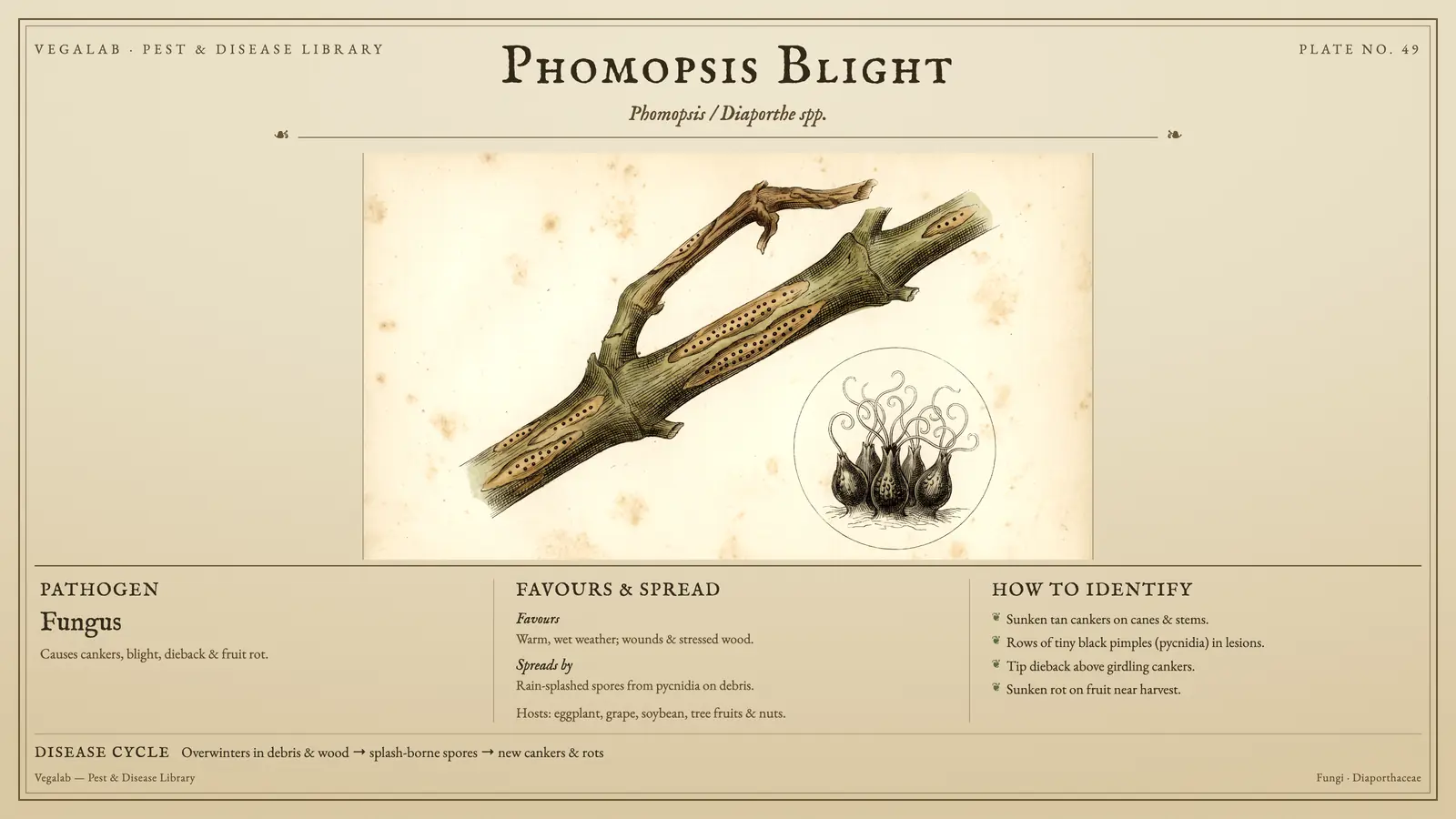
- Tip dieback above girdling cankers.
What is it?
Phomopsis (teleomorph Diaporthe) is a fungal pathogen that infects leaves, stems/canes and fruit, surviving between seasons in crop debris and infected wood and releasing spores in wet weather.
How to identify it
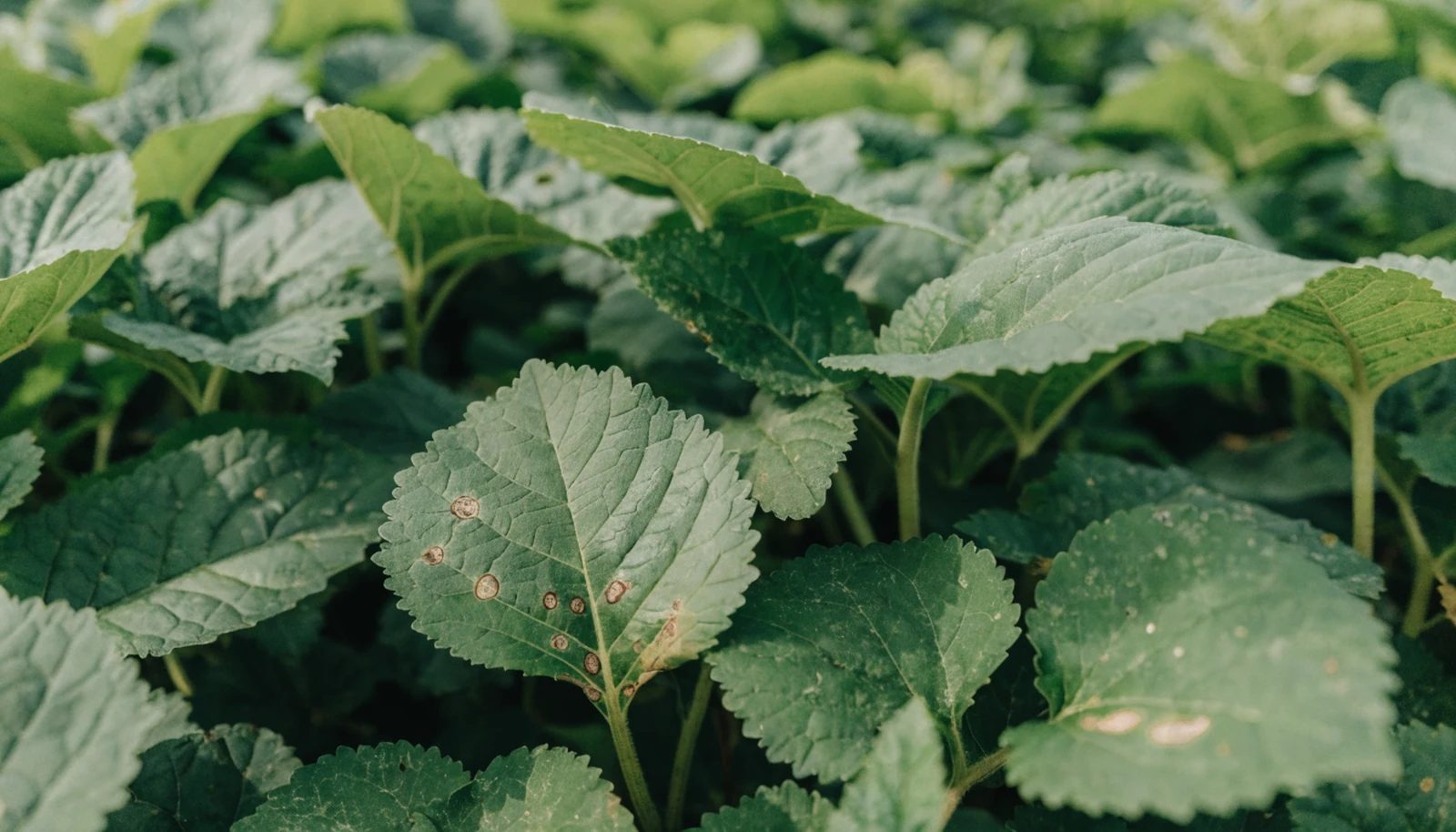
- Small leaf spots that enlarge and coalesce, sometimes with pale centres.
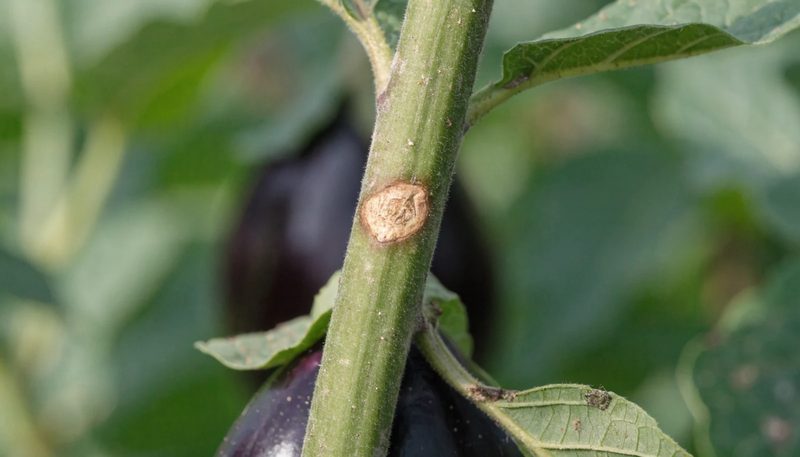
- Elongated stem, cane or shoot lesions and cankers, occasionally girdling.
- Fruit rot, including post-harvest, often firm then mushy.
- Tiny dark fruiting bodies (pycnidia) speckling older lesions and dead wood.
Life cycle & spread
Overwinters in infected debris, canes and mummified fruit; produces spores in spring/summer that spread by rain splash to new growth and fruit; cycles in warm, wet weather.
Conditions that favour it
Warm, wet, humid weather; dense canopies with poor airflow; carry-over inoculum in unpruned debris and dead wood.
Damage and how it spreads
Reduces canopy health, weakens stems and canes, and rots fruit (in-field and post-harvest), cutting both yield and storage quality.
Monitoring & scouting
Inspect new growth and developing fruit in warm wet spells; check old canes/debris for fruiting bodies; act preventively under favourable conditions.
How to control it
- Remove and destroy infected debris and prunings, improve airflow, and apply protectant programs preventively and at first symptoms.
How to manage phomopsis
- Prune out infected wood and remove it from the block. Infected canes and spurs are the inoculum source, and this is the primary control. Prunings left on the ground continue to release spores.
- Protect early shoot growth in wet springs. The susceptible window is the first few weeks of shoot extension; protection applied later addresses tissue that is no longer at risk.
- Open the canopy. Training, shoot positioning and leaf removal reduce the duration of wetness on shoots and fruit.
- Avoid overhead irrigation during early shoot growth, since the disease is splash-dispersed.
- Reduce trunk and cordon wounds and protect large pruning cuts, which can act as infection sites for the wood-invading phase.
- Remove mummified fruit where the host produces it.
- Rotate modes of action where repeated applications are made in high-pressure blocks.
- Manage vigour · dense, shaded, slow-drying canopies sustain the disease.
Because the fungus lives in the wood, a single season of good management does not clear a badly affected block. Successive years of pruning out infected wood are what bring it down.
Why the basal lesions are the ones that matter
Phomopsis produces lesions on leaves, shoots, rachises and fruit, and they are not equally important. Leaf spots are largely cosmetic. Fruit infection matters where it occurs. But the lesions at the base of the shoot, on the first two or three internodes, are the ones with real economic weight, and they are also the easiest to overlook because the canopy grows over them.
The reason is structural. A lesion at the shoot base is a weak point in the cane that will carry the crop. It cracks, it restricts vascular flow through the season, and it becomes a breakage point under crop weight or wind - so a shoot that looked healthy in the canopy snaps at its base at the worst possible moment. In grapevine, basal lesions also compromise the canes selected for next year's fruiting wood, which carries the problem into the following season.
This has a practical consequence for scouting: the useful inspection is early, low on the shoot, before the canopy closes, and it is worth deliberately parting the canopy to look. By mid-season the tissue is hidden, and by harvest the assessment is being made on broken canes rather than on lesions.
See Weak Stems & Lodging for the non-pathogenic causes of structural failure, which can look similar at harvest.
Phomopsis or another early-season blight?
- Phomopsis: small dark spots with pale necrotic centres on shoots, leaves and rachises; sunken cracked basal lesions; in winter, bleached cane areas speckled with tiny black pycnidia
- Black rot (Guignardia): circular tan leaf lesions with dark borders and a ring of black pycnidia; fruit shrivels to hard black mummies
- Anthracnose / bird's-eye rot: lesions with dark raised margins and pale sunken centres, giving the bird's-eye appearance on berries
- Downy mildew: oil-spot lesions with white sporulation on the underside; needs free water and progresses fast in warm humid weather
- Frost injury: blackened shoot tips and leaf margins dated to a specific event, distributed by cold-air topography
The bleached-and-black-speckled cane in winter is the most reliable confirmation of phomopsis. See Anthracnose and Downy Mildew.
Sanitation is a multi-year programme
- Assess in dormancy, when bleached and speckled wood is obvious
- Cut back into clean tissue and remove prunings from the block
- Prune in dry weather to avoid creating infection sites
- Select clean canes for next season's fruiting wood
- Expect two to three seasons in a badly affected block, not one
Phomopsis lives in wood, and that single fact determines how long it takes to get on top of a bad block. The fungus persists in infected canes, spurs and old wood, producing spores from those lesions every wet spring. Removing the current season's symptoms does nothing about the reservoir; removing the reservoir is a job measured in seasons.
In a badly affected vineyard or orchard the realistic path is successive winters of deliberate pruning-out: identify bleached, black-speckled wood in dormancy when it is clearly visible, remove it back into clean tissue, and take the prunings out of the block rather than leaving them on the ground where they continue to release spores. Each year removes a share of the inoculum, and disease pressure falls progressively rather than in one step.
Two practical points make the difference. First, prune in dry weather · cuts made in wet conditions are infection sites for this and several other wood pathogens. Second, be systematic about retained wood: where canes are selected for next season's fruiting, selecting visibly clean wood matters more than any spray decision, because an infected cane retained deliberately carries the disease into the new season at the heart of the canopy.
Growers who treat this as a spray problem tend to spend for years without improvement. Growers who treat it as a wood-removal problem see the pressure decline.
This is the same logic as mummy removal in brown rot and canker removal in fire blight: the inoculum is in the perennial structure, and sanitation beats protection.
Recommended Vegalab solution: Spore Control
Spore Control · natural broad-spectrum fungicide (thymol) applied preventively as conditions favour disease and at first symptoms, with thorough coverage; combine with sanitation and canopy management.
| Role | Product | Use |
|---|---|---|
| Primary control | Spore Control |
Preventing it next season
Sanitation (remove debris, prunings and mummies), airflow/canopy management, and timely preventive sprays in warm, wet periods.
Claims and product availability vary by jurisdiction. Always read and follow the product label.