

Crops affected
How to identify fire blight
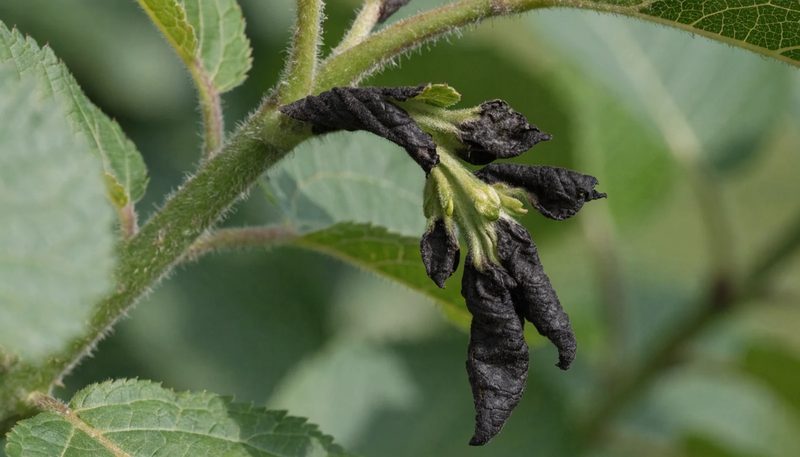
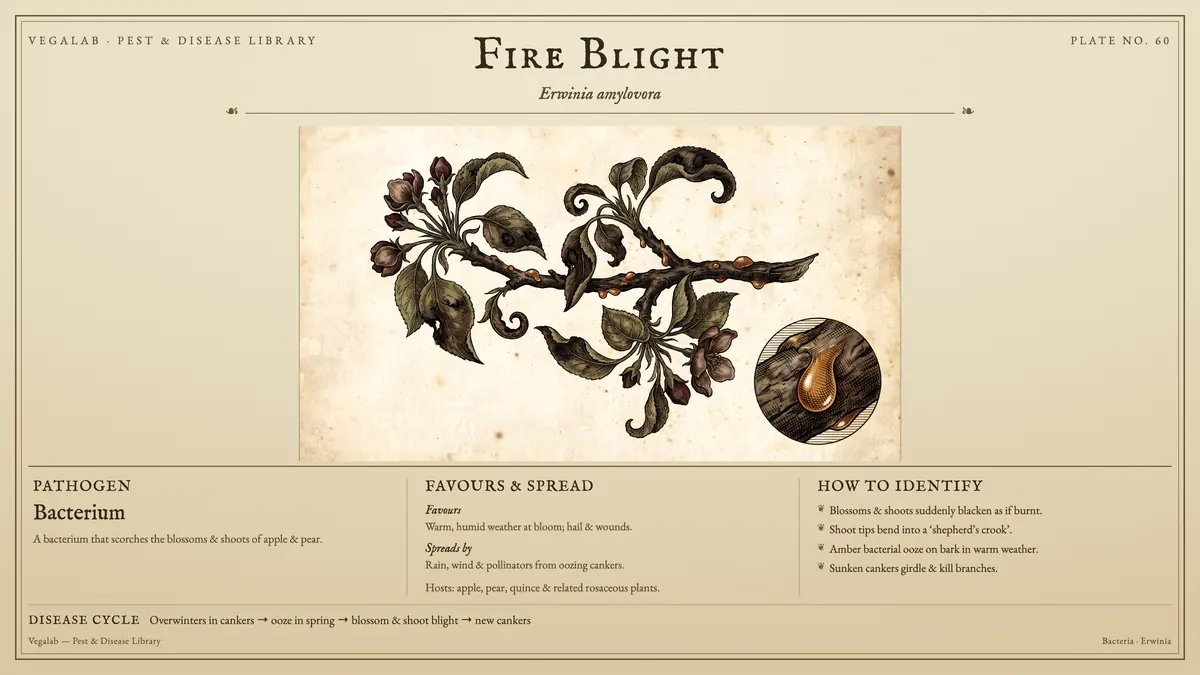
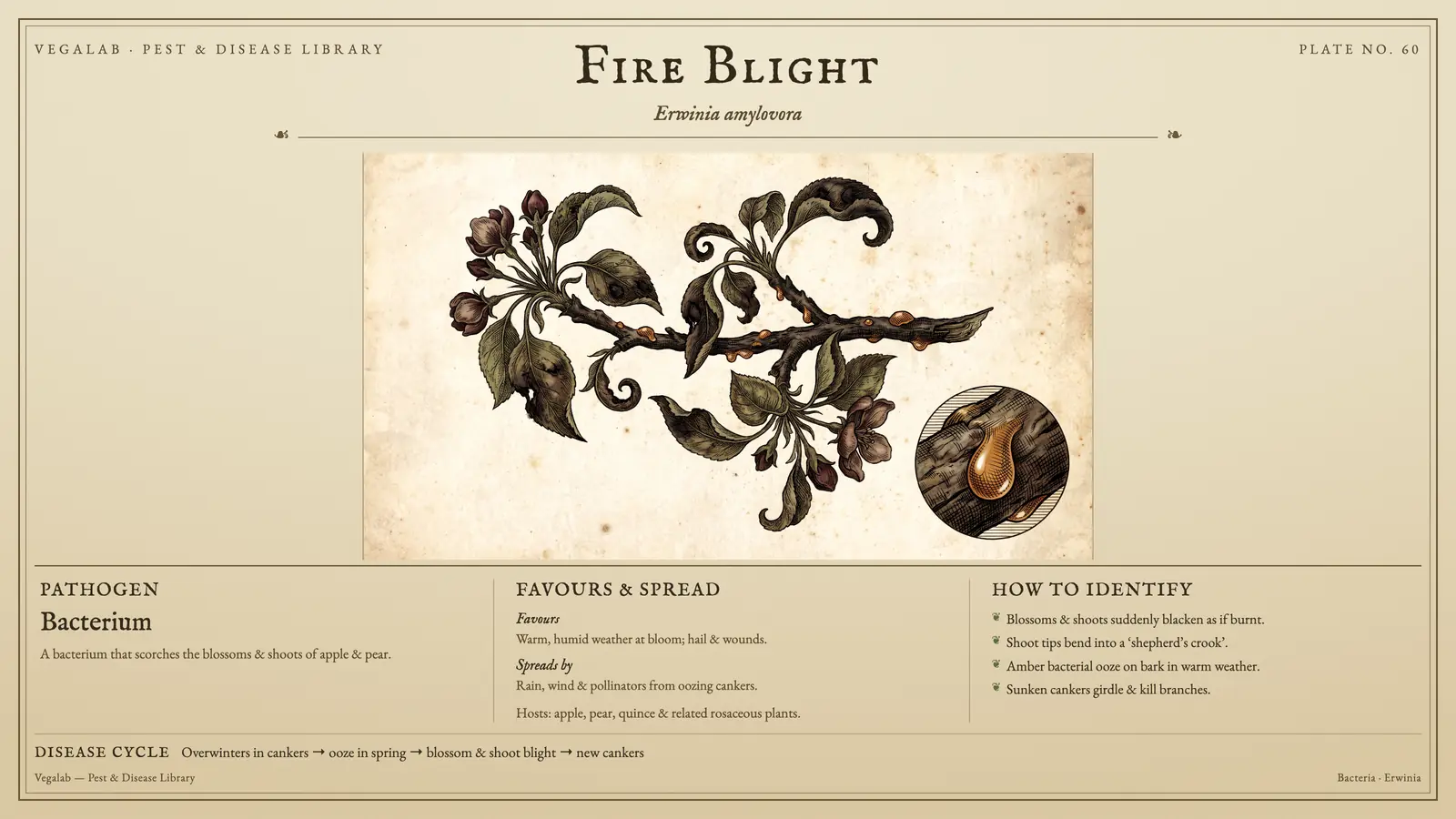
- Blossoms & shoots suddenly blacken as if burnt.
What is it?
Fire blight is caused by the bacterium Erwinia amylovora. It overwinters in cankers and spreads in spring during bloom, when warm, wet weather and insects move the bacteria into open flowers. From there it moves into shoots, branches, and the main structure, killing tissue as it goes.
How to identify it
- Blackened, scorched-looking shoots, leaves, and blossoms that stay attached
- Shoot tips that wilt and bend into a shepherd's crook
- Oozing droplets of bacteria on infected tissue in humid weather
- Sunken, dark cankers on branches and trunk
Life cycle & spread
*Erwinia amylovora* overwinters at the margins of cankers on woody tissue. In spring, warm wet weather causes the canker margin to exude a sticky bacterial ooze; insects - pollinators included - and splashing rain carry it to open blossom, which is the primary infection route.
Once inside, the bacterium multiplies in the flower, moves into the spur and then down the shoot, killing tissue as it goes. The shoot tip wilts into the shepherd's-crook shape that gives the disease away, and the blackened leaves stay attached, giving the scorched look the name describes.
Two thresholds govern risk. Blossom infection needs roughly 18 °C or warmer with wetness while flowers are open; trauma infection - through hail, wind damage or pruning cuts - can happen any time the tissue is wet and the bacterium is present. Vigorous, heavily nitrogen-fed young wood is the most susceptible tissue on the tree.
Conditions that favour it
Two thresholds drive risk, and both have to be met. Blossom infection needs open flowers, roughly 18 °C or warmer, and wetness - rain, dew or overhead irrigation. Trauma infection needs only a wound and wet weather, so hail and storm events create risk outside the bloom window entirely.
Tree condition matters as much as weather. Vigorous, succulent young shoots - the product of high nitrogen, heavy pruning or a young high-density planting - are the most susceptible tissue on the tree. Susceptible cultivars and rootstocks raise the baseline before any of the above applies.
Damage and how it spreads
Fire blight can kill blossoms, shoots, branches, and even whole young trees, and it spreads fastest during warm, wet bloom. Infected cankers harbor the bacteria into the next season. Because there is no cure once tissue is infected, prevention during bloom plus aggressive pruning of infected wood is the core of management.
Monitoring & scouting
During bloom, follow a temperature-and-wetness risk model rather than scouting for symptoms: by the time a strike is visible the infection is a week or more old and the protective window has closed.
After bloom, walk the block weekly through the period of active shoot growth. Look for wilted, blackened shoot tips bent into a shepherd's crook, with dead leaves still attached, and for amber ooze at canker margins in warm humid weather.
In dormancy, map and mark every canker before you prune. This inventory is what next spring's inoculum load depends on, and marking in winter is far easier than finding them again in leaf.
How to control it
- Prune out infected wood well below visible symptoms, disinfecting tools between cuts.
- Remove cankers in winter to reduce overwintering bacteria.
- Avoid excess nitrogen and heavy succulent growth, which is more susceptible.
- Protect during the bloom infection window as part of an integrated program.
How to manage fire blight
- Cut out cankers in dormancy. This is the inoculum for next spring. Remove well below the visible margin - at least 20–30 cm into healthy wood - and take the prunings out of the orchard.
- Watch the bloom-period weather. Risk models built on temperature and wetness during open bloom exist for good reason; protective applications are worth making when the threshold is crossed and largely wasted when it is not.
- Do not prune in wet weather. Every cut is an infection site. Disinfect tools between trees, and between cuts in an infected tree.
- Moderate nitrogen and vigour. Succulent, fast-growing shoots are the most susceptible tissue there is; excessive nitrogen and hard heading cuts both increase risk.
- Remove strikes promptly in dry weather, cutting well below the visible symptom, and destroy the material.
- Choose less susceptible cultivars and rootstocks for replants · on a high-risk site this decision outranks everything above.
Fire blight is a bacterial disease of woody tissue, and there is no treatment that eradicates it from an infected tree. Management is prevention during bloom plus decisive surgery afterwards - and the surgery is what saves the tree.
Copper and antibiotic options are regulated differently in every jurisdiction and resistance to streptomycin is established in several regions. Follow local extension guidance and the product label.
Blossom blight, shoot blight and rootstock blight
The same bacterium produces phases that look like separate problems. Blossom blight kills flower clusters during and just after bloom - the primary infection. Shoot blight is the visible spread down the current season's growth, with the hooked tip. Trauma blight follows hail or storm damage and can appear at any point in the season. Rootstock blight is the dangerous one: the bacterium moves systemically to the rootstock and kills the tree outright, which is why highly susceptible rootstocks are avoided on high-risk sites.
Bacterial canker (Pseudomonas syringae) is the usual misdiagnosis in stone fruit · but fire blight is a disease of apple, pear and other pome fruit and their ornamental relatives. If the host is a cherry or peach, it is almost certainly not fire blight. See Bacterial Blight.
Recommended Vegalab solution: Spore Control
Vegalab Spore Control (Thymol) forms a protective film on plant surfaces and can support an integrated fire blight program during the high-risk bloom period, alongside the essential cultural controls. Note that fire blight is bacterial and cannot be cured once tissue is infected - the priorities are prevention during bloom and prompt removal of infected wood. Disinfect tools and prune well below symptoms.
| Role | Product | Use |
|---|---|---|
| Primary control | Spore Control | Broad-spectrum protective fungicide |
| Companion / broader pressure | Armour Boost | Silica for tissue resilience |
By crop
See crop-specific solutions
Preventing it next season
Prune out cankers in winter, avoid excess nitrogen, disinfect tools, and protect during warm, wet bloom. Balanced, unstressed growth is less susceptible - support firm tissue with Armour Boost.
Claims and product availability vary by jurisdiction. Always read and follow the product label.