

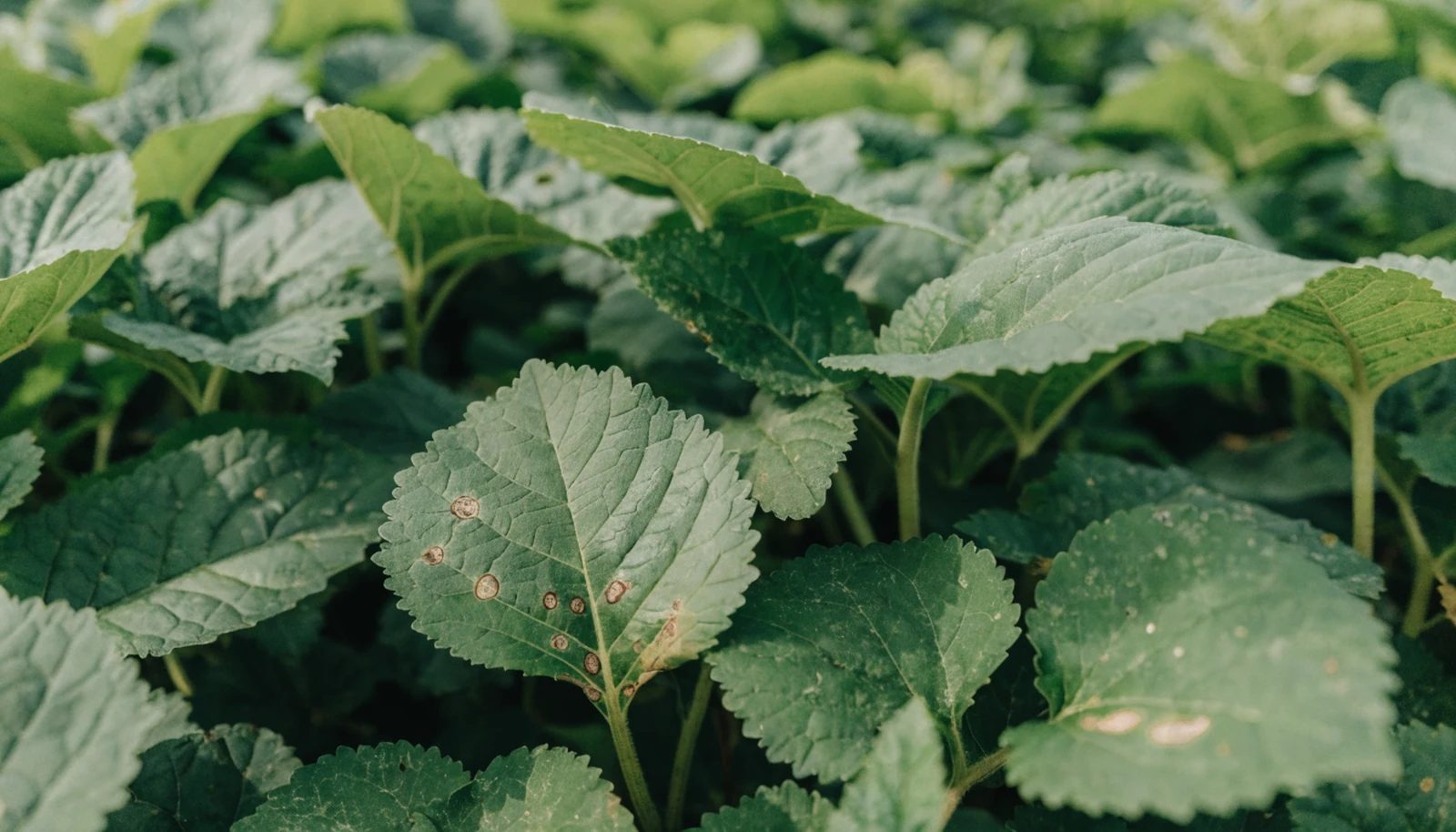
Crops affected
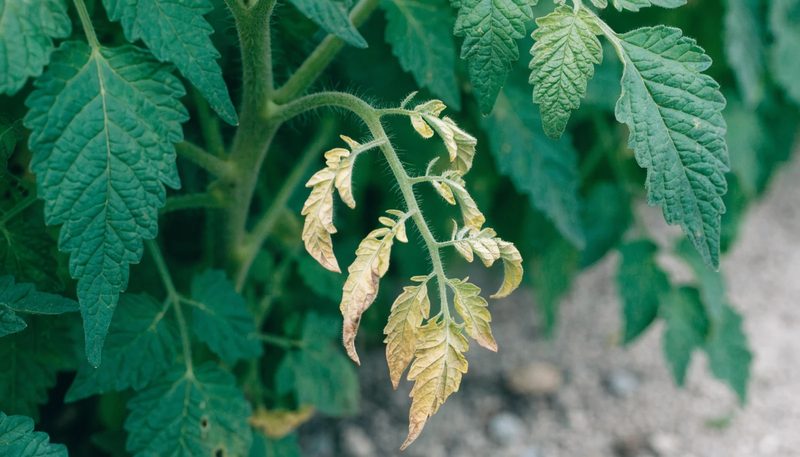
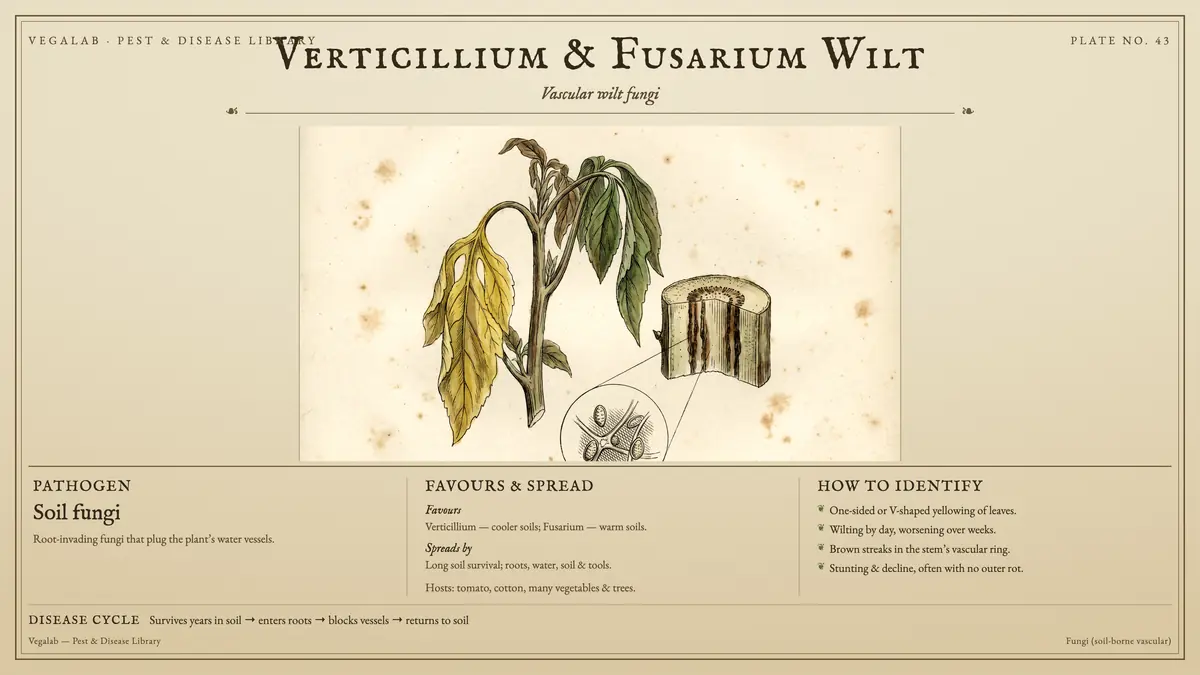
How to identify verticillium & fusarium wilt
- Wilting by day, worsening over weeks.
What is it?
These wilts are caused by Verticillium and Fusarium fungi that enter through the roots and colonize the plant's vascular (water-conducting) system, blocking water flow. They survive in soil and debris for years and are favored by stress and monoculture. Once a plant is systemically infected, it cannot be cured - which is why prevention is central.
How to identify it
- Yellowing and wilting, often starting on one side of the plant or one branch
- Wilting that does not recover after watering
- Brown discoloration in the vascular tissue when a stem is cut lengthwise
- Progressive decline and stunting, worse in warm conditions (Fusarium) or cool (Verticillium)
Life cycle & spread
Both pathogens are soil-borne and both attack through the roots, then colonise the water-conducting xylem - which is what makes them wilts rather than rots. *Verticillium dahliae* survives as microsclerotia and *Fusarium oxysporum* as chlamydospores, and both persist in soil for **many years**, in *Verticillium*'s case a decade or more.
Infection begins at the root tip or through wounds, often assisted by nematode feeding damage. The fungus grows into the vascular tissue and spreads upward, and the plant responds by plugging its own vessels to contain the invader. That defensive plugging is what actually causes the wilt: the plant restricts its own water transport. It is also what produces the brown vascular staining that is the definitive diagnostic.
Symptoms therefore appear late and progress irreversibly, typically at the point of highest water demand - fruit load, hot weather, or both. There is no phase at which a foliar treatment intercepts this.
Conditions that favour it
*Verticillium* favours cooler soils, roughly 20–25 °C, and is often worst in temperate regions and early in the season. *Fusarium* favours warmer soils, roughly 25–30 °C, and dominates in warm climates and later in the season. Both are worse in light soils, in monoculture, and where nematode pressure damages roots.
The strongest risk factor is cropping history: short rotations of susceptible hosts build inoculum that then persists for years. Root damage of any kind - nematodes, cultivation injury, transplant shock, compaction - opens infection routes, and water stress brings symptom expression forward.
Damage and how it spreads
By blocking water transport, these wilts stunt and kill plants and can make ground unusable for susceptible crops for years because the fungi persist in soil. Since infected plants cannot be cured, the practical goals are to avoid introducing the pathogens, reduce their build-up, and keep plants vigorous enough to tolerate pressure.
Monitoring & scouting
Watch for one-sided wilting and yellowing on individual plants that recovers overnight and returns in the heat of the day, progressing to permanent wilt. Wilting on adequate soil moisture is the signal.
**Cut the stem lengthwise at the base.** Brown or tan discolouration of the vascular ring inside the stem is the diagnostic that separates a wilt from every other cause of wilting. Verticillium often shows discolouration extending further up the stem than expected; Fusarium often shows more on one side.
Map affected plants across seasons. These diseases build in patches that reappear and enlarge in the same part of the field, and that map is what should drive rotation and variety decisions.
How to control it
- Use resistant varieties and clean, certified transplants and seed.
- Rotate with non-host crops and avoid moving infested soil.
- Remove and destroy infected plants and debris; do not compost.
- Build suppressive soil biology and keep plants unstressed and well-rooted.
How to manage verticillium and fusarium wilt
- Use resistant varieties and rootstocks. This is the primary control and, for many crops, the only reliable one. The V and F designations on tomato varieties refer precisely to this, and grafting onto resistant rootstocks is standard practice in high-value protected production.
- Rotate long, with genuine non-hosts. Cereals and grasses are non-hosts for most strains. Because the resting structures persist for a decade or more, short rotations achieve very little - this is a multi-year plan, not a one-season fix.
- **Know your Fusarium race before choosing a variety.** Resistance is race-specific, and a variety resistant to race 1 may be fully susceptible to race 3. Laboratory identification is worth the cost.
- Manage nematodes. Root-knot and lesion nematode damage substantially increases wilt incidence by opening infection sites - the two problems compound, and treating the nematode reduces the wilt.
- Avoid root injury, minimise transplant shock, and relieve compaction. Every wound is a potential entry point.
- Keep water and nutrition steady. Water stress accelerates symptom expression; ammonium-heavy nitrogen tends to favour Fusarium while nitrate forms are less favourable.
- Solarise, or biofumigate, where climate allows · brassica green manures incorporated as biofumigants reduce Verticillium microsclerotia in the upper profile.
- Build soil biological activity. A diverse, active rhizosphere competes with soil-borne pathogens for space and root exudates, which reduces pressure over time as part of a soil programme.
- Remove and destroy infected plants and debris, and clean equipment moving off an infested block - this soil moves on machinery.
Once a plant shows vascular wilt symptoms it will not recover, and nothing applied to soil or foliage reverses it. These are diseases managed between crops and by genetics - which makes them frustrating to advise on and expensive to ignore.
Neither disease is eradicable from an infested field with current tools. Plan around resistant genetics and long rotation rather than around treatment.
Verticillium or fusarium · and does it matter?
- Verticillium: cooler soils; symptoms often start on lower leaves and progress upward, frequently in a V-shaped yellowing from the leaf margin; usually affects both sides of the plant more evenly; vascular discolouration often lighter tan and extends well up the stem; very wide host range including many weeds, which limits rotation options.
- Fusarium: warmer soils; classically one-sided · a single branch, one side of the stem, or half a leaf yellows first; vascular browning often more intense and concentrated lower down; highly host-specific by race, so a Fusarium from tomato will not infect a cucurbit.
- Bacterial wilt (Ralstonia): rapid wilting with no yellowing first, and a milky ooze from a cut stem suspended in water - the key differential.
- Phytophthora root and crown rot: dark rotted roots and crown with water-soaked lesions at the soil line, not clean vascular staining, and associated with waterlogging.
It matters, because resistance is specific and because soil temperature will tell you which to expect. Both produce vascular browning, so the distinction comes from pattern and conditions.
See Phytophthora. The one-sided-versus-even pattern plus soil temperature is the practical field call; a laboratory test settles it and identifies the race.
Recommended Vegalab solution: Spore Control
Vegalab Spore Control (Thymol) lists wilt diseases among its targets and supports a broader management program, though systemic soil-borne wilts cannot be cured once a plant is infected. The most effective approach combines resistant varieties, rotation, and sanitation with strong soil and root health: Charge Bioboost supports suppressive soil biology, Balance Boost aids soil remediation and balance, and Root Boost builds vigorous roots that better tolerate pressure.
| Role | Product | Use |
|---|---|---|
| Primary control | Spore Control | Broad-spectrum protective fungicide |
| Companion / broader pressure | Charge Bioboost | Soil biology / suppressive soil |
| Plant support | Balance Boost | Soil remediation & balancing |
Preventing it next season
Choose resistant varieties, rotate, sanitize, and avoid spreading infested soil - and invest in soil health. Charge Bioboost and Balance Boost help build resilient, suppressive soil over time.
Claims and product availability vary by jurisdiction. Always read and follow the product label.