


Why is my skin so dry in winter?
Last updated:
Cold winter air holds little moisture, and indoor heating dries the air further, so more water evaporates from the outer layer of your skin. Studies following the same people from winter to summer find higher water loss, lower hydration and rougher skin in winter. Long hot showers and harsh soaps strip barrier lipids on top of that, leaving skin tight, flaky and itchy.
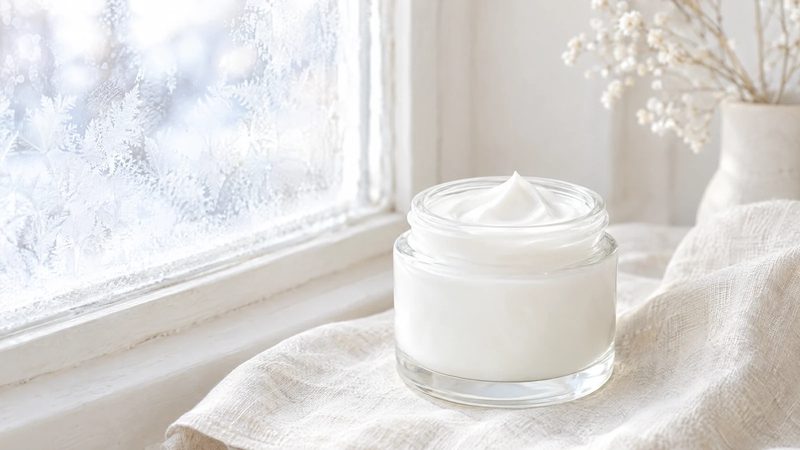
What happens to your skin in winter?
Dry skin, called xerosis, occurs when skin loses too much water and oil, and cold, dry winter air and dry indoor air from heating are two of its best-known causes1. The effect shows up in measurements, not only in how skin feels.
A study that followed 14 healthy volunteers through one change of season, from winter to summer, measured the skin of their arms at both points5. By summer, transepidermal water loss (the water that escapes through the skin) had fallen by about 22%, epidermal roughness by about 34%, and epidermal hydration had risen by about 25%5. Water loss and hydration moved in opposite directions, so the season that pulls more water out of the skin is the season the skin holds less5.
The outer layer of skin, the stratum corneum, relies on barrier lipids to limit that water loss and on natural moisturizing factors such as amino acids, lactate and urea to hold water in4. Climate is one of the outside factors that act on this barrier4.
In North America, winter dryness tracks the heating season, when cold outdoor air and heated indoor air are both dry1. In the Southern Hemisphere the same pattern falls from about June to August.
Why does indoor heating make dry skin worse?
Heated indoor air is dry air, and US government health information lists dry indoor air from heating or cooling systems among the causes of dry skin1. The National Institute on Aging likewise names living in a dry environment as a reason skin feels dry and rough2.
Room humidity changes skin water loss quickly6. In a controlled climate chamber study, raising the humidity of a 25 degrees Celsius room from 30% to 50% relative humidity for 90 minutes significantly lowered transepidermal water loss in both younger and older adults, while lowering humidity in a separate summer experiment raised it6. That is the logic behind the National Institute on Aging's suggestion to try a humidifier, an appliance that adds moisture to a room2.
Do hot showers and soap make winter dryness worse?
Yes. The National Institute on Aging notes that hot baths and showers and using too much soap can make dry skin worse2, and MedlinePlus lists bathing too often or too long and some soaps and detergents as causes of dry skin1.
The mechanism runs through the barrier lipids: when harsh soaps disrupt them, transepidermal water loss increases and skin can become dry and irritated4. A review of moisturizers describes soap as a surface-active agent that creates an alkaline environment that is not gentle on skin, and recommends lukewarm water with mild soap3.
What winter skincare routine helps dry skin?
The steps below draw on US government health guidance and a published review of moisturizers.
| Step | What to do | Why it helps |
|---|---|---|
| Wash | Use lukewarm, not hot, water and keep water exposure to what you need1,2 | Hot and frequent bathing worsens dry skin1,2 |
| Cleanse | Choose a gentle cleanser free from dyes and perfumes, or a mild soap1,2 | Harsh soaps disrupt barrier lipids and raise water loss4 |
| Dry off | Pat skin dry with a towel instead of rubbing1 | Part of the standard prevention advice for dry skin1 |
| Moisturize | Apply a lotion, cream or ointment every day, ideally while skin is still damp2,3 | Moisturizers add water and slow its loss3 |
| Room air | Run a humidifier in heated rooms2 | Raising room humidity from 30% to 50% lowered skin water loss6 |
Which moisturizer ingredients work best for winter dryness?
Look for a formula that combines more than one way of holding water, because moisturizers work through three complementary actions3:
- Humectants such as glycerin, urea, panthenol and hyaluronic acid attract water into the stratum corneum3. On their own they can increase water loss by pulling water up from deeper layers where it evaporates, so they are usually combined with occlusives3.
- Emollients, mostly lipids, fill the gaps between skin cells and make skin smoother, softer and more flexible3.
- Occlusives form a water-repellent film on top of the skin. Petrolatum is the most effective classic occlusive, cutting water loss by more than 98% at a concentration of at least 5%, while lanolin, mineral oil and dimethicone reduce it by 20% to 30%3.
- Barrier lipids: mixtures of ceramide, cholesterol and free fatty acids can speed barrier recovery after disruption3.
Who gets the driest skin in winter?
Age matters. Skin gets thinner and produces less natural oil with aging1, and many older people develop dry, itchy, rough or scaly patches on the lower legs, elbows and lower arms2. Dry skin is usually worse on the arms and legs1.
Existing conditions matter too. Skin conditions such as eczema and psoriasis, diseases such as diabetes and an underactive thyroid, and certain medicines can all cause dry skin1. If your skin is very dry and itchy, the National Institute on Aging advises talking to your doctor2.
Key takeaways
- Winter skin loses more water and holds less: in one study, water loss fell by about 22% and hydration rose by about 25% from winter to summer.
- Cold outdoor air and heated indoor air are both dry, and both are recognized causes of dry skin.
- Hot showers, long baths and harsh soaps strip barrier lipids and make winter dryness worse.
- Lukewarm water, a gentle cleanser, daily moisturizer on damp skin and a humidifier form the core winter routine.
- Moisturizers that pair humectants with occlusives such as petrolatum hold water best.
References
- Dry skin (MedlinePlus Medical Encyclopedia)
- Skin Care and Aging
- The Role of Moisturizers in Addressing Various Kinds of Dermatitis: A Review
- Importance of Stratum Corneum Acidification to Restore Skin Barrier Function in Eczematous Diseases
- Effect of seasonal change on the biomechanical and physical properties of the human skin
- Effects of indoor summer dehumidification and winter humidification on the physiological and subjective responses of the elderly
Frequently asked questions
Does drinking more water help dry skin in winter?
Is a humidifier worth it for dry winter skin?
It addresses one of the main causes. Dry indoor air from heating is a recognized cause of dry skin1, and in a controlled study, raising room humidity from 30% to 50% lowered transepidermal water loss within 90 minutes6. The National Institute on Aging suggests trying a humidifier for dry, itchy skin at home2.
Why does dry winter skin itch and crack?
Dry skin can become scaly, itchy and red and develop fine cracks, most often on the arms and legs1. When the stratum corneum holds less than about 10% water, surface cells pile up and lose their continuity, which shows as visible dryness3. Very inflamed, itchy areas need a health care provider, who may suggest a topical steroid1.