


Sulfur vs copper fungicide
Last updated:
Choose sulfur for powdery mildew and copper for tomato blights, leaf spots and bacterial diseases1,7. Sulfur prevents powdery mildew, while copper is not very effective against it1. Copper gives good control of early blight, late blight and Septoria leaf spot on tomatoes and fairly good control of bacterial spot7. Both are protectants that must be on the plant before infection1,5.
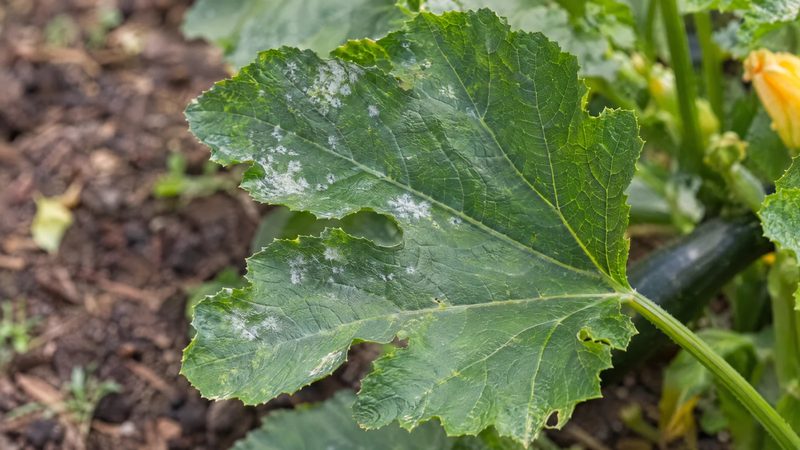
What is the difference between sulfur and copper fungicides?
Sulfur is a natural element and an essential plant nutrient that can kill fungi, insects and mites, and it has been registered for pesticide use in the United States since the 1920s4. It kills fungi on contact. Its exact mode of action is not fully understood, but the main theory is that sulfur enters fungal cells and disrupts their respiration4. Sulfur fungicides come as dusts, wettable powders and liquids4.
Copper has been used as a fungicide and bactericide since the 1880s, when the lime and copper sulfate blend known as Bordeaux mixture was discovered5. The active agent is the cupric ion, which acts on oomycetes (water molds), fungi and bacteria at many sites at once: it damages cell membranes and denatures structural and enzyme proteins, blocking spore germination5. Copper is active only when it is wet and the copper ions are in solution6. Copper products list their strength as metallic copper equivalent (MCE), and formulations differ widely in copper content6.
The practical split follows from those spectra. Sulfur is the classic powdery mildew material, and copper is the broader material for water molds, leaf spots and bacterial diseases1,5,7.
| Question | Sulfur | Copper |
|---|---|---|
| Main garden targets | Powdery mildew; also kills mites and some insects1,4 | Tomato blights, leaf spots, leaf mold, bacterial spot, peach leaf curl6,7 |
| How it acts | Contact; thought to disrupt fungal respiration4 | Multisite cupric ion damage to membranes and proteins5 |
| When it works | Only before symptoms appear1 | Only when present on the plant before disease5 |
| Powdery mildew | Long used and preventive1 | Available but not very effective1 |
| Heat limit | Not near or above 90°F; 80°F for strawberries and caneberries1,2 | Not stated in the cited guidance; follow the product label |
| Fish and aquatic life | Practically non-toxic to fish tested4 | Highly to very highly toxic8 |
| Soil | Joins the natural sulfur cycle4 | Accumulates and persists at the soil surface8 |
In North America, interest in these fungicides peaks in June as powdery mildew and tomato leaf diseases build, and sulfur should not go on when temperatures are near or above 90°F; dormant copper sprays for peach leaf curl go on after leaf fall, usually late November or December. In the Southern Hemisphere, the summer spray season falls around December and January and the dormant copper window around May and June.
Which is better for powdery mildew?
Sulfur. Sulfur products have been used against powdery mildew for centuries, but they work only when applied before symptoms appear1. University of California guidance names wettable sulfurs formulated with surfactants as the best sulfur products for garden powdery mildew, and notes that copper is also available but is not very effective against the disease1.
Powdery mildew fungi (Erysiphe, Sphaerotheca and related species) attack many vegetables, including beans, cucumbers, melons, peas, peppers, pumpkins, squash and tomatoes1. Very susceptible crops such as cucurbits may need fungicide, and least-toxic fungicides must go on no later than the first sign of disease1. Because sulfur acts only on contact, coverage of all susceptible plant parts matters, and repeat applications may be needed as plants produce new tissue1. Follow the product label for intervals.
Once mild to moderate infections are visible, oils such as horticultural oil or neem oil work better, because oils act as eradicants while sulfur is mainly preventive1. Sulfur can damage some squash and melon varieties, so check the label for crop restrictions before spraying cucurbits1.
Which is better for tomatoes?
For the common leaf diseases of tomato, copper is the one of the two that appears in Clemson Extension's home garden spray guidance7. Clemson Cooperative Extension rates copper fungicide as good against early blight (Alternaria linariae), late blight (Phytophthora infestans) and Septoria leaf spot (Septoria lycopersici), and as part of a preventive program for leaf mold7. Against bacterial spot, caused mainly by Xanthomonas perforans, spraying copper gives fairly good control7. Sulfur is not listed for these diseases in the same guidance7.
Bacterial spot is difficult to control once it appears, so copper works best as part of prevention with clean seed and transplants, drip irrigation and removal of diseased plants7. Several bacterial pathogens have also developed resistance to copper, first reported in 1983 in Xanthomonas campestris pv. vesicatoria and in 1986 in Pseudomonas syringae pv. tomato5. Selection of copper-resistant strains is the major reason copper bactericide programs fail, while fungi and oomycetes have shown no resistance to copper compounds5.
Tomatoes do get powdery mildew, from Erysiphe lycopersici and Leveillula taurica, and University of California guidance calls for fungicides there only if necessary1. In that case sulfur, not copper, is the better fit1.
| Tomato disease | Cause | Copper rating |
|---|---|---|
| Early blight | Alternaria linariae (fungus) | Good; mancozeb rated very good7 |
| Late blight | Phytophthora infestans (water mold) | Good; chlorothalonil rated very good7 |
| Septoria leaf spot | Septoria lycopersici (fungus) | Good; chlorothalonil rated very good7 |
| Leaf mold | Passalora fulva (fungus) | Part of a preventive program7 |
| Bacterial spot | Xanthomonas species (bacteria) | Fairly good control7 |
When should you apply each, and how does heat change things?
Both are protectants, so timing comes before the damage shows. Sulfur prevents powdery mildew but is not effective once symptoms appear, and copper ions must be on plant surfaces before disease occurs1,5.
Heat matters most for sulfur. Do not apply sulfur when the air temperature is near or above 90°F, and for strawberries and caneberries the limit is 80°F because sulfur damages foliage and fruit1,2. Never apply sulfur to apricot trees at any temperature2. Some ornamental cultivars are also injured by sulfur sprays3. Sulfur dust is harder to use than wettable sulfur and irritates skin and eyes1,3.
Copper is active only when wet, and rain can wash it off, so coverage, spreader and sticker additives, and rainfall all affect how well it works6. Follow the product label for crops, intervals and weather limits for either material.
Can you combine sulfur or copper with oil sprays?
Sulfur and oil do not mix. Never apply an oil spray within 2 weeks of a sulfur spray, or the reverse, because plants may be injured, and some plants need an even longer gap1,2. That rule covers neem oil and other plant-based oils as well as horticultural oil1.
Copper and oil can work together in one case. For peach leaf curl, adding horticultural oil to a copper ammonium or copper soap spray increases effectiveness, while oil alone is not effective against the disease6. Combine products only as their labels allow.
What are the risks to people, bees, fish and soil?
Sulfur is low in toxicity to people, but breathing sulfur dust can irritate the airways, and it can irritate the skin and eyes4. It does not dissolve well in water, so drift or runoff is not expected to harm aquatic life, and it is rated practically non-toxic to honeybees and to the fish and aquatic invertebrates tested4. Drift can injure sulfur-sensitive plants nearby4.
Copper sulfate can cause severe eye irritation8. The U.S. EPA considers copper practically nontoxic to bees and moderately toxic to birds, but studies find copper highly to very highly toxic to fish and aquatic life8. In soil, copper accumulates mainly at the surface, where it binds tightly and persists, and too much copper is toxic to plants because it inhibits photosynthesis8. Because it cannot be degraded, repeated copper use leads to buildup in soil, and high concentrations can reduce earthworm populations5. Repeated use can harm soil microorganisms and, through runoff, aquatic organisms, so University of California guidance suggests alternating copper with another fungicide and avoiding runoff6.
The European Union has capped copper use in organic farming since 2002; at the time of a 2018 review, the limit was an average of 6 kilograms per hectare per year over 5 years5.
Key takeaways
- Sulfur is the better choice for preventing powdery mildew; copper is not very effective against it.
- Copper is the better choice for tomato early blight, late blight, Septoria leaf spot and bacterial spot.
- Both are protectants that must be on the plant before infection.
- Keep sulfur off plants near or above 90°F and at least 2 weeks away from any oil spray.
- Copper builds up in soil and is highly toxic to fish, so avoid runoff and follow the product label.
References
- Pest Notes: Powdery Mildew on Vegetables (UC ANR Publication 7406)
- Pest Notes: Powdery Mildew on Fruits and Berries (UC ANR Publication 7494)
- Pest Notes: Powdery Mildew on Ornamentals
- Sulfur General Fact Sheet
- Copper in plant protection: current situation and prospects
- Pest Notes: Peach Leaf Curl (UC ANR Publication 7426)
- Tomato Diseases and Disorders (HGIC 2217)
- Copper Sulfate General Fact Sheet