

How does pyrethrin work?
Last updated:
Pyrethrins are six insecticidal compounds found naturally in some chrysanthemum flowers1. They act on voltage-gated sodium channels in insect nerve cells, overexciting the nervous system so insects that touch or eat them are quickly paralyzed and die1,2. Sunlight breaks them down within hours to days, so they knock pests down fast but leave little lasting residue1.
What are pyrethrins and where do they come from?
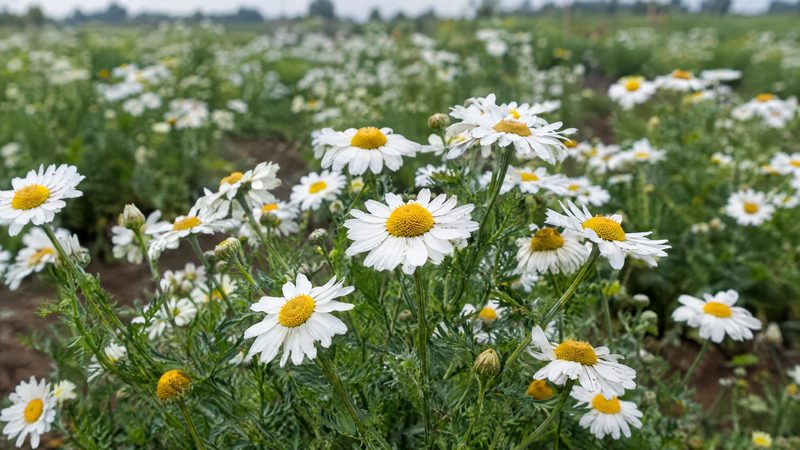
Pyrethrins are pesticides found naturally in some chrysanthemum flowers, and they are a mixture of six chemicals that are toxic to insects1. Commercial pyrethrum extract comes from the flowers of the pyrethrum daisy (Tanacetum cinerariaefolium), which is cultivated in Tasmania, East Africa (Tanzania, Rwanda and Kenya) and southern China; about 10,000 metric tons of dried flowers were produced in 20163. The extract is valued for its low toxicity to mammals, rapid knockdown and efficacy against a wide range of insects3.
Pyrethrins are usually separated from the flowers but still contain some flower impurities, while whole, crushed flowers are known as pyrethrum powder1. They have been registered for use in pesticides since the 1950s and are found in over 2,000 registered products, used in and around buildings, on crops and ornamental plants, and on certain pets and livestock1. Common forms include foggers, sprays, dusts and pet shampoos, some of these products can be used in organic agriculture, and pyrethrins also appear in some head lice products regulated by the Food and Drug Administration1.
In North America, interest in pyrethrin peaks in June, in the main garden pest season, and is lowest in February. In the Southern Hemisphere, the same window falls around December and January.
How do pyrethrins kill insects?
Pyrethrins excite the nervous system of insects that touch or eat them, which quickly leads to paralysis and death1. The target is the voltage-gated sodium channel, a protein in insect nerve cell membranes that must work correctly for nerve impulses to travel2. Pyrethrins share that target with DDT and the synthetic pyrethroids, and their binding disrupts nerve signaling, leading to paralysis and eventual death2.
Many products pair pyrethrins with a synergist, a second chemical that increases their effect1. Pyrethrins are often combined with piperonyl butoxide (PBO), a human-made synergist that is not designed to kill insects by itself4. Insects carry enzymes that break down some insecticides; PBO blocks some of those enzymes, giving the insecticide more time to work so insects are less likely to recover4. Early studies found that PBO greatly improved how well pyrethrins killed houseflies, allowing control with smaller amounts of pyrethrins4.
Pyrethrins do not readily spread within plants, so they act only where the spray lands1.
What is the difference between pyrethrins and pyrethroids?
Pyrethrins served as the models for pyrethroids, longer lasting chemicals that are human-made1. Pyrethroids are very similar in structure to pyrethrins but are often more toxic to insects and to mammals, and they last longer in the environment5. More than 1,000 synthetic pyrethroids have been developed, fewer than a dozen are used in the United States, and permethrin is the most frequently used5. Early synthetic versions such as resmethrin were unstable in air and light, and permethrin became the first light-stable pyrethroid for agricultural use3.
That persistence difference matters in a garden. University of California guidance notes that formulations combining insecticidal soap and pyrethrins have fewer negative impacts on natural enemies than malathion, permethrin and acephate, because pyrethrins break down very quickly6. Regulators still treat the two together for wildlife risk: the EPA assessed pyrethroids and pyrethrins as a class and determined that measures to reduce spray drift and runoff and to promote soil conservation are needed for the entire class7.
| Feature | Pyrethrins | Pyrethroids |
|---|---|---|
| Origin | Found naturally in some chrysanthemum flowers1 | Human-made, modeled on pyrethrins1 |
| Target in insects | Voltage-gated sodium channels2 | Voltage-gated sodium channels2 |
| Persistence | Break down rapidly in sunlight1 | Last longer in the environment5 |
| Toxicity | Low toxicity to people and other mammals1 | Often more toxic to insects and mammals5 |
| Example | Pyrethrin 1, one of six natural pyrethrins1 | Permethrin, the most used in the U.S.5 |
What pests does a pyrethrin spray control on plants?
Pyrethrins are commonly used against mosquitoes, fleas, flies, moths, ants and many other pests1. On garden plants, their strength is rapid knockdown rather than lasting control3,1. For aphids, formulations combining insecticidal soap and pyrethrins may give slightly more knockdown than soap alone6. For thrips, horticultural oils, insecticidal soaps and pyrethrins can give temporary control, especially of greenhouse thrips, and spinosad may be more effective8.
Because pyrethrins act only on insects they reach and do not move through the plant, a spray works on the pests present at the time of application1. Pesticides alone rarely control thrips well, so spraying works best combined with other methods8. Mix and apply any pyrethrin spray exactly as the product label directs, including the crops listed, the interval between sprays and the waiting period before harvest.
Are pyrethrins harmful to bees, fish, pets or people?
In general, pyrethrins are low in toxicity to people and other mammals1. On skin they can be irritating and cause tingling or numbness, and inhaling them has caused respiratory irritation, coughing and difficulty breathing1. They are absorbed poorly through skin and are rapidly broken down in the body; in a mouse study, more than 85 percent left the body within two days1. The EPA classifies pyrethrins as not likely to cause cancer at doses below a threshold seen in rat studies1. Exposure to very high levels of pyrethrins or pyrethroids can cause dizziness, headache, nausea, muscle twitching and, at the extreme, convulsions5.
Bees and water life are the bigger concerns. Pyrethrins are practically non-toxic to birds but highly toxic to honey bees, although their slight repellent activity and rapid breakdown limit some of the risk to pollinators1. They are highly to very highly toxic to fish and very highly toxic to lobster, shrimp, oysters and aquatic insects1. PBO adds its own aquatic risk: it is moderately toxic to fish and highly toxic to tadpoles4. For the whole pyrethrin and pyrethroid class, the EPA calls for measures that reduce spray drift and runoff7, so keep spray off flowering plants that bees visit and away from ponds and streams.
| Organism | Reported toxicity |
|---|---|
| People and other mammals | Low; skin irritation, tingling or numbness possible1 |
| Dogs | Drooling, tremors and difficulty breathing only at extremely large fed doses1 |
| Birds | Practically non-toxic1 |
| Honey bees | Highly toxic; risk limited by repellency and rapid breakdown1 |
| Fish | Highly to very highly toxic1 |
| Shrimp, lobster, oysters, aquatic insects | Very highly toxic1 |
How long do pyrethrins last after spraying?
Not long in sunlight. Pyrethrin 1, a major component, has a half-life of 11.8 hours in water and 12.9 hours on soil surfaces in the presence of sunlight, and less than 3% remained on potato and tomato leaves after 5 days1. In air, all six pyrethrins are broken down within 1 to 2 days by sunlight and other compounds5. In soil, microbes break pyrethrins down with half-lives of 2.2 to 9.5 days, and pyrethrins bind to soil with very low potential to reach groundwater1.
They persist longer out of the light. Without light, pyrethrin 1 breaks down more slowly in water, with half-lives of 14 to 17 days, and in sediment its half-life is 10.5 to 86 days1. Pyrethrins can reach water through soil erosion or drift1.
Insects can also become resistant. Some insect populations have evolved changes in the sodium channel protein that prevent the insecticide from binding, which makes them resistant2.
Key takeaways
- Pyrethrins are six natural insecticidal compounds from pyrethrum flowers, used in pesticides since the 1950s.
- They act on insect voltage-gated sodium channels, causing fast paralysis, and are often paired with the synergist PBO.
- Sunlight breaks them down within hours to days, so they give quick knockdown with little residue.
- They are low in toxicity to mammals but highly toxic to honey bees and highly to very highly toxic to fish.
- Pyrethroids such as permethrin are synthetic relatives that last longer and are often more toxic.
References
- Pyrethrins General Fact Sheet
- DDT, pyrethrins, pyrethroids and insect sodium channels
- Discovery and development of pyrethroid insecticides
- Piperonyl Butoxide (PBO) General Fact Sheet
- ToxFAQs for Pyrethrins and Pyrethroids
- Pest Notes: Aphids (UC ANR Publication 7404)
- Pyrethrins and Pyrethroids (Registration Review)
- Pest Notes: Thrips (UC ANR Publication 7429)
Frequently asked questions
Is pyrethrin the same as permethrin?
Can pyrethrins be used in organic growing?
Can you combine pyrethrins with insecticidal soap?
Products that combine them exist. University of California guidance reports that soap and pyrethrin formulations may give slightly more knockdown of aphids than soap alone, with fewer negative impacts on natural enemies than malathion, permethrin or acephate6.