

Are natural pesticides safe for bees?
Last updated:
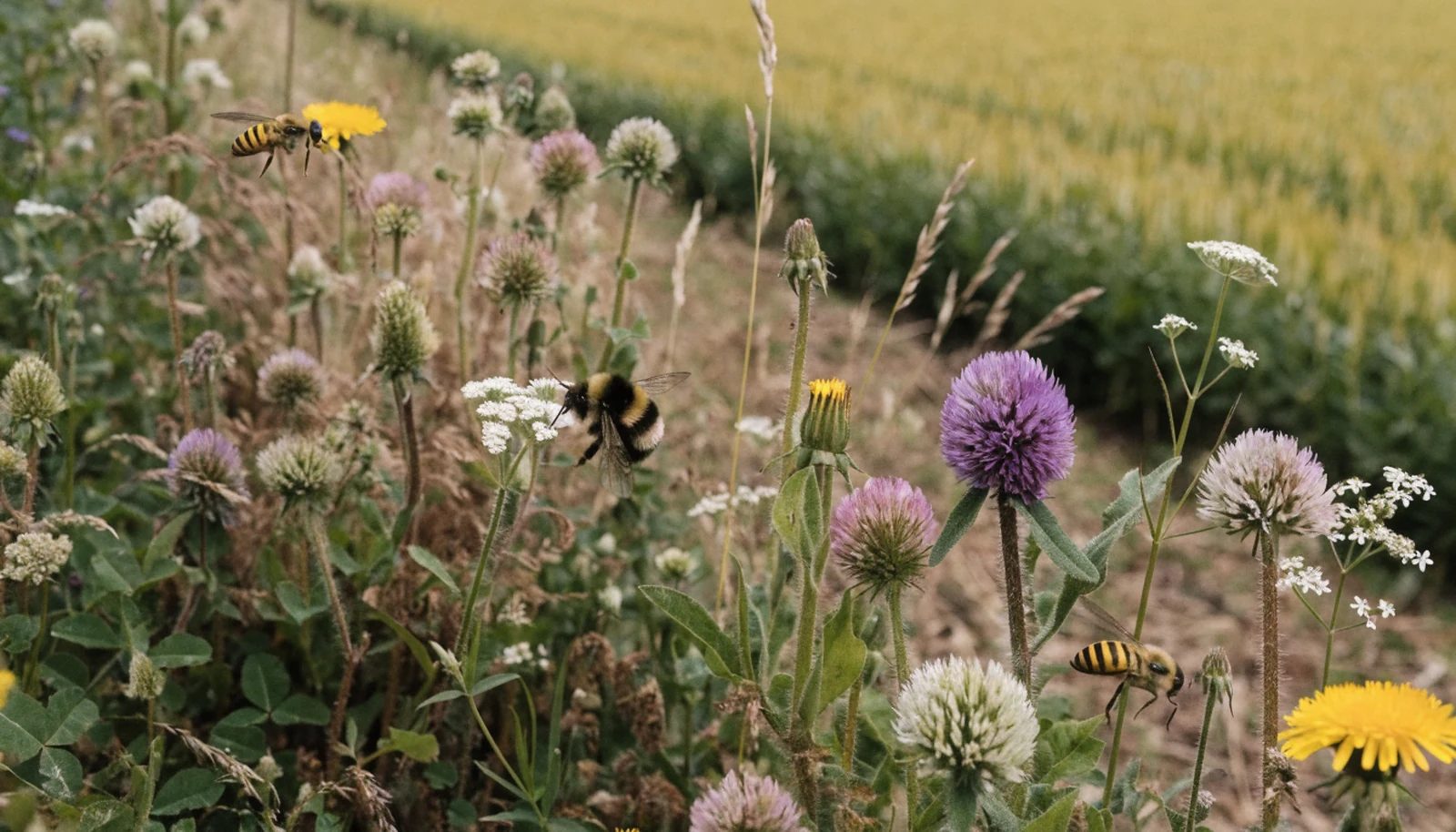
Not automatically. Natural origin is not a safety category: natural pyrethrins are acutely toxic to honey bees, and saponins were among the most toxic compounds in a honey bee feeding screen of 63 plant allelochemicals. Risk depends on the compound, dose, formulation and above all timing; short-persistence materials applied in late evening or at night, after foraging ends, pose minimal hazard.
Are natural pest controls safe for bees?
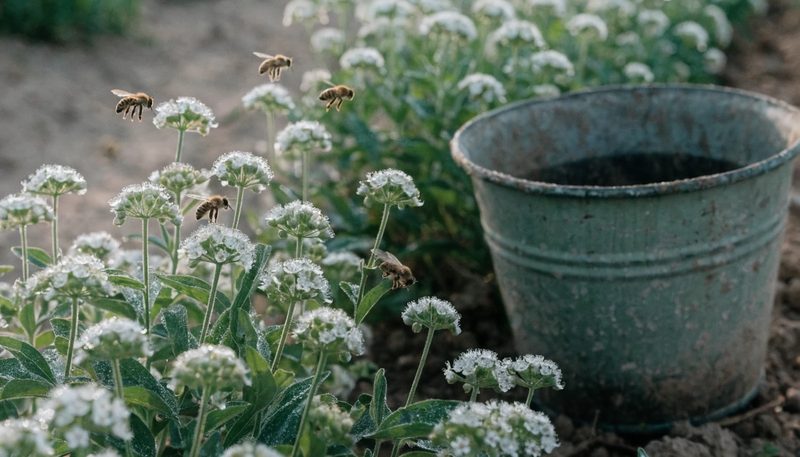
Not automatically, and the assumption that they are is the most common mistake in this area. Some of the most acutely bee-toxic insecticides in use are botanical. Natural pyrethrins, extracted from chrysanthemum, are toxic enough to honey bees that EU and US regulators flagged acute contact risk in their reviews. Saponins - the active class in our own Slug Control · were among the most toxic compounds in a screen of 63 plant allelochemicals fed to honey bees, causing mortality at dietary concentrations between 0.003% and 0.6%.
Origin is not a safety category. What matters is the specific compound, the dose, the formulation, and above all when you spray.
Which actives in this range do bees meet directly?
Geraniol is not just tolerated by honey bees - they make it. Geraniol was identified in 1962 as the active attractant component of the Nasonov gland secretion, the pheromone worker bees release to orient nestmates and mark food sources and nest entrances. Commercial swarm lures use it: a slow-release blend of citral, geraniol and nerolic and geranic acids drew 19 of 23 reproductive swarms to artificial nests, against 4 for pheromone-free controls.
That is genuinely reassuring about recognition and attraction, and it is not the same as a safety clearance. Bees detect geraniol as a signal - an electroantennogram study confirms a distinct antennal response - but the same paper notes that detailed toxicity data for geraniol are still lacking. No acute LD50 for geraniol in Apis mellifera has been published that we could locate. Anyone quoting one should be asked for the source. What can be said is that geraniol is a contact material with short persistence, so exposure is governed almost entirely by timing.
Thymol is the opposite case: bees are deliberately dosed with it. Thymol is the active in registered in-hive Varroa treatments such as Apiguard and Api Life Var, applied inside colonies at concentrations far above anything a foliar spray would deliver. That sounds like a clean bill of health. The literature says otherwise, and this is worth knowing if you use thymol products near hives.
In-hive thymol produces measurable sublethal effects. Colonies treated with a 74% thymol miticide showed reduced phototactic behavior weeks and months after treatment. A residue study measured a median body burden of 4.3 µg per bee at 24 hours, including 11 ng in the brain, and found thymol persisting in wax at around 10 mg/kg a full year after treatment. In vitro larval rearing found both lethal and sublethal developmental effects at in-hive-relevant doses. And in a direct selectivity comparison, thymol and carvacrol raised bee mortality significantly above solvent control while γ-terpinene did not - selectivity ratios of 48 to 91-fold in favor of the mite, which is a workable margin but not an absence of effect.
So thymol is well characterized in bees, deliberately used in bees, and still carries documented sublethal costs. That is the honest position.
Why is LD50 the wrong question?
Acute lethal dose measures whether a bee dies in 48 hours. It does not measure whether a forager can still navigate home.
A widely cited study tracked free-flying foragers by RFID and found that a sublethal, non-lethal dose caused enough homing failure to compromise colony dynamics - bees that survived exposure simply did not return. The canonical review of sublethal effects in beneficial arthropods makes the general argument: physiological and behavioral endpoints are required for a complete risk picture, and acute mortality alone systematically understates impact.
This applies to natural actives too. Chronic oral exposure to carvacrol and thymol produced measurable sublethal effects at doses well below acute lethality.
When should you spray to protect bees?
For short-persistence contact materials - which is most of what this range contains - when you spray matters more than what you spray.
The regulatory framework for this is RT25, the residual time to 25% bee mortality. The US EPA maintains a database of field-weathered residue toxicity tests. Products with an RT25 under roughly 8 hours pose minimal hazard if applied in late evening or at night, because residues decay below harmful levels before foragers return. Above 8 hours, extended residual toxicity requires additional mitigation.
Field evidence supports the principle. A seven-week replicated field study of truck-mounted ULV applications made when bees were not foraging found no significant difference in bee mortality, colony health or detoxification enzyme activity against untreated controls.
One honest caveat: a 2024 systematic review recalculating RT25 across 50 studies found that nearly a third of 155 EPA-registered labels stated residual toxicity inconsistently with the calculated value. Timing guidance is only as good as the residue data behind it.
Practical rules:
- Do not apply to open bloom.
- Apply at dusk, after dark, or in early morning before foraging begins.
- Avoid application when temperatures will keep bees flying late.
- Check for hives within foraging range - typically up to about 3 km - and tell the beekeeper before you spray.
- Do not let spray or rinsate reach flowering weeds beneath the crop.
Do spray adjuvants affect bees?
The active is not the only thing in the tank. Ingestion of 20 µg of an organosilicone surfactant impaired olfactory learning in honey bees in a proboscis extension reflex assay - organosilicones were more active than nonionic adjuvants, and crop oil concentrates showed no effect. “Inert” is a regulatory classification, not a biological one.
For balance: a later study found a tested organosilicone adjuvant did not increase the lethal effects of a pyrethroid or a carbamate, so the picture is about sublethal impairment rather than acute synergy.
If you tank-mix, the adjuvant is part of your pollinator risk assessment.
Are biological controls automatically bee-safe?
Bacillus thuringiensis is widely assumed bee-safe. A semi-field and laboratory study found Bt spores detectable in all hive matrices for the full test duration, with chronic exposure reducing adult and larval survival in a concentration-dependent way. Not a reason to avoid Bt - a reason not to treat it as a free pass.
Entomopathogenic nematodes were long considered non-susceptible: a 1995 study sprayed four species onto combs and found under 10% adult mortality with no evidence of infection on dissection. That finding should no longer be presented as settled. More recent work reports complete worker mortality in bioassays with some Steinernema species, so the honest statement today is that entomopathogenic-nematode bee safety is less certain than it was.
Trichoderma-based products showed no worker mortality and no adverse reproductive effects in a laboratory study on Bombus terrestris.
What should you do if bees have been harmed?
Stop applications. Contact the beekeeper if hives are nearby, and report the incident to your national pesticide incident scheme - in the UK the Wildlife Incident Investigation Scheme, in the US your State Lead Agency for pesticide regulation. Retain the product label, batch number and a record of the application, because an investigation is only as useful as the record behind it.
This page is stewardship guidance, not a regulatory determination. Product registrations, permitted uses and bee-protection label statements vary by jurisdiction, and the label on the product you hold is the governing document.
How are the actives in this range rated for bees?
Ratings reflect what is known, and “insufficient data” is stated as such rather than defaulted to safe.
| Active | Rating | What is known |
|---|---|---|
| Geraniol | Caution | No published acute LD50 in honey bees. Short persistence; timing governs exposure. Bees produce geraniol themselves as a pheromone component, which aids recognition but is not a safety clearance. |
| Thymol | Caution | Used deliberately in-hive against Varroa, but with documented sublethal effects on behavior and larvae, and persistence in wax. |
| Peppermint oil | Caution | Monoterpene, short persistence. No specific honey bee dataset located for this range's use pattern. |
| Rosemary oil | Caution | Monoterpene, short persistence. No specific honey bee dataset located for this range's use pattern. |
| Tea saponin | Avoid on bloom | Saponins were among the most toxic and most deterrent compounds in a 63-allelochemical honey bee screen. Soil and surface use away from flowering only. |
| Oxymatrine | Insufficient data | No honey bee toxicity dataset located. Treat as caution and apply the timing rules. |
| Bacillus subtilis | OK | No adverse bee findings located. |
| Trichoderma | OK | No mortality or reproductive effect in Bombus terrestris. |
| Beneficial nematodes | Caution | Long considered non-susceptible; recent work questions that. Soil-applied, so foliar exposure is limited in any case. |
Which compounds are rated, and how?
Ratings come from the compound records, so the same vocabulary appears here and on each compound page.
| Compound | Rating | Why |
|---|---|---|
| Geraniol | caution | Contact material with short persistence, so timing is the main lever. Avoid application to open bloom and to foraging periods; prefer late-day treatment where bees are active. |
Key takeaways
- Some of the most acutely bee-toxic insecticides are botanical, including natural pyrethrins.
- Acute LD50 misses sublethal harm such as foragers failing to return home.
- Do not spray open bloom; apply at dusk, after dark or early morning before foraging begins.
- Adjuvants are part of pollinator risk: an organosilicone surfactant impaired honey bee olfactory learning.
- Check for hives within about 3 km and tell the beekeeper before you spray.
References
- Identification of Geraniol as the Active Component in the Nassanoff Pheromone of the Honey Bee
- Attraction of reproductive honey bee swarms to artificial nests by Nasonov pheromone
- Terpenoid-Induced Feeding Deterrence and Antennal Response of Honey Bees
- Lethal and sub-lethal effects of thymol on honeybee (Apis mellifera) larvae reared in vitro
- Prolonged effects of in-hive monoterpenoids on the honey bee Apis mellifera
- Thymol as an alternative to pesticides: persistence and effects of Apilife Var on the phototactic behavior of the honeybee Apis mellifera
- Acaricidal Toxicity of Four Essential Oils, Their Predominant Constituents, Their Mixtures against Varroa Mite, and Their Selectivity to Honey Bees
- Risk Assessment of Effects of Essential Oils on Honey Bees (Apis mellifera L.)
- Attraction, deterrence or intoxication of bees (Apis mellifera) by plant allelochemicals
- The Sublethal Effects of Pesticides on Beneficial Arthropods
- A Common Pesticide Decreases Foraging Success and Survival in Honey Bees
- Comparison of sublethal effects of natural acaricides carvacrol and thymol on honeybees
- Residual Time to 25% Bee Mortality (RT25) Data
- Systematic review of residual toxicity studies of pesticides to bees and veracity of guidance on pesticide labels
- Effects of truck-mounted, ultra low volume mosquito adulticides on honey bees (Apis mellifera) in a suburban field setting
- Learning Impairment in Honey Bees Caused by Agricultural Spray Adjuvants
- A selected organosilicone spray adjuvant does not enhance lethal effects of a pyrethroid and carbamate insecticide on honey bees
- Assessment of the impacts of microbial plant protection products containing Bacillus thuringiensis on the survival of adults and larvae of the honeybee
- Nonsusceptibility of the Honey Bee, Apis mellifera, to Steinernematid and Heterorhabditid Nematodes
- Impact of microorganisms and entomopathogenic nematodes used for plant protection on solitary and social bee pollinators
- Trichoderma-based biological control agents are compatible with the pollinator Bombus terrestris: A laboratory study
- Conclusion on the peer review of the pesticide risk assessment of the active substance pyrethrins
Frequently asked questions
When is the safest time to spray?
Spray at dusk, after dark or in early morning before foraging begins, and never onto open bloom. Products with a residual time to 25% bee mortality (RT25) under about 8 hours pose minimal hazard when applied in late evening or at night, because residues decay before foragers return. Avoid times when temperatures will keep bees flying late.
Are essential oil sprays toxic to bees?
They carry caution ratings rather than a clean bill. Geraniol has no published acute honey bee LD50, and its short persistence makes timing the main lever. Thymol is used in hives against Varroa but has documented sublethal effects on behavior and larvae and persists in wax. Peppermint and rosemary oils are short-persistence monoterpenes with no specific honey bee dataset located.
Is Bt (Bacillus thuringiensis) safe for bees?
Bt should not be treated as a free pass. A semi-field and laboratory study found Bt spores in all hive matrices for the full test duration, and chronic exposure reduced adult and larval survival in a concentration-dependent way. That is not a reason to avoid Bt.
Is copper fungicide safe for bees?
EPA rates copper as practically nontoxic to bees. Cornell University notes that copper sulfate, the simplest form, is considered more toxic to native bees than other copper fungicides. Copper is highly to very highly toxic to fish and aquatic life, so follow the product label, including its directions near water.
Sources: Copper Sulfate General Fact Sheet, National Pesticide Information Center (Oregon State University and U.S. EPA cooperative agreement), 2012 (Government guidance); Copper Fungicides for Organic and Conventional Disease Management in Vegetables, Cornell University, Cornell Vegetable Program, 2020 (University extension publication)
Is insecticidal soap safe for bees?
Adult bees and lady beetles, with their stronger exoskeletons, are generally not affected by insecticidal soap, although their larvae may be. Soap works only while it is wet: once the spray dries on the plant, no insecticidal activity remains, so bees that visit afterward meet no active residue. Follow the product label for when and how to apply.
Sources: Insect Control: Insecticidal Soap (Fact Sheet 5.547), Colorado State University Extension, 2025 (University extension publication); The Use of Horticultural Oils and Insecticidal Soaps for Control of Insect Pests of Amenity Plants, Journal of Arboriculture 15(11), International Society of Arboriculture, 1989 (Review article)
Related reading
More in safety & stewardship
Products
No direct product mapping. This page examines a claim rather than a single ingredient, so no product maps to it directly.