

How does insecticidal soap work?
Last updated:
Insecticidal soap kills small, soft-bodied pests such as aphids, spider mites and whiteflies by disrupting their cell membranes, so they die from rapid dehydration; it can also strip protective waxes from some insects1. It works only on pests the wet spray touches, and once it dries there is no residual effect, so thorough coverage and repeat applications matter1,3.
What is insecticidal soap made of?
Insecticidal soaps, also called soap salts, are potassium salts of fatty acids: molecules made of potassium attached to long carbon chains1. A soap forms when an alkali such as potassium hydroxide acts on a fat, and commercial products contain a blend of selected fatty acid chain lengths3. Common soap salts include potassium laurate, potassium myristate, potassium oleate and potassium ricinoleate5.
Soaps have been used against insects for more than 200 years, and the first pesticide product containing soap salts was registered by the EPA in 19471. Depending on chain length, soap salts can act as insecticides, fungicides or herbicides1. EPA lists potassium salts of fatty acids as insecticides, acaricides (mite killers), herbicides and algaecides, used on food and feed crops, ornamentals, house plants, trees and shrubs5.
In North America, interest in insecticidal soap peaks in September, when aphids, whiteflies and spider mites build up on late-season crops and on plants coming indoors for winter; spray only on days below 90°F. In the Southern Hemisphere, the same late-season window falls around March.
How does insecticidal soap kill insects?
The fatty acids disrupt the structure and permeability of insect cell membranes, so cell contents leak out and the insect dies quickly3. Soaps can also remove the protective waxes that cover certain insects, leaving them more open to dehydration1. The process affects immature and adult stages, but not eggs4.
Soap is strictly a contact insecticide1. It is active only while liquid, and once the spray dries on the plant surface no insecticidal activity remains4. An insect that was not coated with spray is not affected by walking over or eating treated plant material3. Pests that cannot be fully wetted, such as aphids inside curled leaves, will not be controlled1.
Soaps are well suited to integrated pest management programs4. Fatty acids also break down quickly: microbes rapidly degrade them in soil, and EPA estimates their half-life at less than one day5.
Which pests does insecticidal soap control?
Small, soft-bodied arthropods are the most susceptible: aphids, young scales, whiteflies, psyllids, mealybugs and mites1. Thrips and scale crawlers are also listed as targets, and crawlers, nymphs and larvae tend to be more susceptible than adults2,3. Larger insects with tougher bodies respond poorly, and soap is less effective against hard-bodied pests such as beetles1,3.
Beneficial species are affected when they are hit directly. Both pest and beneficial mites are susceptible, and direct sprays are very harmful to predatory mites used for biological control1,3. Adult lady beetles and bees, with stronger exoskeletons, are generally not affected, although their larvae may be1.
| Pest or group | How well soap works | Source notes |
|---|---|---|
| Aphids, mealybugs, psyllids | Most susceptible | Small, soft-bodied pests are most susceptible1 |
| Spider mites | Most susceptible | Soap or oil is the preferred selective treatment6 |
| Whiteflies | Only where sprayed | Controls only whiteflies directly sprayed8 |
| Scale insects | Crawlers only | Young scales and crawlers are affected1,2 |
| Caterpillars, sawflies, beetle larvae | Generally not controlled | Generally not controlled by soap sprays1 |
| Insect eggs | Little effect | Soap has less effect on eggs3,4 |
Does insecticidal soap work on spider mites and whiteflies?
For spider mites, yes, with good technique. University of California guidance names insecticidal soap or insecticidal oil as the preferred selective treatment when one is needed6. Soaps must contact mites to kill them, so excellent coverage of leaf undersides is essential, and repeat applications may be required6. Colorado State University notes repeats at relatively short intervals, about four to seven days, may be needed for spider mites and scale crawlers1. Follow the product label for the interval.
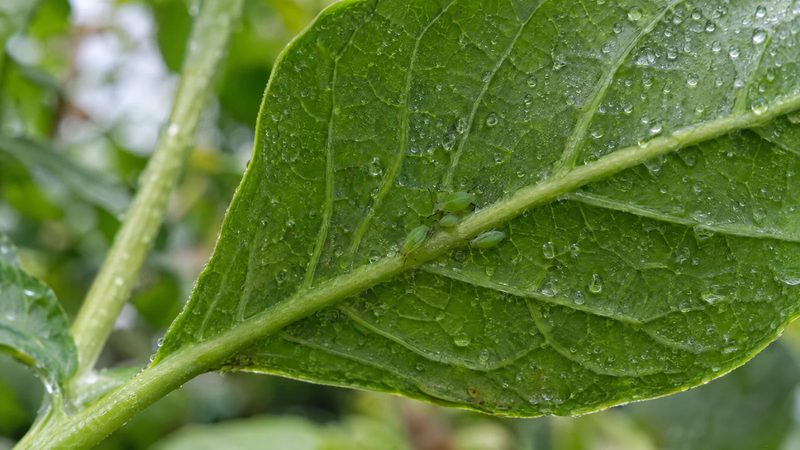
Whiteflies are harder. Insecticidal soaps, neem oil and petroleum oils control only the whiteflies they hit directly, so the undersides of all infested leaves must be covered, usually the lowest and hardest to reach8. In gardens, soaps or oils may reduce whitefly populations but not wipe them out8. Soaps are among the products least harmful to whitefly natural enemies8.
For aphids, soaps and oils are the best insecticide choices for most situations; they kill only the aphids present on the day of spraying and leave no toxic residue for natural enemies that arrive later7.
Can you make your own insecticidal soap?
Extension services advise against it. Colorado State University states that homemade soap solutions are not recommended for insect control, because home remedies are not consistently formulated or tested, so there is no evidence that they control pests1. Dish soaps contain strong detergents that can injure plants, damage soil and contaminate waterways1.
Commercial insecticidal soaps are designed to kill insects, tested for efficacy, selected to limit plant injury, and comply with pesticide label law1. Household soaps also do not qualify as registration-exempt minimum risk pesticides, which makes their use as pesticides of questionable legality1. Dishwashing soaps are made to remove grease and can dissolve the waxy cuticle on leaves3. Dry dish detergent and laundry detergents are too harsh for plants2.
How do you use insecticidal soap without damaging plants?
Read the whole label and follow its directions, including the mixing concentration2. Spray tops and especially undersides of leaves, where many pests feed2. Apply when the spray will dry slowly, such as early morning or early evening, because soap works only while wet3,4. Do not spray in full sun, above 90°F, or on water-stressed plants2.
Some plants are sensitive. Sensitive species include sweet pea, cherries, plum, horse chestnut, mountain ash, Japanese maple, bleeding heart, maidenhair fern, lantana, nasturtium, gardenia and Easter lily2. Test a small area and wait 24 hours before treating a whole plant2. Rinse plants with clean water if wilting or leaf-edge browning appears within a few hours2. Leaf damage can build up with repeated sprays, so avoid unnecessary applications1.
Water quality matters too. Calcium, magnesium and iron in hard water cause fatty acids to precipitate, making the soap ineffective2. To check your tap water, mix the spray in a glass jar and let it stand 15 minutes: a uniform milky mix is fine, while surface scum means you should use distilled or bottled water2.
Key takeaways
- Insecticidal soap is potassium salts of fatty acids that disrupt insect cell membranes, causing rapid dehydration.
- It works only on pests the wet spray touches and leaves no residual activity once dry.
- It suits aphids, spider mites, mealybugs, psyllids and young scales; whiteflies need thorough underside coverage.
- Commercial products are tested for efficacy and plant tolerance; homemade dish soap mixes are not recommended.
- Test on a small area, avoid heat above 90°F and water-stressed plants, and follow the product label.
References
- Insect Control: Insecticidal Soap (Fact Sheet 5.547)
- Insecticidal Soaps for Garden Pest Control (HGIC 2771)
- Insecticidal Soaps (fact sheet)
- The Use of Horticultural Oils and Insecticidal Soaps for Control of Insect Pests of Amenity Plants
- R.E.D. Facts: Soap Salts (EPA-738-F-92-013)
- Pest Notes: Spider Mites (UC ANR Publication 7405)
- Pest Notes: Aphids (UC ANR Publication 7404)
- Pest Notes: Whiteflies (UC ANR Publication 7401)
Frequently asked questions
Is insecticidal soap harmful to people, pets or fish?
EPA placed soap salts in its lowest toxicity category for acute oral and brief skin exposure, though longer skin contact can cause mild or moderate irritation5. Potassium salts of fatty acids are generally recognized as safe by FDA5. They are slightly toxic to fish and highly toxic to aquatic invertebrates, so keep spray out of ponds and streams5. Follow the product label for any pet-specific directions.
Can you use insecticidal soap on vegetables right up to harvest?
Does insecticidal soap kill insect eggs?
Can insecticidal soap be mixed with other pesticides?
A 1989 review in the Journal of Arboriculture notes soaps are physically compatible with many pesticides but not with concentrated mineral elements, lime sulfur, Bordeaux mixture or copper sulfate4. Some commercial soaps already include another active ingredient such as neem oil, pyrethrin, sulfur or spinosad2. Only combine products as their labels allow.