

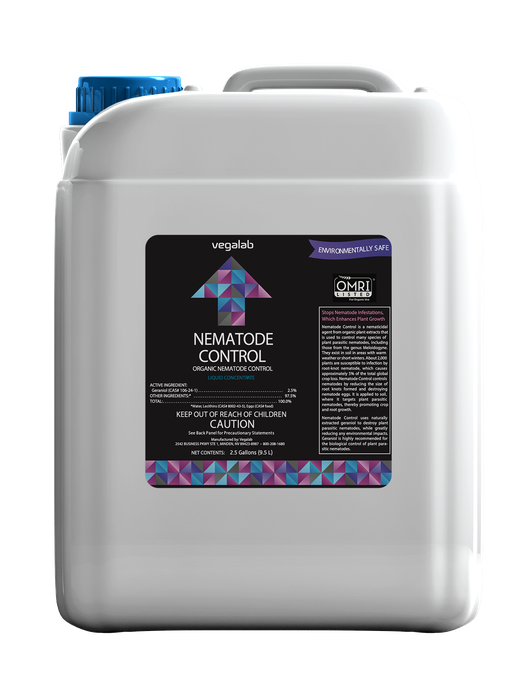
Nematode Control
Nematode Control is a natural nematicide that controls plant-parasitic nematodes, including root-knot. Its nano-emulsified geraniol active distributes through the soil profile and disrupts nematode feeding and reproduction, helping minimise root-knot formation while keeping residues low and the product compatible with organic programs.
Natural control of parasitic nematodes - 90%+ efficacy.
- Zero REINo re-entry wait
- Zero PHIHarvest the same day
Natural control of parasitic nematodes from Vegalab Crop Science, powered by Geraniol. Nematode Control targets Root-knot, lesion, burrowing, pin and spiral nematodes.
Shipping $20 + $5 per gallon, calculated at checkout. Online orders up to 50 gallons; contact us for larger loads. Not available for delivery to Canada.
Secure checkout on Shopify. Each store keeps its own bag.
Nano-emulsified geraniol distributes through the soil profile and disrupts feeding and reproduction of plant-parasitic nematodes. Root-knot formation is minimized, egg hatch is reduced, and the rhizosphere is left intact for beneficial microbiota.
| Active | Geraniol |
|---|---|
| Targets | Root-knot, lesion, burrowing, pin and spiral nematodes |
| Dilution rate | 1:1,000 prevention · 1:500 active · 5–10 L/ha (67.6 fl oz/acre–1.1 gal/acre) soil drench |
| Application | Soil irrigation, prevention or treatment |
| Line · Category | Control · Natural control of parasitic nematodes |
- Root-knot nematode (Meloidogyne)
- Lesion nematode (Pratylenchus)
- Burrowing nematode (Radopholus)
- Pin nematode (Paratylenchus)
- Spiral nematode (Helicotylenchus)
What are plant-parasitic nematodes, and why do they damage crops?
Plant-parasitic nematodes are microscopic roundworms in the soil that feed on plant roots. Root-knot nematodes (Meloidogyne) are the most damaging: they invade the root and trigger the swollen galls that give them their name, disrupting the plant’s uptake of water and nutrients. The visible result is stunted growth, wilting, nutrient-deficiency symptoms and reduced yield - often mistaken for a fertility problem.
Because nematodes live below ground and build up over seasons, infestations are easy to miss until yield drops. Vegalab Nematode Control targets the major plant-parasitic groups - root-knot (Meloidogyne), lesion (Pratylenchus), burrowing (Radopholus), pin (Paratylenchus) and spiral (Helicotylenchus) nematodes - where they feed and reproduce.
How does Vegalab Nematode Control work?
The active ingredient is geraniol, a plant-derived terpene, delivered as a nano-emulsion. The nano-emulsion distributes the active evenly through the soil profile and reaches the root zone where nematodes are active. There it disrupts nematode feeding and reproduction, reduces egg hatch, and helps minimise the root-knot galling that drives yield loss - while leaving the surrounding rhizosphere and beneficial microbiota intact.
Independent and internal evaluation supports 90%+ efficacy against target nematodes when applied as directed. Because the active is nature-derived and breaks down rather than persisting, residues stay low and the product remains compatible with organic programs.
Which nematodes and crops is it for?
Nematode Control is effective against root-knot, lesion, burrowing, pin and spiral nematodes. It has been tested on tomatoes, cucumbers, melons, strawberries, watermelons and banana - high-value crops where root-knot pressure is a common, costly problem. It suits both preventive programs and active infestations.
How is it applied, and at what rate?
Nematode Control is applied as a soil drench through irrigation. Typical rates are 1:1,000 for prevention and 1:500 for active infestations, or 5–10 L/ha (67.6 fl oz/acre to 1.1 gal/acre). For a rate tailored to your crop and pressure, use the Vegalab Rate Calculator or speak to an agronomist via the contact link on this page.
Can it be used in an organic programme?
Its geraniol active is delivered on Vegalab’s food-grade biopolymer platform (non-PLGA). Controlled delivery means more active reaches the target with less off-target loss, so you get nematicidal performance with a cleaner residue profile than many conventional nematicides.
Need a recommendation for your crop or pest?
Contact usFrequently asked questions
What is the application rate for Nematode Control?
1:1,000 prevention · 1:500 active · 5–10 L/ha (67.6 fl oz/acre–1.1 gal/acre) soil drench Application: Soil irrigation, prevention or treatment.
Is Nematode Control suitable for natural or organic programs?
Nematode Control is a naturally derived input (Geraniol) designed to fit low-residue and IPM programs.
Which crops is Nematode Control used on?
Tomatoes · Cucumbers · Melons · Strawberries · Watermelons · Banana
Is Vegalab Nematode Control safe for beneficial soil organisms?
It is formulated to target plant-parasitic nematodes while leaving the surrounding rhizosphere and beneficial microbiota intact, Follow label rates for your crop.
How quickly does it work?
Geraniol acts on nematode feeding and reproduction once it reaches the root zone. Use the preventive rate (1:1,000) ahead of pressure and the active rate (1:500) on established infestations for fastest impact.
Can it be tank-mixed with other inputs?
Compatibility depends on the other products and your water. Run a jar test first, and contact a Vegalab agronomist for guidance on your specific program.
Does it control root-knot nematodes specifically?
Yes · root-knot (Meloidogyne) is a primary target, alongside lesion, burrowing, pin and spiral nematodes. Reducing egg hatch helps minimise new root-knot galling.
How often should it be re-applied?
Re-apply according to crop stage and nematode pressure; preventive programs use lighter, regular applications while active infestations use the stronger rate. The Rate Calculator and an agronomist can set a schedule for your situation.
The evidence behind these actives
Reference pages on the actives this product declares - mode of action, limits and the published sources, written independently of the product listing.
Problems addressed
Pest & disease library
See all plant pests & diseases →
Reference links to identification and management guides. Claims and product availability vary by jurisdiction - always read and follow the product label.
Last updated: