


What is integrated pest management?
Last updated:
Integrated pest management (IPM) is a science-based decision process that combines biological, cultural, physical and chemical tools to manage pests while minimizing economic, health and environmental risk.3 An IPM program sets action thresholds, monitors and identifies pests, prevents problems first, and then uses the most effective lower-risk control, with pesticides applied only when monitoring shows they are needed.1,2
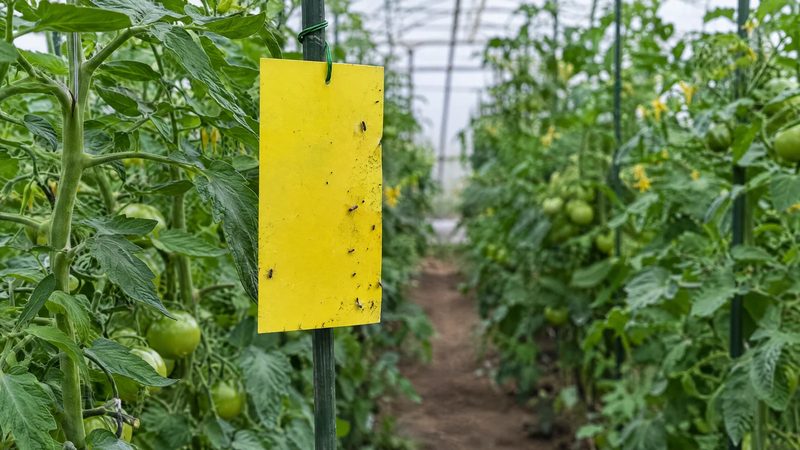
What does integrated pest management mean?
The U.S. Environmental Protection Agency describes IPM as an effective and environmentally sensitive approach that uses current information on pest life cycles and their interaction with the environment to manage pest damage at the lowest cost and with the least hazard to people, property and the environment.1 The University of California Statewide IPM Program defines it as an ecosystem-based strategy that focuses on long-term prevention of pests or their damage through a combination of techniques such as biological control, habitat manipulation, modified cultural practices and resistant varieties.2
The federal National Road Map for IPM adds that a pest is any organism, whether microbe, plant or animal, that poses an economic, health, aesthetic or environmental risk, and that pests are context-specific: an organism that is a pest in one setting may be benign or beneficial in another.3 That is why identification comes before any action. IPM applies on farms and also in homes, gardens and workplaces.1 It began in agriculture and has since expanded into schools, residential and institutional buildings, biosecurity and natural areas.3
Where did integrated pest management come from?
IPM grew out of "integrated control," defined in 1959 by Stern and colleagues as applied pest control that combines and integrates biological and chemical control.4 The concept was developed by entomologists facing indiscriminate use of broad-spectrum insecticides, insect outbreaks caused by the elimination of natural enemies, and the emergence of pesticide resistance.4 The same 1959 paper defined the economic injury level, the lowest pest population density that will cause economic damage.5
IPM now applies to all aspects of plant protection, not only insects.4 In the European Union, Directive 2009/128/EC requires every member state to ensure that all professional pesticide users apply eight general principles of IPM, starting January 1, 2014.4 In the United States, the National Road Map for IPM, revised in September 2018, sets out federal research, education and extension priorities for IPM across agriculture, communities and natural areas.3
How do you set up an IPM program?
EPA describes IPM as a four-tiered approach, and the same steps apply on a farm or in a home garden.1,7 The European Union's eight principles cover the same ground in more detail and add two steps that close the loop: anti-resistance strategies and checking whether the measures worked, based on records of pesticide use and pest monitoring.4 Federal IPM principles in the Road Map likewise call for written records of decisions, treatments and monitoring results, and for adjusting strategies when objectives are not met.3
| Step | What it involves | Example |
|---|---|---|
| 1. Set action thresholds | Decide in advance the pest level or condition at which action is needed | Seeing a single pest does not by itself mean control is needed |
| 2. Monitor and identify | Check which pests are present, how many, and what damage they cause | Correct identification avoids treating harmless or beneficial organisms |
| 3. Prevent | Manage the crop, lawn or indoor space so pests do not become a threat | Crop rotation, pest-resistant varieties, pest-free rootstock |
| 4. Control | Choose the most effective lower-risk option first | Pheromones or trapping, then targeted spraying; broadcast non-specific spraying last |
What is an action threshold, and how is it different from an economic injury level?
An action threshold is the pest population level, or environmental condition, at which control is needed.1 Federal IPM principles describe it as the level at which a pest's presence becomes a nuisance, a health hazard or an economic threat, and note that a defined threshold sets the size, scope and intensity of the plan.3
In crops, two terms are used. The economic injury level is the lowest pest density that causes economic damage, while the economic threshold is the density at which an intervention, such as a pesticide application, is economically justified.5 NC State Extension notes that treating at the economic injury level may give the highest yields but is not necessarily the most cost-effective, whereas treating at the economic threshold is the most cost-effective approach.5
EU guidance treats robust, scientifically sound thresholds as essential for decisions and asks users to take regional, crop and climate-specific thresholds into account where they exist.4 In many cases thresholds have not yet been developed, which is why monitoring and local advice remain central.4
Which control tactics do growers combine in IPM?
UC IPM groups the tools into four families, and an IPM program usually uses several at once.2 Non-chemical methods that are each less efficient than a pesticide can still produce useful gains when combined.4
- Chemical control in IPM means choosing and applying materials so that they reduce possible harm to people, nontarget organisms and the environment.2
- EPA lists pheromones that disrupt mating and trapping among the lower-risk first choices, with broadcast spraying of non-specific pesticides as a last resort.1
- When you use any pesticide, including biological ones, follow the product label.
| Tactic | How it works | Examples |
|---|---|---|
| Biological control | Natural enemies manage pests and their damage | Predators, parasites, pathogens and competitors |
| Cultural control | Practices that make it harder for pests to establish, reproduce, spread and survive | Adjusting irrigation to reduce root disease and weeds; crop rotation |
| Mechanical and physical control | Kill pests directly, block them out, or make the site unsuitable | Traps, mulches for weeds, steam sterilization of soil, screens |
| Chemical control | Pesticides used only when needed, alongside other methods | The most selective effective product, bait stations rather than broad sprays, spot treatment |
How does IPM slow pesticide resistance?
EPA defines pesticide resistance as a significant decrease in sensitivity to a pesticide that reduces its field performance, and it names IPM as the best way to avoid it.6 The IPM practices EPA lists include rotating crops to avoid repeated use of the same pesticides, sampling pest populations before applying pesticides where practical, timing applications for when pests are most susceptible, and scouting before and after an application to confirm the pest and check control.6 Where a pesticide is needed repeatedly, the general recommendation is to alternate or combine products with different modes of action, because resistance to two or more such products at once is much less likely.6,4
Resistance is not a theoretical risk. The fungus that causes cucurbit powdery mildew, Podosphaera xanthii, developed resistance to demethylation inhibitor fungicides, then to strobilurins and more recently to cyflufenamid.4 Slowing the evolution of resistance to pesticides and other tactics is one of the three stated aims of IPM in the U.S. Road Map.3
Key takeaways
- IPM is a decision process that combines biological, cultural, physical and chemical tools to manage pests with the least economic, health and environmental risk.
- The four EPA steps are set action thresholds, monitor and identify, prevent, and control with the lowest-risk effective option first.
- An economic threshold is the pest level where treatment pays; it sits below the economic injury level, where damage becomes economic.
- Pesticides are used only when monitoring shows they are needed, chosen to be as selective as possible.
- Rotating modes of action, scouting before and after treatment, and keeping records slow resistance and show whether the program works.
References
- Introduction to Integrated Pest Management
- What Is Integrated Pest Management (IPM)?
- A National Road Map for Integrated Pest Management (revised September 21, 2018)
- Eight principles of integrated pest management
- Economic Thresholds
- Slowing and Combating Pest Resistance to Pesticides
- Integrated Pest Management (IPM) Principles
Frequently asked questions
Is integrated pest management the same as organic growing?
Does IPM mean you never use pesticides?
Can home gardeners use IPM?
Yes. EPA states that home gardeners can apply the same four steps used on farms, and suggests contacting the state Extension Service or a Master Gardener for local help.7 In a garden, the steps are the same: identify the pest, decide what level of damage you will accept, prevent the conditions that favor it, and pick the lowest-risk control that works.1
Is IPM required by law?
In the European Union, yes: Directive 2009/128/EC requires all professional pesticide users to apply the eight general principles of IPM from January 1, 2014.4 In the United States, IPM is promoted through federal and state programs, and EPA notes that IPM-labeled foods are available only in limited areas.7,3