


How do you use potassium bicarbonate as a fungicide?
Last updated:
Spray a registered potassium bicarbonate fungicide at the first signs of powdery mildew, mixed as the label directs, covering upper and lower leaf surfaces thoroughly2,3. It kills mildew spores and threads on contact within minutes and is not persistent, so repeat sprays and pair it with protectant fungicides4. Avoid advanced infections, where plant injury can be severe1.
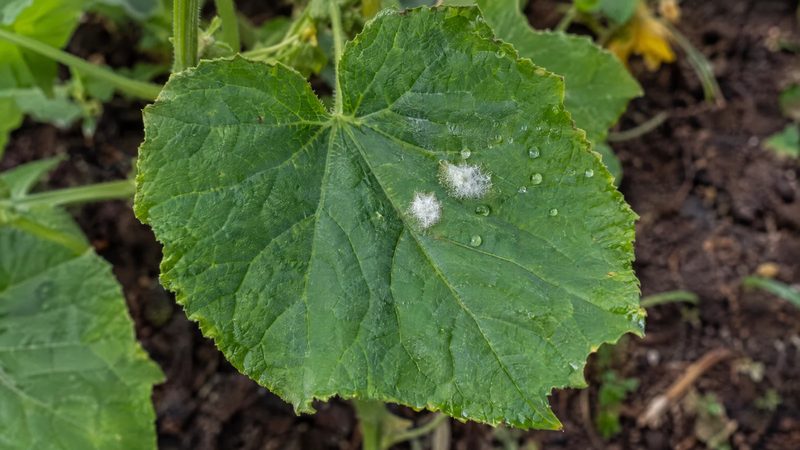
What is potassium bicarbonate for plants?
Potassium bicarbonate (KHCO3), also called potassium hydrogen carbonate, is an alkali salt widely used in the food industry, for example in baking powder4. FDA affirms it as generally recognized as safe as a direct human food ingredient8. It has been used for plant disease control since at least 19334.
In the United States it is registered as a fungicide. In 1997 EPA approved a potassium bicarbonate product to control powdery mildew on grapes, cucumbers, strawberries, tobacco and roses, after concluding that its use would not generally cause unreasonable adverse effects to the environment7. University of California guidelines list it as an inorganic salt fungicide, not classified into a resistance group2. In grapes it is conditionally acceptable for organic production, subject to the certifier3, and the European Commission authorized its use in organic agriculture in 20086.
It is not the same as baking soda, which is sodium bicarbonate. Research comparing bicarbonate salts found that the right salt depends on the disease, and potassium bicarbonate consistently gave the best control of powdery mildew4.
In North America, interest in potassium bicarbonate peaks in July, when powdery mildew spreads quickly on cucurbits, grapes and roses and early treatment works best. In the Southern Hemisphere, the same window falls around January.
How does potassium bicarbonate kill powdery mildew?
The precise mode of action is not fully understood and is thought to combine several effects4. Early work pointed to a change in pH on the leaf surface; later work indicates it damages powdery mildew spores, leading to dehydration and spore death, and other studies suggest it upsets the potassium ion balance in the walls of fungal threads (hyphae), causing them to collapse4. Because it acts in more than one way, the risk of resistant strains developing is low4.
It works as a contact fungicide, killing spores and hyphae on the plant surface within minutes4. In laboratory tests, potassium bicarbonate significantly suppressed spore germination of three powdery mildew fungi, from tomato, pea and rose5. Sources differ on how to classify it. A UK review describes it mainly as an eradicant that can delay or suppress disease after symptoms are visible, and less effective as a protectant4. University of California nursery guidelines call it primarily a protectant that also eradicates some existing infections when coverage is thorough2.
Does potassium bicarbonate work on powdery mildew?
Field and greenhouse trials say yes. In three field trials in Taiwan, potassium bicarbonate reduced powdery mildew severity on tomato, pea and rose, was as effective as the comparison fungicides, and gave more than 80% disease control5. In Swiss greenhouse trials on tomato, cucumber, melon, rosemary, sage and corn salad, its effect was comparable to sulfur for most crops, with efficacy above 90% when applied protectively6.
Timing changed the result. On melon, where mildew was already present before the first spray, efficacy fell to 74%6. University of California guidance agrees that products containing potassium bicarbonate effectively eradicate powdery mildew fungi, but warns that phytotoxicity will be severe on advanced infections1. On grapes, field reports suggest eradicant activity, though University of California notes this has not been demonstrated in university research there, and it is most effective alternated with another fungicide and used as a protectant3.
| Study | Crops | Result |
|---|---|---|
| Field trials, Taiwan (2005) | Tomato, pea, rose | More than 80% disease control, as effective as fungicides5 |
| Greenhouse trials, Switzerland (2011) | Tomato, cucumber, melon, herbs, corn salad | Comparable to sulfur for most crops; above 90% with protective sprays6 |
| Same trials, melon | Melon with mildew present before spraying | 74% efficacy6 |
| UC grape guidelines | Grapes | Most effective alternated with another fungicide and used as a protectant3 |
How do you use a potassium bicarbonate spray?
Start with a product registered as a fungicide and mix it exactly as its label directs. Apply at the first signs of infection, because thorough coverage is essential for good protection2. Cover upper and lower leaf surfaces and, on grapes, the clusters3. Good control depends on direct contact with the fungus4.
Plan on repeats. Potassium bicarbonate is not persistent on the plant and powdery mildew can develop quickly, so repeated applications work best4. Its efficacy improves when an adjuvant is added to the spray, and University of California notes a non-acidifying spreader-sticker or a non-phytotoxic crop oil is recommended on grapes3,4. Use only adjuvants the product label allows, and do not mix potassium bicarbonate with acids4.
Because it eradicates more than it protects, control is most effective when it is used in a program with protectant fungicides4. Sulfur, for example, works only as a preventive applied before symptoms appear1.
Can potassium bicarbonate damage plants?
It can. University of California warns that products containing potassium bicarbonate can injure plants infected with powdery mildew, so use them with caution and never on advanced infections, where phytotoxicity will be severe1. A UK grower guide notes some risk of spray scorch on some crops, depending on rate and crop4.
Simple precautions reduce the risk. When using it on a crop for the first time, spot treat a few plants or a small area first4. Scorch can occur where spray solution pools and stays concentrated on part of a leaf4. Close to harvest, it can leave a white deposit on some ornamentals with rough leaves, such as geranium4. In the Swiss trials, no phytotoxicity was seen with the formulated product tested6.
Where does potassium bicarbonate fit in a powdery mildew program?
Its strength is early clean-up. Among the less toxic powdery mildew fungicides, most, including sulfur, are mainly preventive, while potassium bicarbonate has some eradicant activity and oils work best as eradicants1. A UK review recommends it as one part of an integrated strategy, used with protectant fungicides4.
It also suits growers looking for low-residue options. The same review lists a low risk of pathogen resistance and use close to harvest among its advantages4. It can be used in mixtures with a protectant such as sulfur, although little information exists on mixtures in general4. For a closer look at how it compares with baking soda, see the bicarbonates page in the related questions.
Key takeaways
- Potassium bicarbonate is a food-grade salt registered as a fungicide for powdery mildew on crops including grapes, cucumbers, strawberries and roses.
- It kills mildew spores and threads on contact within minutes, so it works best on early infections.
- Trials found more than 80% control on tomato, pea and rose, and results comparable to sulfur in greenhouses.
- Cover both leaf surfaces, repeat sprays because it is not persistent, and follow the product label.
- Do not spray advanced infections, where plant injury can be severe.
References
- Pest Notes: Powdery Mildew on Ornamentals (UC ANR Publication 7493)
- Agriculture: Floriculture and Ornamental Nurseries Pest Management Guidelines, Powdery Mildew
- Agriculture: Grape Pest Management Guidelines, Powdery Mildew
- Use of potassium hydrogen carbonate for powdery mildew control (Project CP 48, Final Report)
- Control of Powdery Mildew with Potassium Bicarbonate and Polyelectrolyte
- Potassium Bicarbonate as a Potential Sulphur Substitute in Protected Organic Cropping
- Toagosei Company Ltd.; Approval of a Pesticide Product Registration (62 FR 47666, FR Doc. 97-23973)
- 21 CFR 184.1613, Potassium bicarbonate
Frequently asked questions
Is potassium bicarbonate spray safe for pets?
Potassium bicarbonate itself is affirmed by FDA as generally recognized as safe as a food ingredient8. EPA concluded that its fungicide use, following commonly recognized practice, will not generally cause unreasonable adverse effects to the environment7. Fungicide products can also contain adjuvants and other ingredients, so keep pets away during spraying and follow the precautions on the product label.