


What are PDRN and polynucleotides in skincare?
Last updated:
PDRN (polydeoxyribonucleotide) and polynucleotides are purified DNA fragments extracted from the sperm of rainbow trout or chum salmon, which is why clinics call them salmon DNA. PDRN uses shorter chains and acts mainly through adenosine A2A receptors; polynucleotides are longer chains that form a viscous gel in the skin. Most clinical evidence comes from injections, and evidence for topical serums is early.
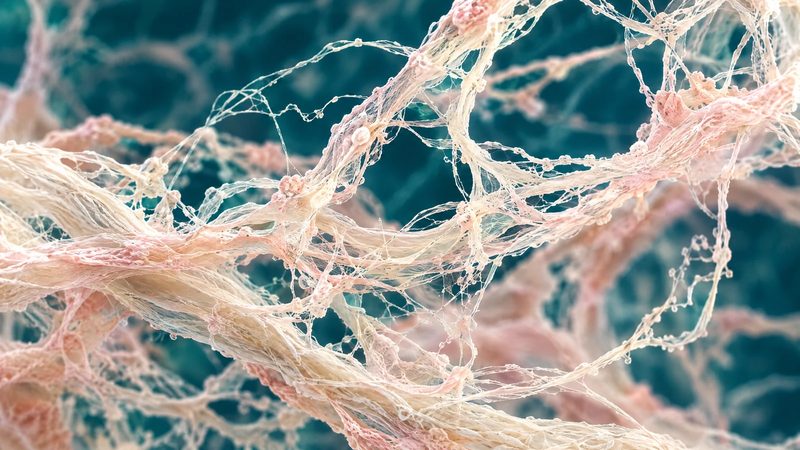
What are PDRN and polynucleotides made of?
Polydeoxyribonucleotide (PDRN) is a mixture of deoxyribonucleotide polymers with molecular weights between 50 and 1,500 kDa, derived from the sperm DNA of rainbow trout (Oncorhynchus mykiss) or chum salmon (Oncorhynchus keta)1,2. Manufacturing removes active proteins and peptides that could provoke an immune reaction, giving an active substance more than 95% pure1.
Polynucleotides (PN) are DNA-derived biopolymers from the same salmon source. What separates the two is chain length and the way each is thought to act2.
| PDRN (polydeoxyribonucleotide) | PN (polynucleotides) | |
|---|---|---|
| Chain size | Shorter chains, 50 to 1,500 kDa1,2 | Longer chains, at or above 1,500 kDa2 |
| Main proposed action | Adenosine A2A receptor activation and the nucleotide salvage pathway1,2 | Forms a highly viscous three-dimensional matrix in the dermis; extracellular matrix remodeling2 |
| Regulatory history | Approved by the Italian Medicines Agency in 1994 for skin ulcers, dystrophic connective tissue disorders and superficial wounds2 | PN-based injectable medical devices approved in several European countries; a PN injectable widely used in the Asian aesthetic market2 |
| Usual route in aesthetic practice | Intradermal injection2 | Injection2 |
How are PDRN and polynucleotides thought to work?
The best-described mechanism for PDRN is engagement of adenosine A2A receptors1. Through that receptor it is reported to lower pro-inflammatory cytokines such as TNF-alpha and IL-1 beta and to up-regulate vascular endothelial growth factor2.
PDRN also offers nucleosides and nucleotides to the salvage pathway, a route that supplies nucleotides to growing keratinocytes and fibroblasts1,2.
Polynucleotides are described differently: their longer chains form a highly viscous matrix in the dermis and act mainly through extracellular matrix remodeling2. Much of the clinical history behind both comes from wound care, and the strongest trial results are still in wound healing2,3.
What does the clinical evidence show?
A 2026 systematic review found seven randomized trials of PN or PDRN with 183 participants in total: four on skin rejuvenation, one on scar prevention after surgery and two on wound healing3. The most consistent benefit was in wound healing, where PDRN sped re-epithelialization and shortened healing time, and no serious treatment-related adverse events were reported3.
The reviewers describe the evidence as limited by small samples, varied protocols and inconsistent outcome measures, and they judged three of the seven trials at low risk of bias3. A 2026 narrative review of PDRN after aesthetic procedures adds that the optimal concentration, molecular weight, injection depth, timing and number of sessions have not been determined by clinical evidence2.
| Focus | Participants | Comparison | Reported result |
|---|---|---|---|
| Wrinkles around the eyes | 29 women, 6 months | Radiofrequency microneedling plus topical PN vs radiofrequency microneedling plus saline | Greater early improvement in wrinkle indentation with PN |
| Wrinkles and pigmentation | 24 women, 6 weeks | Microneedling plus PDRN vs microneedling plus platelet-rich plasma | Greater wrinkle reduction with PDRN; pigmentation results comparable |
| Delivery method | 10 adults, 2 weeks | Needle-free jet PN delivery vs needle injection | Less pain with jet delivery, efficacy maintained |
| Formulation | 15 patients, 12 weeks | Ionization-adjusted PN filler vs conventional PN filler | Comparable results, less injection pain and fewer local reactions |
Does a PDRN serum work on intact skin?
Evidence for topical PDRN is at an early stage. A 2026 study opened by stating that the mechanism and delivery of topical PDRN remain insufficiently defined, then tested a medium-length PDRN in cells, skin models and people4.
In its randomized, double-blind, split-face trial, 31 women aged 35 to 55 with self-reported sensitive skin used an eye cream with 0.1% PDRN on one side and 0.1% retinol on the other for 28 days; the authors report roughly two-fold greater improvement in periocular wrinkles and eye bag measures on the PDRN side4.
The authors name a key limit themselves: Raman spectroscopy, used to track penetration, cannot cleanly distinguish applied PDRN from the skin's own nucleic acids4. Several authors list affiliations with biotechnology companies4. DNA chains are large molecules, so the skin barrier question covered on the delivery systems page applies directly.
On an ingredient list, DNA-derived cosmetic ingredients appear under INCI names such as Sodium DNA, which the EU cosmetic ingredient database CosIng lists with the function skin conditioning5. The CosIng entry does not specify chain length or source species, so the INCI name alone will not tell you whether an ingredient is PDRN-grade material5.
What is a polynucleotide skin booster or salmon DNA facial?
In clinics, a salmon DNA treatment usually means injection. PDRN-based dermal fillers and biostimulatory injectables have been approved by regulators in countries such as South Korea and in Europe2. Aesthetic uses described for polynucleotide injectables include facial rejuvenation, wrinkle reduction and the area around the eyes2.
In the randomized trials reviewed in 2026, no serious treatment-related adverse events were reported3. Injection is a medical procedure. Ask who will perform it, what their license covers and what the written aftercare says, and read the Vegalab guide to skincare around injectables before booking.
What happens in salmon DNA microneedling?
Microneedling uses a needle device on the skin, and FDA guidance sets out when a microneedling product is a medical device and the regulatory pathway for microneedling devices for aesthetic use7.
Two of the randomized trials pair nucleotide ingredients with needling. In 24 women aged 30 to 50, microneedling with 3% salmon PDRN reduced wrinkle severity more than microneedling with platelet-rich plasma at six weeks, although reviewers noted some concerns about the trial's risk of bias3. In 29 women, radiofrequency microneedling plus topical PN produced greater early improvement in wrinkles around the eyes than radiofrequency microneedling plus saline3.
A 2026 review notes that no published human randomized trial has tested PDRN as an after-procedure product following microneedling, lasers, peels or radiofrequency in an aesthetic patient group2. The practitioner chooses any product used during needling and sets the date when normal skincare resumes.
Key takeaways
- PDRN and polynucleotides are purified DNA fragments from trout or salmon sperm; polynucleotide chains are longer.
- PDRN acts mainly through adenosine A2A receptors, while polynucleotides form a viscous matrix in the dermis.
- Seven randomized trials with 183 participants exist across rejuvenation, scars and wounds, and the reviewers call the evidence limited.
- Topical PDRN evidence rests on early work, such as a 28-day split-face trial in 31 women.
- Injections and microneedling are professional procedures, and FDA's list of approved filler materials does not include polynucleotides.
References
- Pharmacological Activity and Clinical Use of PDRN
- Polydeoxyribonucleotide (PDRN) in Post-procedure Recovery in Aesthetic Medicine: A Narrative Review
- Polynucleotides and Polydeoxyribonucleotides for Skin Rejuvenation, Postoperative Scar Prevention, and Wound Healing: A Systematic Review of Randomized Clinical Trials
- Topical medium-length PDRN enhances dermal extracellular matrix repair in photodamaged skin via PI3K-Akt/TGF-beta-regulated pathways
- CosIng: SODIUM DNA (substance 79472)
- FDA-Approved Dermal Fillers
- Regulatory Considerations for Microneedling Products: Guidance for Industry and Food and Drug Administration Staff
Frequently asked questions
Is PDRN vegan?
Are polynucleotide injections FDA-approved?
FDA's page on approved dermal fillers lists the materials in approved products as hyaluronic acid, calcium hydroxylapatite, poly-L-lactic acid and polymethylmethacrylate beads; polynucleotides are not among them6. PN-based injectable devices have been approved in several European countries and are widely used in Asian aesthetic markets2.
Do polynucleotide injections hurt?
How is a polynucleotide booster different from a hyaluronic acid filler?
Hyaluronic acid in fillers combines with water and swells in gel form, producing a smoothing or filling effect; it is sometimes crosslinked to last longer, and FDA puts the effect at about 6 to 12 months6. Polynucleotides are described as acting mainly through extracellular matrix remodeling2, and a 2026 review reports PDRN showing non-inferior short-term cosmetic results compared with hyaluronic acid filler2.