


What do mycorrhizal fungi do for plants?
Last updated:
Mycorrhizae are symbioses between fungi and plant roots. Arbuscular mycorrhizal fungi enter root cells and trade mineral nutrients for the plant's photosynthate. Their hyphae reach beyond the zone that roots have already depleted, so phosphorus uptake improves most, with zinc and copper also benefiting. Secondary effects include better drought tolerance, more stable soil aggregates and some protection against root pathogens.
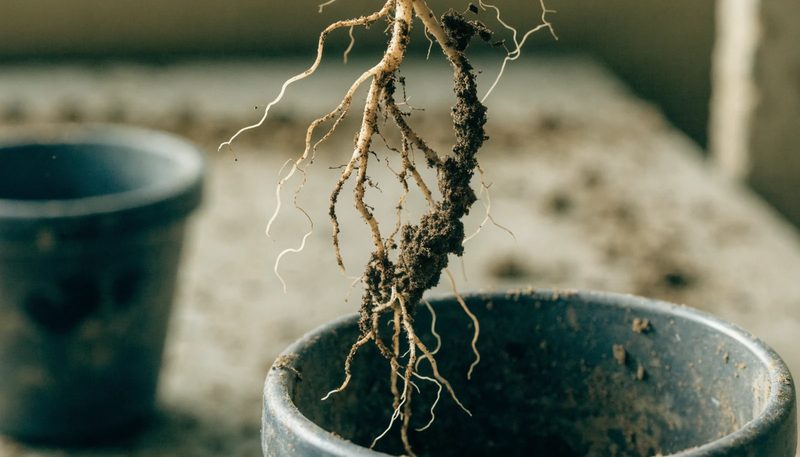
What is mycorrhizal fungi?
Arbuscular mycorrhizal fungi form symbioses with the roots of the great majority of land plants - an association dating back to the colonization of land by plants. The fungus penetrates root cortical cells and forms branched structures called arbuscules, across which nutrients and carbon are exchanged: the plant supplies photosynthate, the fungus supplies mineral nutrients gathered from a soil volume far larger than the roots can reach.
Charge BioBoost contains Rhizophagus irregularis (formerly Glomus intraradices) plus Glomus etunicatum, Glomus intraradices, Glomus mosseae and Glomus aggregatum. Note that the taxonomy of this group has been revised repeatedly, so older and newer names for the same organism circulate - and Rhizophagus irregularis and Glomus intraradices in that list may reflect that history rather than two distinct organisms. Worth verifying against the supplier's strain data.
What does the symbiosis deliver?
Phosphorus uptake is the best-established benefit. Phosphate moves very slowly in soil, so roots rapidly deplete the zone immediately around them; hyphae extend well beyond that depletion zone and effectively enlarge the absorbing surface enormously. Zinc and copper uptake benefit similarly.
Secondary effects include improved water relations and drought tolerance, better soil aggregate stability through hyphal networks and glomalin production, and some protection against root pathogens through physical occupation and induced resistance.
What does mycorrhizal fungi not do?
They do not fix nitrogen, and the nitrogen benefit is modest and indirect. They form no association with brassicas, beets or several other non-host families, so inoculating those crops is pointless - a specific and useful thing for a grower to know. High available phosphorus suppresses colonization, because the plant has no reason to trade carbon for a service it does not need, so inoculating a high-phosphorus soil wastes the product. Tillage disrupts existing hyphal networks. And propagule viability in commercial products is variable and not always well controlled.
How do you read the label?
Propagule or spore count per unit, and the species list. As with bacterial inoculants, the number formulated is not the number that colonizes, and colonization percentage in your own crop and soil is the only figure that answers the question.
Key takeaways
- Phosphorus uptake is the best-established benefit, because hyphae extend beyond the root depletion zone.
- Mycorrhizal fungi do not fix nitrogen, and their nitrogen benefit is modest and indirect.
- Brassicas, beets and several other non-host families form no association.
- High available phosphorus suppresses colonization, and tillage disrupts existing hyphal networks.
- Colonization percentage in your own crop and soil is the figure that shows whether an inoculant worked.
References
- Roles of arbuscular mycorrhizas in plant phosphorus nutrition
- Arbuscular mycorrhizal fungi reduce growth and infect roots of the non-host plant Arabidopsis thaliana
- A meta-analysis of mycorrhizal responses to nitrogen, phosphorus, and atmospheric CO2 in field studies
- Tillage or no-tillage: Impact on mycorrhizae
Frequently asked questions
Do mycorrhizal fungi inoculants work?
They can, where a host crop and soil conditions allow colonization. Propagule viability in commercial products is variable and not always well controlled, and the number formulated is not the number that colonizes. Inoculating non-host crops or high-phosphorus soil wastes the product, and measuring colonization percentage in your own crop and soil is the only figure that answers the question.
Which crops do not benefit from mycorrhizal fungi?
Brassicas, beets and several other non-host families form no association, so inoculating those crops is pointless. Most other land plants do form the symbiosis.
Do mycorrhizal fungi provide nitrogen?
No. They do not fix nitrogen, and any nitrogen benefit is modest and indirect. Their main contribution is phosphorus, with zinc and copper uptake benefiting similarly.
More in actives
Products
No direct product mapping. Nothing in the Vegalab range declares mycorrhizal fungi in its composition, so this page has no product link - the absence is deliberate, not an omission.