


Nutrient salts in a foliar feed
Last updated:
Why this page exists
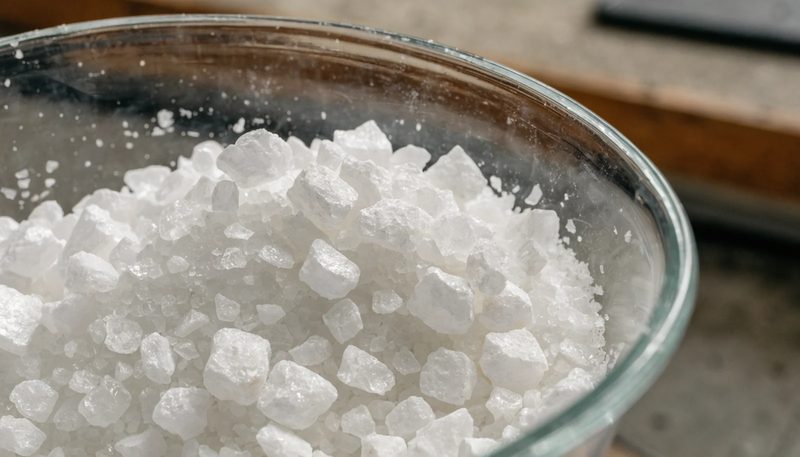
A grower reading the ingredient list of a plant-nutrition product will find mono-potassium phosphate, potassium sulfate, magnesium sulfate, calcium chloride and a series of micronutrient sulfates. These are manufactured mineral salts. A reasonable question follows: how does that sit with a product range positioned around natural and low-residue inputs?
The honest answer is that plant nutrition is elemental. A plant takes up potassium as the potassium ion regardless of whether it came from a mined sulfate, a composted banana or a seaweed extract. There is no natural or synthetic version of a potassium ion. Where natural sourcing genuinely matters - pesticidal actives, residues on produce, effects on soil biology and non-target organisms - it matters a great deal. For mineral nutrients it matters much less, and claiming otherwise would be misleading.
What does differ between nutrient sources is counter-ion, solubility, salt index, pH effect and any organic fraction that comes along with it. Those are real and worth understanding.
The salts in the range
Mono-potassium phosphate · phosphorus and potassium, highly soluble, mildly acidic, low salt index. The most widely used salt in the range.
Potassium sulfate and potassium chloride - both supply potassium; the counter-ion is the decision. Sulfate adds sulfur and suits chloride-sensitive crops; chloride is cheaper but chloride-sensitive crops including many fruits, potatoes and tobacco can be damaged. Note the data issue flagged elsewhere: Potassium Pro lists potassium chloride as the active and potassium sulfate as the derived-from source. Those are not the same thing and the discrepancy matters agronomically.
Potassium nitrate · potassium plus nitrate nitrogen, in NPK Pro.
Calcium chloride · highly soluble calcium, used where calcium mobility is the limiting factor as in blossom-end rot and bitter pit. Chloride again warrants attention.
Magnesium sulfate · magnesium and sulfur, both mobile and readily taken up.
Manganese, zinc and copper sulfates, boric acid and ammonium molybdate - the micronutrient sources. Copper deserves a specific note: copper accumulates in soil and does not degrade, so repeated application over years is a genuine long-term consideration rather than a nutritional non-issue.
Phosphoric acid · phosphorus and strong acidification, useful for adjusting alkaline spray water.
A labeling issue to fix
The crop product pages carry a templated FAQ line describing each product as a naturally derived input, generated by interpolating the active field. On urea and synthetic salt formulations that produces statements such as "a naturally derived input (Urea, manganese sulfate, EDTA-Fe + citric acid)". Urea and EDTA chelates are not naturally derived. That claim needs to be scoped to the products where it is accurate - and this page is the right place to explain the distinction properly.
Reading a fertilizer label
Guaranteed analysis gives the elemental percentages. Derived-from tells you the salts, and therefore the counter-ions, the salt index and the pH behavior. Both matter, and the second is the one most often ignored.
References
Products
No direct product mapping. Nothing in the Vegalab range declares nutrient salts in a foliar feed in its composition, so this page has no product link - the absence is deliberate, not an omission.