


How do you keep a backyard flock biosecure?
Last updated:
Keep disease out by controlling what reaches the birds: separate the flock from wild birds and other poultry, quarantine new birds for at least two to three weeks, wear dedicated boots and clothes, never borrow equipment, and clean before you disinfect1,2,3. New birds and contaminated foot traffic pose the greatest risk, so manage those first1.
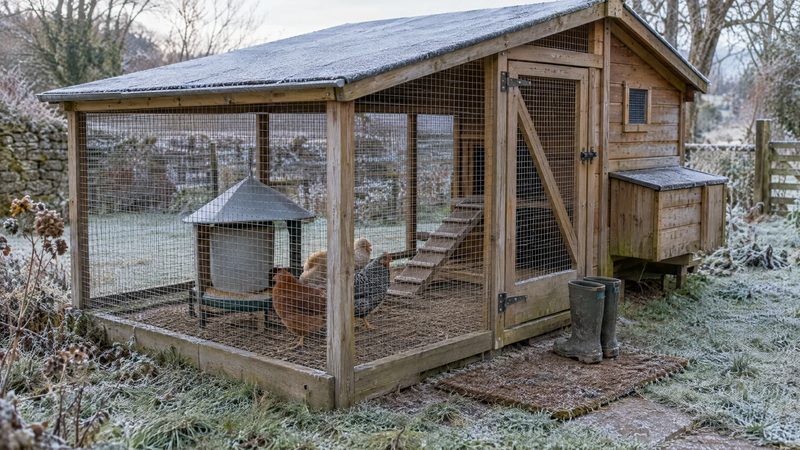
What does biosecurity mean for a backyard flock?
Biosecurity is the set of measures taken to prevent disease from entering a poultry flock or spreading within it, and every flock, however small, benefits from a written plan2. Extension specialists group the work under three headings: isolation, traffic control and sanitation4. Controlling traffic onto the property is one of the least expensive measures and still reduces the chance of disease transmission4.
Birds raised free-range or on pasture need particular attention because they have more exposure to environmental disease sources1. Disease reaches a flock through diseased wild birds or purchased birds of unknown origin, healthy-looking birds that recovered from disease but still carry it, the shoes and clothing of people who have been near other birds, borrowed equipment, and rodents and free-flying birds reaching housing and feed1. Of these, introducing new birds and contaminated foot traffic pose the greatest risk1.
In North America, many HPAI clusters have coincided with winter and with spring and fall waterfowl movements, but the current H5N1 lineage is established in wild waterfowl, so the risk is year-round rather than seasonal5. In the Southern Hemisphere migration falls in the opposite months, so the periods of heightened vigilance shift accordingly.
How does bird flu reach backyard chickens?
Highly pathogenic avian influenza (HPAI) H5 has been confirmed in commercial and backyard flocks across the United States since February 2022, with more than 195 million birds depopulated5. The virus moves from wild birds to poultry by direct contact with infected waterfowl and indirectly through contaminated environments, equipment, vehicles and people5. Mallards and Canada geese account for the largest share of wild bird detections5.
Earlier strains arrived in seasonal waves along migratory flyways, but the current lineage has become established in wild waterfowl across the United States, so the risk to poultry is now continuous5. Extension guidance puts the risk for a backyard flock as low but not zero, and the more contact birds have with wild or migrating birds, the higher it is3. Small mammals may also play a part: during a 2025 outbreak in an Illinois flock, the H5N1 virus was found in a cat and in rats on the same farm6.
What belongs on a backyard biosecurity checklist?
Each item below closes one of the routes disease uses to reach a flock. Reassess the list periodically as birds, visitors and local risks change4.
| Practice | What to do |
|---|---|
| Fence the flock | A perimeter fence that fully surrounds the birds, with gates kept closed; screens on windows and vents to keep wild birds out2 |
| Separate from wild birds | Enclose the coop and run, trim nearby roosting trees, avoid ponds and creeks where wild birds gather, and pen free-ranging birds when avian flu risk is high1,3 |
| Protect feed and water | Keep feeders and waterers clean and covered, store feed in sealed containers and clean up spills at once2,3 |
| Buy carefully | Source birds from dealers in the National Poultry Improvement Plan and avoid auctions and live bird markets1 |
| Quarantine newcomers | Hold new birds apart for at least two to three weeks before mixing1,2 |
| Dedicate boots and clothes | Wear footwear that stays with the flock and is sanitized after each visit1,3 |
| Limit visitors | Keep visitors few, ask where they have been, and keep anyone who has been near other birds in the last 24 hours away from the flock2 |
| Never borrow equipment | Do not share tools or supplies with other bird owners; clean and disinfect anything that comes onto the property1,2 |
| Clean, then disinfect | Remove organic material first, because it can make disinfectants ineffective2 |
| Control rodents and insects | Pests can introduce and spread disease; clean feed spills promptly2 |
How long should you quarantine new chickens?
Extension sources recommend at least two weeks2 to at least three weeks1, so three weeks covers both. The lowest-risk course is not to add new birds to an existing flock at all, because new birds can carry disease without showing any signs2. If you do add birds, isolation will help reveal birds recently exposed to disease that are not yet sick, but it will not identify birds that were sick, recovered and continue to shed pathogens1.
Any bird that shows signs of disease during quarantine should not join the flock, and a sick or dead bird is best submitted to a poultry diagnostic laboratory2. Care for the existing flock first and the quarantined birds last, never the reverse unless you change clothing and shower2.
What are the warning signs, and who should you call?
Early detection limits spread, so watch for changes in eating, drinking and behavior, and for signs and sounds of respiratory distress1. If birds are sick or dying, isolate them, wear gloves, disinfect your boots, and report suspected avian influenza to the USDA or your State Veterinarian3. In the United States, the USDA line for sick birds is 1-866-536-75933. Keep visitors away while you wait for a diagnosis, and keep movement between the affected flock and any other birds to a minimum2.
- Sudden, unexplained deaths1,3
- Lack of energy and poor appetite1
- Nasal and eye discharge, sneezing or coughing1,3
- A drop in egg production or soft, thin-shelled eggs1
- Swelling around the eyes, head, comb or wattles1,3
- Purple discoloration of wattles, combs and legs1
- Tremors, drooping wings, or twisting of the head and neck1
How do you protect your family from germs backyard chickens carry?
Live poultry can carry Salmonella without looking sick. From 1990 to 2014, 53 outbreaks of human Salmonella infection linked to live poultry caused 2,630 illnesses, 387 hospitalizations and 5 deaths in the United States, and the median patient age was 97. In 2020 alone, 1,722 outbreak illnesses were linked to contact with privately owned poultry, more than in any previous year8.
Keeping poultry inside the house and kissing birds were among the high-risk practices reported by sick people7. Wash your hands with soap and water before and after handling birds, their droppings, or their feed and water3. Keep the birds outside the home, and supervise children closely around chicks and ducklings, since most patients in these outbreaks reported contact with chicks7.
Key takeaways
- Biosecurity rests on isolation, traffic control and sanitation.
- New birds and contaminated foot traffic are the two biggest risks, so quarantine newcomers for at least two to three weeks and wear dedicated boots.
- Avian influenza is now established in North American wild waterfowl, so keep wild birds away from the flock, its feed and its water year-round.
- Report sudden deaths or flu-like signs at once to the USDA or your State Veterinarian.
- Wash hands after handling birds and keep poultry out of the house to cut Salmonella risk.
References
- Biosecurity: Revisited
- Biosecurity for Small Poultry Flocks
- Steam Team: Biosecurity-Avian Influenza
- Small Flock Biosecurity
- Spatiotemporal clustering of highly pathogenic avian influenza (HPAI) H5N1 at the wild waterfowl-poultry interface: Vector-specific spillover risks in the U.S., 2022-2025
- Detection of Highly Pathogenic Avian Influenza A(H5N1) Virus in Cat and Rats during Outbreak in Backyard Poultry, United States, 2025
- Outbreaks of Human Salmonella Infections Associated with Live Poultry, United States, 1990-2014
- Salmonella illness outbreaks linked to backyard poultry purchasing during the COVID-19 pandemic: United States, 2020
Frequently asked questions
Should I keep my chickens in their coop during bird flu outbreaks?
Can cats or rats spread bird flu to chickens?
During a 2025 outbreak in an Illinois flock, H5N1 virus was detected in a cat and in rats from the farm, and researchers concluded that small mammals might contribute to transmission6. Rodent droppings can also carry other disease agents that infect both people and poultry, so clean up feed spills and keep up rodent control2.