


What are exosomes in skincare?
Last updated:
Exosomes are extracellular vesicles, about 30 to 150 nanometers across, that cells release to carry proteins, lipids and nucleic acids. Skincare versions come from stem cells, platelets, plants or milk. Early studies report better elasticity, hydration and wrinkle depth, but they are small and short. No exosome product is FDA approved, and human-derived material is prohibited in EU cosmetics.
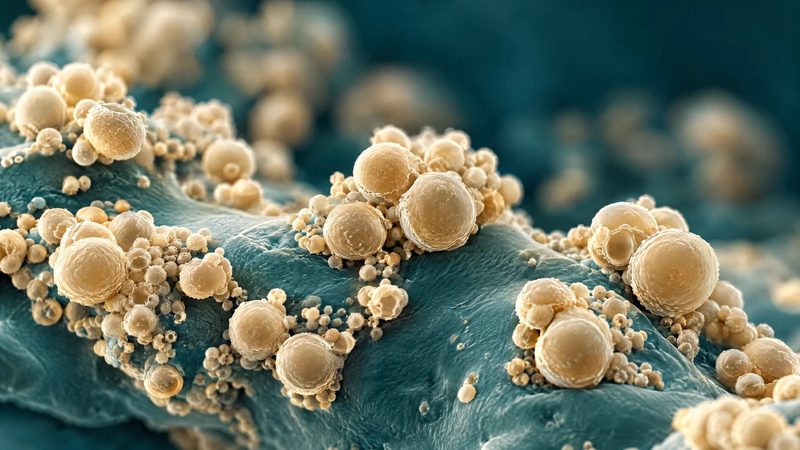
What are exosomes?
Exosomes are a subtype of extracellular vesicles (EVs), ranging from 30 to 150 nanometers, that transport proteins, lipids and nucleic acids between cells1. Health Canada describes them as membrane-bound extracellular vesicles that can be derived from human, animal, plant or synthetic sources2.
A related ingredient is conditioned media: the liquid in which cells have been cultured, which can also contain extracellular vesicles or exosomes2. Research interest in exosomes for the skin comes from their role in cell communication and their potential as a cell-free approach, which a 2025 review describes as an alternative to traditional regenerative therapies1.
Where do skincare exosomes come from?
The source shapes both what is in the vesicle and how the product is regulated1,2. A 2025 review lists platelets, mesenchymal stem cells, immune cells, epithelial cells and plant cells as sources, with plant vesicles called plant-derived extracellular nanoparticles1. Clinical studies in dermatology have used mostly mesenchymal stem cell-derived material3, and a 2026 systematic review included products from adipose stem cells, platelets, plants and milk4.
| Source | Where it appears in the cited research | Regulatory point |
|---|---|---|
| Human mesenchymal stem cells, including adipose-derived | The main source in dermatology clinical studies3,4 | Cells, tissues or products of human origin are listed in Annex II, the EU list of substances prohibited in cosmetics5. |
| Human platelets | Listed as a source and studied for rejuvenation1,4 | Same EU prohibition; in Canada, classification depends on representation, level of action and composition2,5. |
| Plant cells | Plant-derived extracellular nanoparticles1,4 | Non-human sources can be a drug or a cosmetic in Canada depending on the same factors2. |
| Milk | Included in a 2026 systematic review4 | Non-human source; same Canadian factors apply2. |
What do exosomes do for skin, according to studies?
A 2026 systematic review screened 1,032 papers and included 214. The studies reported improved skin elasticity, reduced wrinkle depth, better hydration and changes in pigmentation, alongside laboratory evidence of increased collagen and elastin production, lower oxidative stress and suppression of matrix metalloproteinases, the enzymes that break down the skin's support proteins4.
A 2026 scoping review of 17 human studies found that 76% recorded improvements in wrinkles, pigmentation, elasticity, hydration or scars3. Its authors caution that the studies were small, had short follow-up, were mostly non-randomized and single-arm, and carried potential conflicts of interest3. A 2025 review adds that isolation methods are inconsistent and sources vary, so standardization and larger clinical trials are still needed1.
Are exosomes regulated as cosmetics or drugs?
In the United States, FDA states that there are currently no FDA-approved exosome products and that exosome products intended to treat diseases or conditions require FDA approval6. Claims also matter: FDA gives claims that a product will regenerate cells as an example of claims that make a product a drug, even if it is marketed as a cosmetic8.
Health Canada's April 2026 final notice says human-derived exosomes, human extracellular vesicles and human cell-conditioned media are not inherent drugs and can be used in either drugs or cosmetics2. Classification depends on representation, level of action and composition, and a cosmetic containing them must show a lack of percutaneous absorption2. Therapeutic claims, or claims of benefits comparable to cosmetic surgical procedures, make the product a drug2.
In the European Union, cells, tissues or products of human origin appear in Annex II of the Cosmetics Regulation, the list of prohibited substances5. A 2025 review notes that these strict European rules on human-derived exosomes have pushed researchers toward plant-based sources1.
Can you use exosomes with microneedling?
Exosomes have been studied with microneedling: the 2026 scoping review lists topical application, microneedling, fractional CO2 laser and injection as delivery methods3. The route changes the regulatory picture. Health Canada states that a product containing human-derived exosomes is not consistent with a cosmetic if its label or package insert indicates administration through microneedling or injection2.
In the United States, FDA guidance notes that microneedling products promoted with topical substances may be combination products, and that the class II classification for aesthetic microneedling devices does not include devices intended for transdermal delivery of topical products such as cosmetics, drugs or biologics7. Which product a practitioner applies during a procedure is a decision within that practitioner's training and scope of practice.
What are the risks, and what should you check on the label?
Adverse events in exosome studies were uncommon, but the scoping review recorded granulomas, necrosis and allergic reactions after injection3. Health Canada lists potential toxic effects, the risk of unsubstantiated therapeutic claims for unapproved drugs and, for any material of human origin, the transmission of infectious diseases and adventitious agents2. FDA asks anyone harmed after a regenerative medicine product, including exosomes, to report it to MedWatch6.
- Check the source on the ingredient list: human, animal, plant or synthetic, because the source changes how the product is regulated2,5.
- Check the claims: a promise to regenerate cells or treat a condition is a drug claim in the US8, and therapeutic claims make a product a drug in Canada2.
- Check the directions: a topical exosome product labeled for microneedling or injection is not consistent with a cosmetic in Canada2.
Key takeaways
- Exosomes are 30 to 150 nm extracellular vesicles that carry proteins, lipids and nucleic acids between cells.
- Skincare exosomes come from stem cells, platelets, plants or milk, and human-derived material is prohibited in EU cosmetics.
- Studies report gains in elasticity, wrinkles and hydration, but they are small, short and mostly single-arm.
- No exosome product is FDA approved, and in Canada a human exosome product labeled for microneedling or injection is not a cosmetic.
References
- Exosomes in Cosmetic Dermatology: A Review of Benefits and Challenges
- Final notice: Classification of topical products containing human-derived exosomes, human extracellular vesicles, or human cell-conditioned media
- Exosome-Based Therapies in Dermatology: A Scoping Review
- Exosomes in Skin Rejuvenation: Systematic Review of Anti-Aging Effects and Clinical Applications
- CosIng: Cells, tissues or products of human origin (Annex II, reference number 416)
- Consumer Alert on Regenerative Medicine Products Including Stem Cells and Exosomes
- Regulatory Considerations for Microneedling Products: Guidance for Industry and Food and Drug Administration Staff
- Is It a Cosmetic, a Drug, or Both? (Or Is It Soap?)
Frequently asked questions
Are exosome skin treatments FDA approved?
What is an exosome skin booster?
Skin booster is not a category used in the FDA or Health Canada documents cited on this page. What those regulators look at is the product's intended use, its claims and how it is administered2,8. A product injected into the skin is not a cosmetic in Canada2, and injection was the route linked to granulomas, necrosis and allergic reactions in the scoping review3.