


Does rosemary oil work as an insecticide?
Last updated:
Yes, on contact. Rosemary oil, distilled from Rosmarinus officinalis (now Salvia rosmarinus), disrupts the cuticle and membranes of mites and soft-bodied insects and has documented antifungal activity. It is not systemic, persists only briefly and knocks down only what it contacts, so it is usually used in a blend, where it also acts as a solvent for other actives.
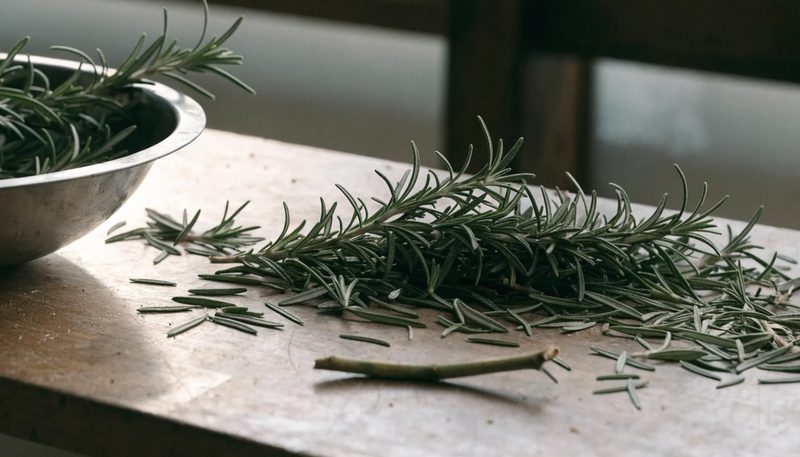
What is rosemary oil?
Rosemary oil is distilled from Rosmarinus officinalis (now Salvia rosmarinus). Its composition depends on chemotype - 1,8-cineole, camphor and alpha-pinene are the usual dominant constituents in the essential oil, while the non-volatile extract contains carnosic acid and rosmarinic acid, which are the compounds of cosmetic and food-preservation interest.
That split matters: the volatile oil and the polyphenol-rich extract are different materials with different uses, and "rosemary extract" on a label may mean either.
How does rosemary oil work?
Contact activity against mites and soft-bodied insects through cuticle and membrane disruption, with the same octopamine-receptor interference reported for other monoterpene-rich oils. It also has documented antifungal activity. In practice it is used as part of a blend rather than alone, contributing both direct activity and solvency for other actives.
How is rosemary used in crop protection and skincare?
Rosemary appears in Vegalab's Spider Mite Control and in the Clarifying NanoSerum and ProSerum on the beauty side. In crop protection it is a pesticidal active; in skincare it functions as an antimicrobial and antioxidant, and its polyphenols are also used as natural preservative boosters.
Under the canonical rule for this library, Crop Science holds the definitive page and the beauty section cross-links to it rather than duplicating it - which avoids two near-identical pages competing for the same search term.
What does rosemary oil not do?
Not systemic, short-persistence, and phytotoxic at higher rates on sensitive crops. Camphor-rich chemotypes are more irritant. And rosemary oil is not an acaricide in the residual sense - it knocks down what it contacts.
Is rosemary oil safe?
Toxic to fish. Concentrated oil is a skin irritant and a mucous-membrane irritant. Camphor content warrants particular caution around cats and around young children, and the general terpenoid caution for cats applies here as elsewhere.
Key takeaways
- Composition depends on chemotype; 1,8-cineole, camphor and alpha-pinene usually dominate the essential oil.
- The volatile oil and the polyphenol-rich extract (carnosic and rosmarinic acids) are different materials.
- It is phytotoxic at higher rates on sensitive crops, and camphor-rich chemotypes are more irritant.
- It is toxic to fish and irritates skin and mucous membranes in concentrate.
References
- Rosemary oil vs minoxidil 2% for the treatment of androgenetic alopecia: a randomized comparative trial
- Carnosic Acid and Carnosol, Two Major Antioxidants of Rosemary, Act through Different Mechanisms
- Antifungal, Insecticidal, and Repellent Activities of Rosmarinus officinalis Essential Oil and Molecular Docking of Its Constituents against Acetylcholinesterase and beta-Tubulin
- 40 CFR 152.25(f), Table 1 - Permitted active ingredients
- Pathophysiology, conventional treatments, and evidence-based herbal remedies of hair loss with a systematic review of controlled clinical trials
- Toxicoses From Essential Oils in Animals — Merck Veterinary Manual · clinical reference
Frequently asked questions
Is rosemary oil safe for cats?
It calls for caution. Camphor content warrants particular care around cats and young children, and the general terpenoid caution for cats applies. Concentrated oil is also a skin and mucous-membrane irritant.
Which pests does rosemary oil affect?
It acts on contact against mites and soft-bodied insects, and it also has documented antifungal activity. It is not a residual acaricide: it knocks down what it contacts.
Is rosemary oil the same as rosemary extract?
Not necessarily. The volatile essential oil is dominated by compounds such as 1,8-cineole, camphor and alpha-pinene, while the non-volatile extract contains carnosic and rosmarinic acids used in cosmetics and food preservation. 'Rosemary extract' on a label may mean either.
Products
No direct product mapping. Nothing in the Vegalab range declares rosemary oil in its composition, so this page has no product link - the absence is deliberate, not an omission.