

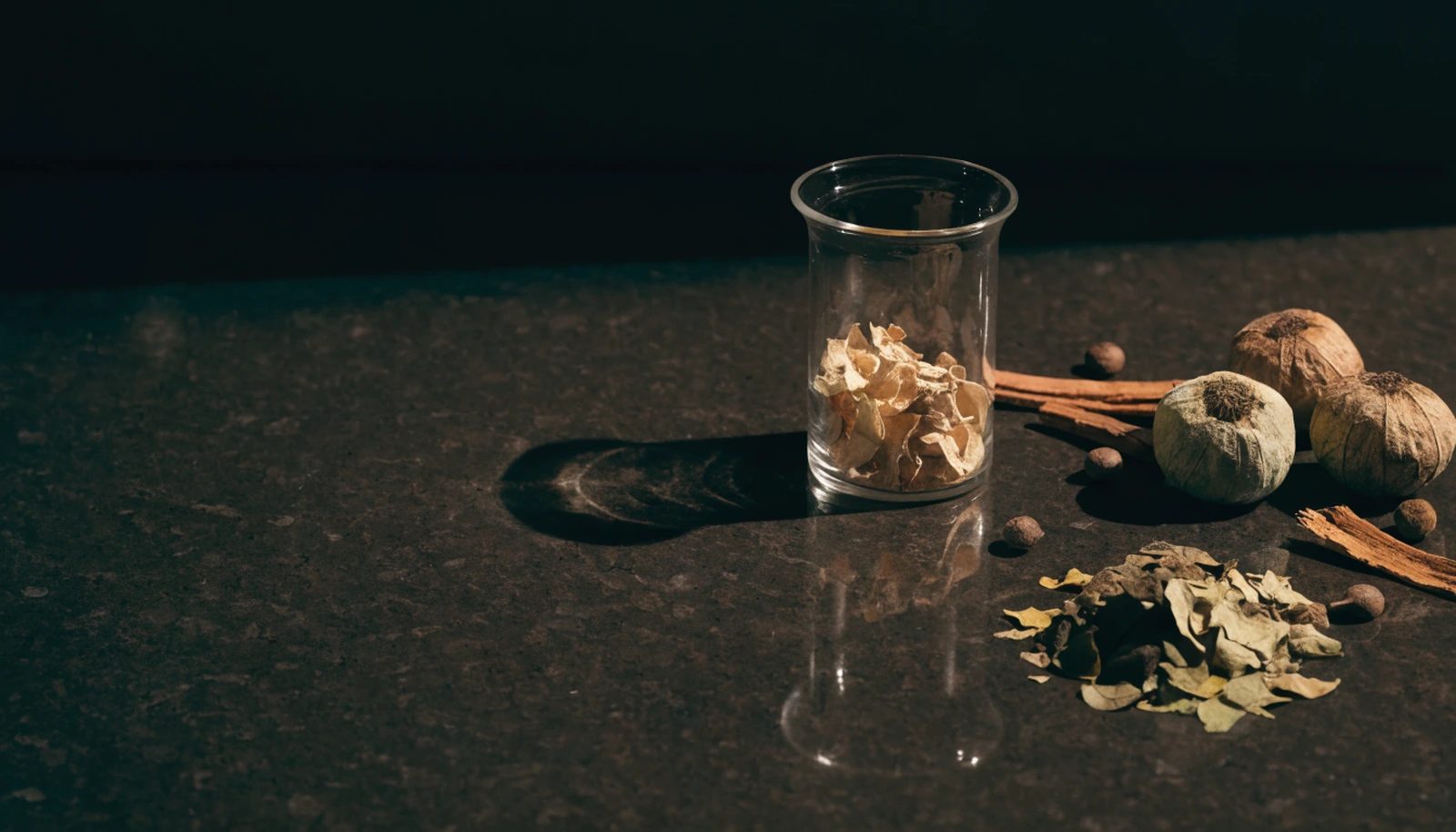
Black soybean and beer yeast
Last updated:
Black soybean
Glycine max with anthocyanin-rich black seed coats. It contains isoflavones - genistein and daidzein - which are phytoestrogens with weak oestrogen-receptor activity, plus anthocyanins as antioxidants. The hair and scalp rationale rests on two threads: isoflavone activity relevant to androgen-driven follicle miniaturisation, and antioxidant protection of the follicular environment.
Beer yeast
Saccharomyces-derived. Yeast provides B vitamins, beta-glucans, peptides and nucleotides. Brewer's yeast has a long history in hair and skin preparations, and beta-glucan's barrier and soothing activity is reasonably supported. Specific evidence for beer yeast improving hair density is limited.
How to present this
Both ingredients are present at levels that could plausibly matter, which is more than can be said for several ingredients elsewhere in these ranges. Both have mechanistic rationales that are coherent rather than fanciful. Neither has clinical evidence for hair density that would survive scrutiny.
The accurate framing is a traditionally used, generously included botanical and yeast system with plausible mechanisms and limited clinical data - which is a perfectly respectable thing to say, and considerably more durable than a growth claim.
What does black soybean and beer yeast not do?
Neither is a treatment for androgenetic alopecia, and neither should be positioned against products with clinical evidence for that indication. Phytoestrogen content also means anyone with a hormone-sensitive condition may reasonably want to raise topical use with a clinician.
References
The studies below describe the ingredient itself. Finished-product results appear in each product's evidence dossier.
More in ingredients
Products
No direct product mapping. Nothing in the Vegalab range declares black soybean and beer yeast in its composition, so this page has no product link - the absence is deliberate, not an omission.