

Slug Control
Slug Control is a natural molluscicide powered by saponin that controls slugs and snails, and also helps against mole crickets and ants. The saponins disrupt the protective mucus and soft tissues that slugs and snails depend on, giving a low-residue alternative to conventional metaldehyde or iron-phosphate baits.
Natural gastropod pesticide · 85-95% efficacy, Surfactant action.
- Zero REINo re-entry wait
- Zero PHIHarvest the same day
Natural gastropod pesticide from Vegalab Crop Science, powered by Saponins. Slug Control targets Slugs, snails, mole crickets, ants - Deroceras, Limax, Acusta.
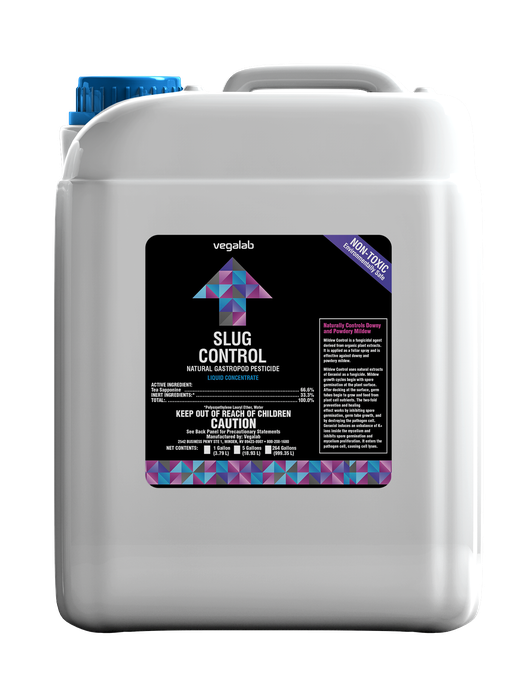
Saponin acts as a surfactant on the slug's mucous and salivary glands, disrupting mucus secretion. Slugs cannot move, feed or reproduce. Field-tested at 85-95% efficacy on strawberries.
| Active | Saponins |
|---|---|
| Targets | Slugs, snails, mole crickets, ants - Deroceras, Limax, Acusta |
| Dilution rate | 1:800–1:600 · 1.25–1.67 mL/L (4.7–6.3 mL/gal) · 0.5–0.75 L/ha (6.9–10.4 fl oz/acre) |
| Application | Foliar spray at start of infestation |
| Line · Category | Control · Natural gastropod pesticide |
- Slugs (Deroceras, Limax)
- Snails (Acusta)
- Mole crickets
- Ants
Why are slugs and snails so damaging?
Slugs and snails feed at night and in damp conditions, rasping holes in leaves, seedlings, fruit and bulbs. A single wet spell can turn a light population into serious crop loss, especially in low-growing, high-value crops like strawberries and lettuce. Because they shelter in soil and debris by day, infestations are easy to underestimate until the damage appears.
How does saponin work?
The active is saponin. Saponins are natural surfactants that break down the mucus layer and disrupt the soft tissues slugs and snails rely on to move and protect themselves, causing a rapid effect on contact. It also helps against mole crickets and ants. As a plant-derived active, it offers a lower-residue route than synthetic metaldehyde baits, which carry handling and wildlife concerns.
How and when should it be applied?
- Apply when
- In the evening, when slugs and snails become active
- Conditions
- After watering or rain, when they move to the surface
- Method
- Soil and around vulnerable plants
- Rate
- 1:800–1:600 · 1.25–1.67 mL/L · 0.5–0.75 L/ha1:800–1:600 · 4.7–6.3 mL/gal · 6.9–10.4 fl oz/acre · Work out your rate
- Pre-harvest interval
- Zero - harvest the same day
- Re-entry interval
- Zero - no re-entry wait
Always read and follow the applicable product label.
Apply to soil and around vulnerable plants, ideally in the evening when slugs and snails become active, and after watering or rain when they move to the surface. Targeting the active period and the damp microclimate where they shelter gives the best result. Reapply after heavy rain or as new activity appears.
Which crops is it for?
Slug Control has been tested on strawberries, lettuce, brassicas and ornamentals - crops where slug and snail pressure is both common and costly. It suits market gardens, protected beds and ornamental production where a low-residue option is preferred.
How does it compare to conventional slug baits?
Conventional baits often rely on metaldehyde, which raises wildlife and handling concerns, or iron phosphate, which works more slowly. Slug Control's saponin chemistry acts on contact and is plant-derived, making it a fit for growers moving toward lower-residue, more environmentally considerate programs without giving up rapid effect.
Need a recommendation for your crop or pest?
Contact usCrop-specific solutions using this product
Frequently asked questions
What is the application rate for Slug Control?
1:800–1:600 · 1.25–1.67 mL/L (4.7–6.3 mL/gal) · 0.5–0.75 L/ha (6.9–10.4 fl oz/acre) Application: Foliar spray at start of infestation.
Is Slug Control suitable for natural or organic programs?
Slug Control is a naturally derived input (Saponins) designed to fit low-residue and IPM programs.
What does Slug Control target?
Slugs and snails (Deroceras, Limax, Acusta); it also helps with mole crickets and ants.
What is the active ingredient?
Saponins.
When is the best time to apply?
In the evening when slugs are active, and after watering or rain when they come to the surface.
Which crops is it for?
Strawberries, lettuce, brassicas and ornamentals.
Is it lower-residue than metaldehyde baits?
Yes · it uses a plant-derived saponin active and offers a lower-residue alternative to synthetic metaldehyde baits.
The evidence behind these actives
Reference pages on the actives this product declares - mode of action, limits and the published sources, written independently of the product listing.
Problems addressed
Pest & disease library
See all plant pests & diseases →
Reference links to identification and management guides. Claims and product availability vary by jurisdiction - always read and follow the product label.
Last updated: