

Crops affected
How to identify slugs & snails
- Seedlings & soft tissue grazed to stubs.
What are slugs and snails?
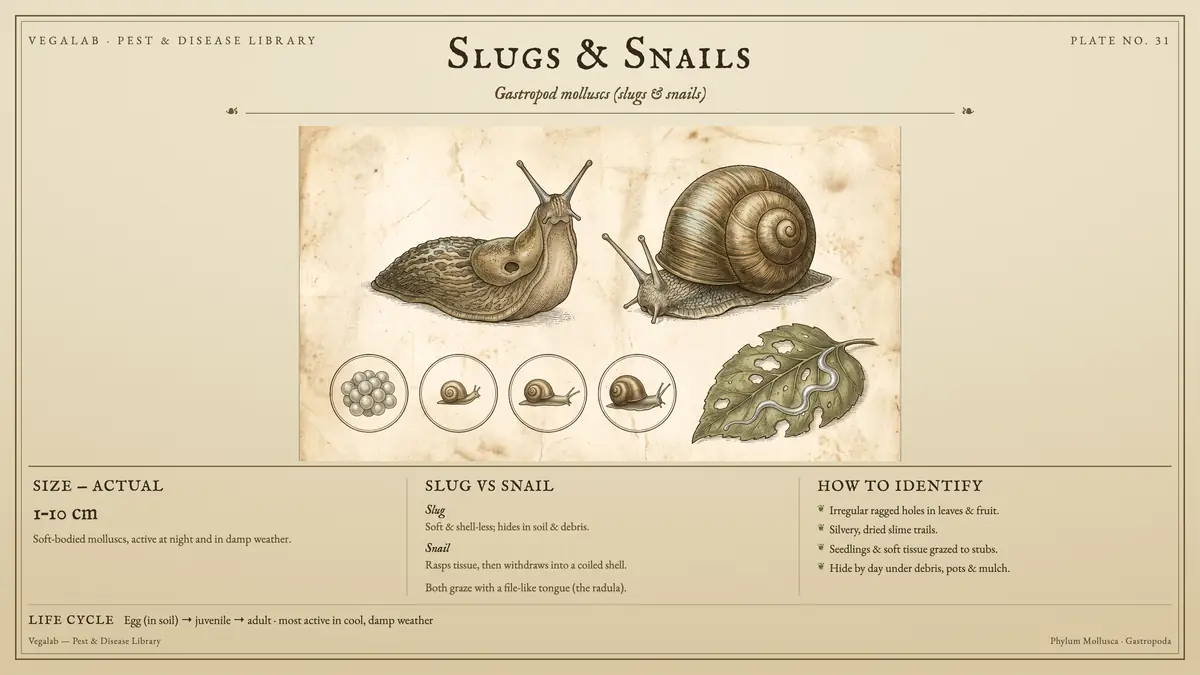
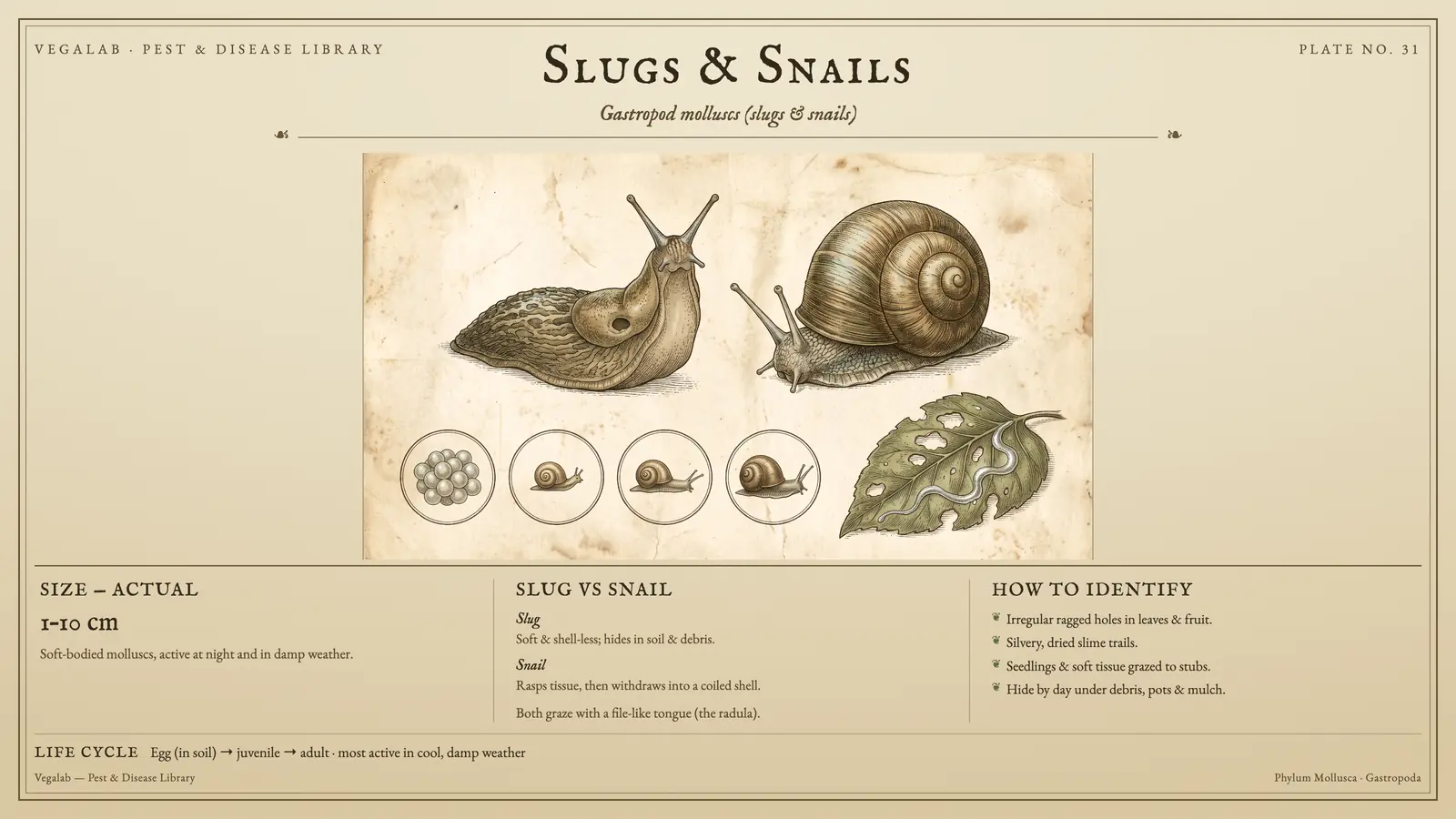
Slugs and snails are molluscs, not insects. They glide on a layer of mucus, feed with a rasping mouthpart, and are most active at night and in humid, wet weather. They shelter under debris, mulch, pots and soil clods during the day. Both slugs (no shell) and snails (shelled) cause similar damage and respond to similar management.
How to identify slug and snail damage
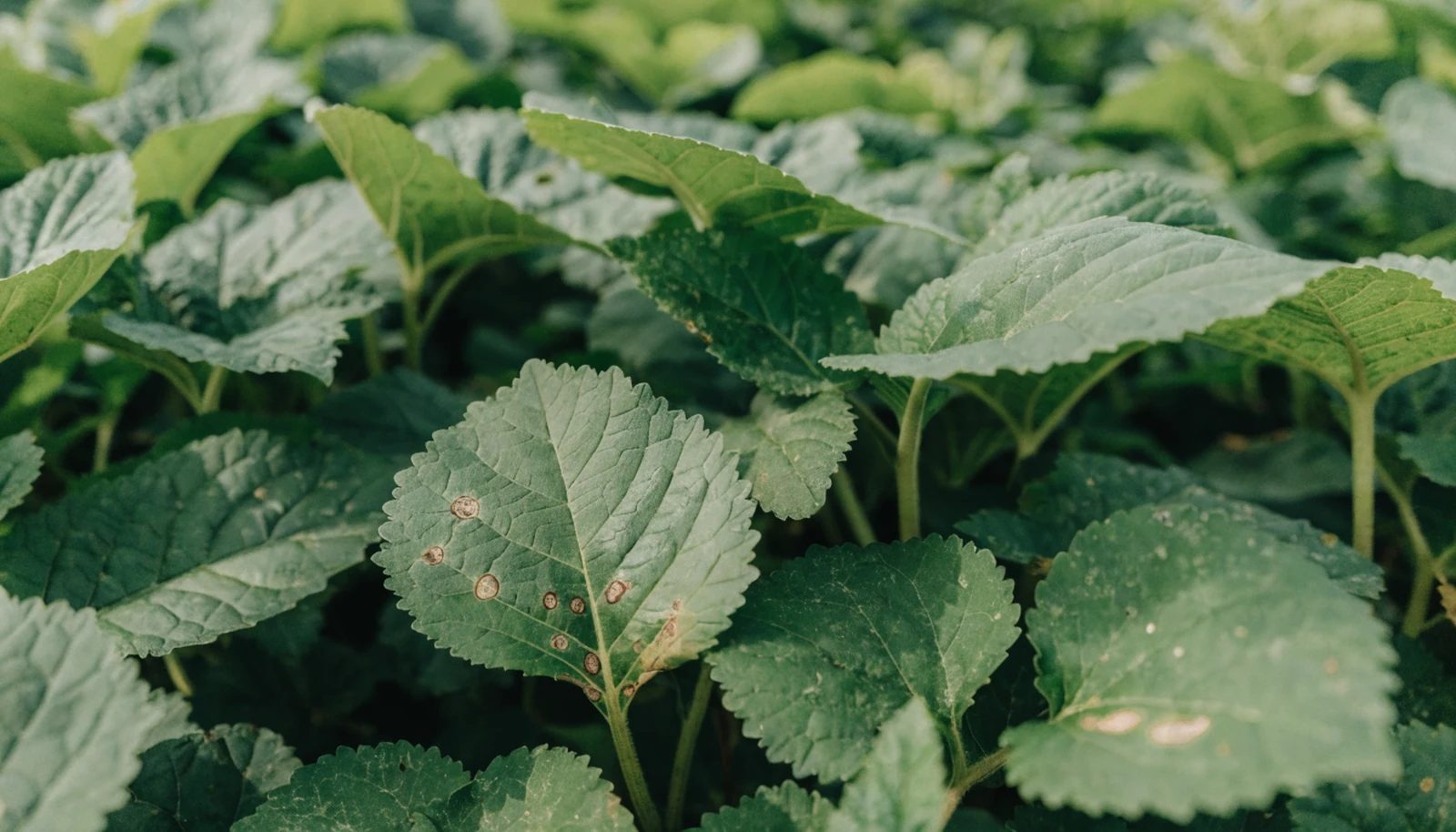
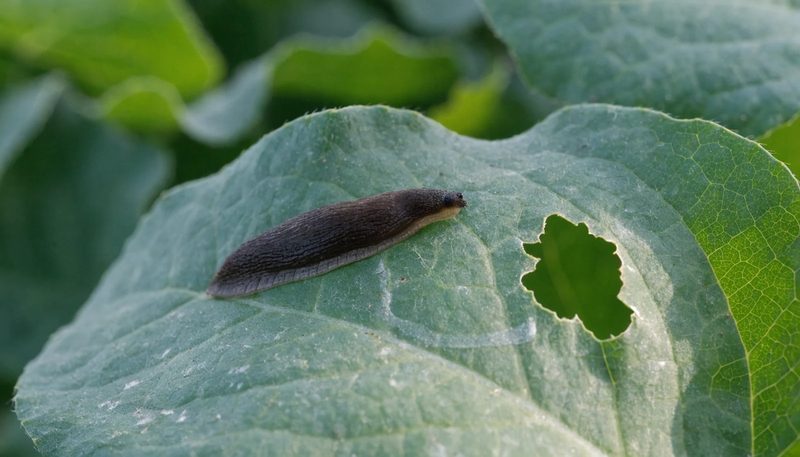
- Irregular holes with smooth edges in leaves, and shredded seedlings
- Silvery, dried slime trails on leaves, soil and hard surfaces
- Damage that appears overnight, worst in damp weather and shaded, sheltered spots
- Grazing on low fruit and vegetables in contact with the soil
Reducing the conditions they love
Cultural steps make a real difference: improve drainage and airflow, reduce dense mulch and debris near vulnerable plants, water in the morning rather than evening so foliage dries by night, and remove daytime hiding places. These steps lower pressure - but in wet seasons an active control is usually still needed.
Life cycle & spread
Slugs and snails are molluscs, not insects, and almost every practical difference follows from that. They are hermaphrodites - every individual can lay eggs - and they lay clusters of translucent, pearl-like eggs in soil crevices, under debris and beneath stones and mulch.
The grey field slug, the most damaging species in most crops, can lay several hundred eggs over its life and complete a generation in a few months, with overlapping generations meaning eggs, juveniles and adults are present together for most of the year. There is no pupal stage and no metamorphosis: juveniles emerge as small adults and begin feeding immediately.
They need moisture constantly because they lose water rapidly through the body surface. That single physiological constraint drives all of their behaviour - nocturnal activity, sheltering under cover by day, and a population that expands in wet weather and retreats underground in drought.
Conditions that favour it
Wet, cool and sheltered. Populations build in mild damp weather, in heavy soils that crack and hold moisture, under dense canopies, and in no-till or heavily mulched systems where surface residue provides permanent daytime shelter.
Irrigation schedule matters more than growers expect: evening irrigation leaves a wet surface exactly when the animals become active, while morning irrigation lets it dry before dusk. Crop debris, weedy margins, boards and stones all provide harbourage, and seedlings are the most vulnerable stage of any crop.
Monitoring & scouting
Scout at night with a torch, or in the very early morning. Daytime inspection reveals damage but almost never the animals responsible, which is why slug damage is often blamed on caterpillars.
Use refuge traps: a board, tile or upturned pot on damp soil, checked at dawn. They give a repeatable index of population that a visual inspection cannot.
Confirm from the evidence: irregular holes with smooth ragged edges in leaves, and silvery slime trails on foliage or soil. Slime is the definitive sign - caterpillar damage leaves frass instead.
How to get rid of slugs and snails
- Remove the daytime shelter. Boards, stones, dense weeds, and loose surface debris are where the population lives between feeds. Clearing harbourage around a vulnerable block reduces pressure directly.
- Irrigate in the morning. A surface that is dry at dusk suppresses activity on the night that follows. This is free and consistently effective.
- Cultivate where the system allows. Tillage exposes eggs and juveniles to desiccation and predation. Slug pressure is reliably higher in no-till and heavy-residue systems, which is a trade-off worth making knowingly.
- Protect the seedling stage. Most economic damage happens between emergence and the four-leaf stage. Bait or barrier at drilling and emergence, then relax - a mature crop tolerates a great deal of grazing.
- Use baits correctly. Apply to the soil surface at dusk in mild damp weather when animals are active, spread thinly and evenly rather than in heaps, and reapply after heavy rain. Ferric phosphate baits are lower risk to pets, wildlife and earthworms than metaldehyde, which is now restricted or withdrawn in many jurisdictions.
- Trap where scale allows. Beer traps sunk to the rim genuinely catch slugs, though they attract them from a limited radius and need emptying. Refuge traps double as monitoring and removal.
- Encourage the predators. Ground beetles, birds, hedgehogs, frogs and slow-worms all take slugs; beetle banks and undisturbed margins support them.
- Barriers on small plantings. Copper tape and sharp grit have modest effect and only while intact and dry.
Because their limiting factor is moisture rather than food, the interventions that work best change the environment rather than attacking the animals. A dry, open, harbourage-free surface does more than any bait.
Salt kills slugs and also damages soil structure and plant roots - it is not a garden or field control method. Coffee grounds and eggshells have little measurable effect in trials.
Slug damage or caterpillar damage?
- Slime trails. Silvery dried mucus on leaves, stems or soil is conclusive for molluscs. Caterpillars leave none.
- Frass. Caterpillars leave dark pellets of droppings on leaves and in the crown. Slugs and snails do not.
- Hole shape and location. Slugs rasp irregular holes with smooth-edged margins, often starting from the leaf edge and working in, and damage concentrates near the soil. Caterpillar damage tends to be higher in the canopy, with more angular chewed edges and sometimes skeletonised tissue.
- Timing check. A torch at 10pm settles it in thirty seconds.
These are confused constantly because the damage is superficially identical - irregular holes chewed in leaves, appearing overnight, with nothing visible in daylight. Three checks separate them reliably.
See Caterpillars & Larvae. No slime and visible frass means you are treating the wrong animal - and mollusc baits do nothing to caterpillars.
Which species, and where the damage happens
- Grey field slug (Deroceras reticulatum) · the main agricultural pest; small, mottled fawn-grey; attacks seedlings and cereal grain in the seedbed
- Keeled slugs (Milax, Tandonia) · live and feed largely below ground, hollowing potato tubers; surface baits reach them poorly, which is why potato damage often continues despite baiting
- Garden snail (Cornu aspersum) · climbs readily into the canopy and into fruit; a contamination risk in leafy and salad crops
- Brown garden and banded snails · cluster on structures, posts and trunks in dry weather, then move onto the crop when it rains
- Spanish slug (Arion vulgaris) · invasive, large, highly fecund and increasingly damaging in northern Europe
Two practical implications: subterranean keeled slugs in potatoes need a different approach from surface baiting, and in leafy salad crops the commercial risk is contamination at packing, not yield - so a very low tolerance applies.
Recommended Vegalab solution: Slug Control
Vegalab Slug Control is a natural broad-spectrum molluscicide for slugs and snails, designed to be low-risk around pets, wildlife and beneficial soil organisms when used as directed. It fits integrated programs and organic-minded operations, Apply around vulnerable plants and known shelter sites, and reapply after heavy rain as needed. Results vary by crop, region and pressure; claims and availability vary by jurisdiction - always read and follow the applicable product label.
| Role | Product | Use |
|---|---|---|
| Primary control | Slug Control | Contact slug & snail knockdown |
Claims and product availability vary by jurisdiction. Always read and follow the product label.