

Pyroligneous liquor (wood vinegar)
Last updated:
What is pyroligneous liquor?
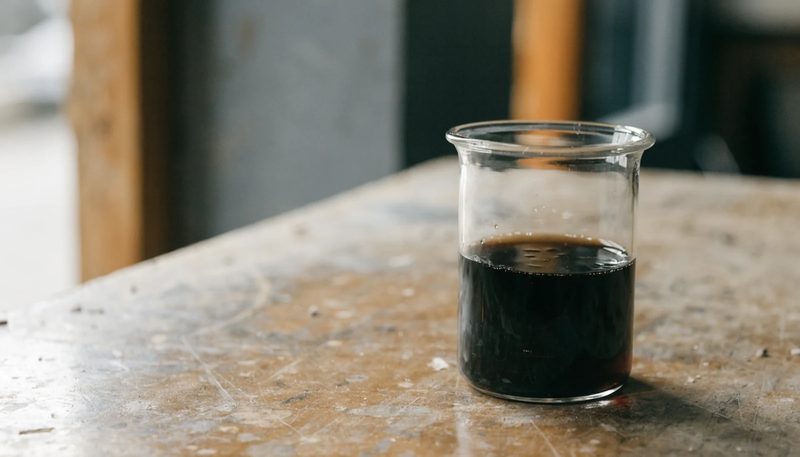
Pyroligneous acid, also called wood vinegar, is the liquid condensed from smoke during pyrolysis of wood - historically a by-product of charcoal making, and now co-produced with biochar. Composition varies with feedstock and pyrolysis temperature but typically includes acetic acid and other organic acids, methanol, phenolic compounds, ketones, aldehydes and trace amounts of many other pyrolysis products.
It is acidic, dark, and strongly smoky in odour. Notably, it is a complex mixture in which the active components are not clearly identified - which is the central difficulty in assessing it.
What is pyroligneous liquor claimed to do, and what is supported?
Reported effects include plant growth promotion, seed germination enhancement, antimicrobial and antifungal activity, insect repellency, and improvement of soil microbial activity. Vegalab lists it among the platform technologies as a growth enhancer.
The evidence is genuinely mixed. Antimicrobial activity in vitro is well documented and unsurprising given the phenolic and acid content. Growth promotion at low dilutions is reported across many studies, though with variable magnitude and often without mechanism. Effects on soil microbial communities are reported in both directions depending on rate.
The honest summary: plausible, widely used, and under-characterised relative to how confidently it is often described.
What does pyroligneous liquor not do?
It is not a fertiliser and supplies negligible nutrients. It is not a registered pesticide in most jurisdictions, so pest and disease claims are generally not permissible. And it is dose-sensitive in a way that matters: at low dilutions it is reported as beneficial, at higher concentrations it is phytotoxic and can suppress germination and microbial activity. Rate discipline is not optional.
Is pyroligneous liquor safe?
Wood pyrolysis products can contain polycyclic aromatic hydrocarbons, and PAH content depends on pyrolysis temperature and on whether the condensate is refined and aged. This is the substantive quality question for any pyroligneous product and it is rarely addressed on labels. A product intended for food crops should have PAH data, and that is a reasonable thing for a buyer to ask for.
The material is acidic and irritant to skin, eyes and airways in concentrate.
Where does pyroligneous liquor appear in the range?
References
Related reading
Products containing pyroligneous liquor
Listed because this ingredient appears in each product's declared composition. This is a commercial link from a reference page; it is not a recommendation, and approved uses and availability vary by market.