

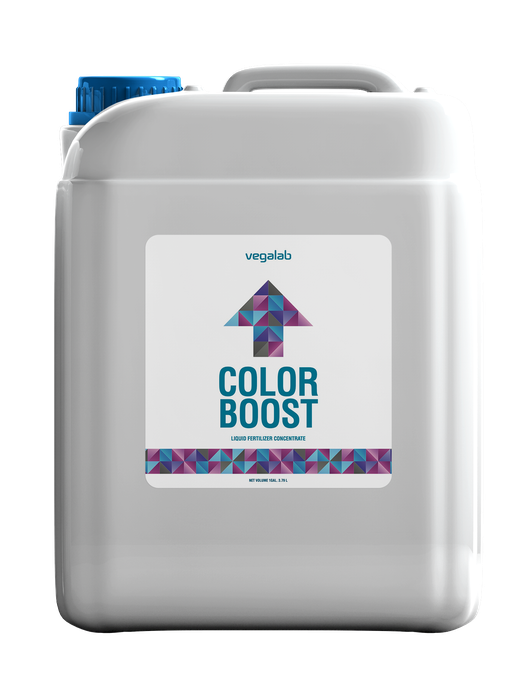
Color Boost
Color Boost is a fruit and flower color enhancer that improves coloration, maturation timing and sweetness. Phosphorus, potassium, magnesium and sulfur with pyroligneous liquor support pigment development and ripening for more uniform, market-ready color.
Fruit and flower color enhancer - Color development, Pre-harvest application.
- Zero REINo re-entry wait
- Zero PHIHarvest the same day
Fruit and flower color enhancer from Vegalab Crop Science, powered by P, K, Mg, S + pyroligneous liquor, phytic acid. Color Boost targets Fruit and flower color, maturation timing, sweetness.
Shipping $20 + $5 per gallon, calculated at checkout. Online orders up to 50 gallons; contact us for larger loads. Not available for delivery to Canada.
Secure checkout on Shopify. Each store keeps its own bag.
High-phosphorus and potassium with anthocyanin-supporting trace elements drives pigment biosynthesis in fruit skin. Color development accelerates and uniformity improves in the 14 days before harvest.
| Active | P, K, Mg, S + pyroligneous liquor, phytic acid |
|---|---|
| Targets | Fruit and flower color, maturation timing, sweetness |
| Dilution rate | 1:1,000–1:500 · 1–2 mL/L (3.8–7.6 mL/gal) · 1.0–1.5 L/ha (13.8–20.8 fl oz/acre) |
| Application | Foliar spray at flowering, 1–2 applications |
| Line · Category | Boost · Fruit and flower color fertilizer |
- Enhances red coloration in apples, grapes, cherries
- Improves uniform ripening
- Increases pack-out at harvest
- Supports flower color intensity
| Nutrient | Content |
|---|---|
| P | 13% |
| K | 6% |
Derived from: Mono-potassium phosphate · Potassium sulfate
Contains: Citric acid · Trace elements
Why does color matter at harvest?
For apples, grapes, cherries and strawberries, color is one of the first things a buyer judges - uneven or pale color downgrades fruit regardless of its eating quality. Achieving full, uniform color on schedule is therefore a direct driver of grade and price, and it depends on the right nutrition and energy during ripening.
How does Color Boost improve color and ripening?
Color Boost (0-13-6) supplies phosphorus, potassium, magnesium and sulfur alongside pyroligneous liquor (wood vinegar) and phytic acid. These support pigment synthesis and the energy demands of ripening, helping fruit develop fuller, more uniform color, mature on schedule and accumulate sugar for better eating quality. Potassium and magnesium in particular underpin the sugar and pigment pathways.
When and how should it be applied?
- Establishment
- Vegetative
- Pre-flower
- FloweringFlowering
- Fruit set
- Fruit development
- Ripening
- Harvest
Apply during Flowering.
- Method
- Foliar spray
- Rate
- 1:1,000–1:500 · 1–2 mL/L · 1.0–1.5 L/ha1:1,000–1:500 · 3.8–7.6 mL/gal · 13.8–20.8 fl oz/acre · Work out your rate
- Frequency
- One to two applications through ripening
- Pack sizes
- 3.8 L, 9.5 L1 gal, 2.5 gal
- Area treated
- 3.8 L treats 2.5-3.8 ha; 9.5 L treats 6.3-9.5 ha1 gal treats 6.2-9.4 acres; 2.5 gal treats 15.6-23.4 acres
- Pre-harvest interval
- Zero - harvest the same day
- Re-entry interval
- Zero - no re-entry wait
Timed to the onset of coloration. Good coverage of the fruit zone matters.
Always read and follow the applicable product label.
Apply as a foliar spray at flowering, one to two applications. Timing it to flowering rather than to the first signs of color is what sets up even coloration later, because the pigment pathway is primed before the fruit starts to turn. Good coverage of the fruit zone helps ensure even color across the crop.
Which crops is it for?
Color Boost has been tested on apples, grapes, cherries and strawberries - crops where color and finish are central to grade and value. It is most useful in premium fresh-market production where appearance commands a price premium.
How does it support sweetness as well as color?
The same phosphorus and potassium that support pigment development also drive sugar accumulation, so Color Boost improves sweetness alongside color. Magnesium supports the photosynthesis that supplies those sugars, making the effect on eating quality and appearance complementary.
Need a recommendation for your crop or pest?
Contact usCrop-specific solutions using this product
Frequently asked questions
What is the application rate for Color Boost?
1:1,000–1:500 · 1–2 mL/L (3.8–7.6 mL/gal) · 1.0–1.5 L/ha (13.8–20.8 fl oz/acre) Application: Foliar spray at flowering, 1–2 applications.
Is Color Boost suitable for natural or organic programs?
Color Boost supplies P, K, Mg, S + pyroligneous liquor, phytic acid in a formulation designed to fit low-residue and IPM programs.
What does Color Boost do?
Enhances fruit and flower color, maturation timing and sweetness.
What is the analysis?
P 13%, K 6% (NPK 0-13-6), with pyroligneous liquor and phytic acid.
When should I apply it?
During the color-development and ripening window.
Which crops is it for?
Apples, grapes, cherries and strawberries.
Does it affect sweetness too?
Yes · the phosphorus and potassium that drive color also support sugar accumulation.
The evidence behind these actives
Reference pages on the actives this product declares - mode of action, limits and the published sources, written independently of the product listing.
Problems addressed
Supports the root zone where these problems establish. Reference links only - see the label for approved uses.
Pest & disease library
See all plant pests & diseases →
Reference links to identification and management guides. Claims and product availability vary by jurisdiction - always read and follow the product label.
Last updated: