


Do hair growth serums work?
Last updated:
Some ingredients have evidence, but it is uneven. Topical minoxidil, one of only two FDA-approved medicines for pattern hair loss, needs at least 4 months of use, and most new hair is lost within months of stopping. Cosmetic scalp serums with caffeine, peptides or rosemary oil rest on small trials, often industry-linked. In the US, any product promising to regrow hair is regulated as a drug.
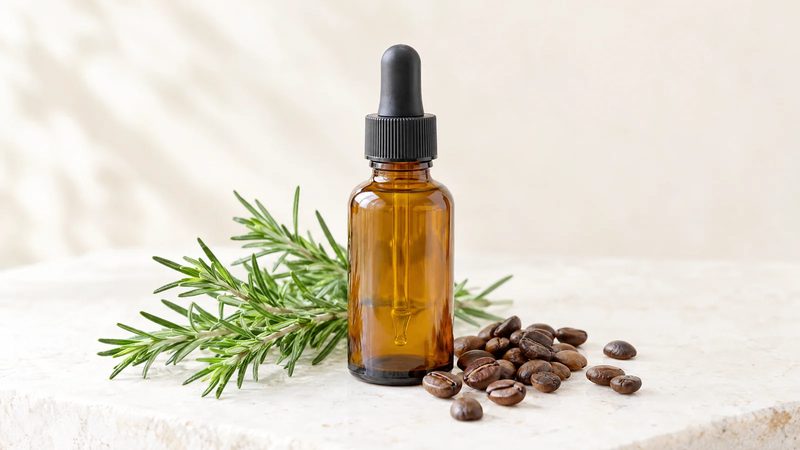
What makes a hair growth serum a drug rather than a cosmetic?
In the United States, intended use decides whether a product is a cosmetic or a drug, and label and advertising claims help establish it2. FDA names claims that a product will restore hair growth as an example of claims that make a product a drug, even when it is marketed as a cosmetic2.
A 1989 federal rule goes further for over-the-counter products. It lists ingredients that have been marketed as hair growers or for hair loss prevention, including amino acids, biotin and all other B vitamins, dexpanthenol, nucleic acids and wheat germ oil, and states that there is a lack of adequate data to establish general recognition of the safety and effectiveness of these or any other ingredients for that use1. Any over-the-counter product labeled or promoted as a hair grower or for hair loss prevention is regarded as a new drug that needs an approved new drug application1.
Canada draws a similar line. Under the Food and Drugs Act, a cosmetic is used for cleaning, improving or altering the complexion, skin, hair or teeth, while a drug is used to diagnose, treat, mitigate or prevent a disease, disorder or abnormal physical state8.
Which hair loss treatments have the strongest evidence?
The only FDA-approved medications for androgenetic alopecia, the common pattern form of hair loss, are finasteride and minoxidil6. Topical minoxidil is used to stimulate hair growth and to slow balding, works best in people under 40 whose hair loss is recent, and has no effect on a receding hairline3. Men may also take finasteride or dutasteride, and a hair transplant is another option a clinician may recommend4.
Popular cosmetic actives sit on a thinner base: a 2025 review found most were tested in combination formulas, with small samples and conflicts of interest5.
| Option | Status | What the cited evidence shows |
|---|---|---|
| Topical minoxidil | FDA-approved medicine for androgenetic alopecia | Effect after 4 months or more; gains fade after stopping3,6. |
| Finasteride or dutasteride (oral, men) | Prescription medicines | Taken by men to decrease hair loss4. |
| Caffeine (shampoo or serum) | Cosmetic ingredient | One 40-person shampoo trial over 24 weeks5. |
| Acetyl tetrapeptide-3 with red clover (biochanin A) | Cosmetic ingredient complex | Small trials, mostly in men, in multi-ingredient formulas5. |
| Rosemary oil | Cosmetic ingredient | One 100-man trial against 2% minoxidil6. |
| Biotin and other B vitamins | Listed in the 1989 rule | Lack adequate data as hair growers1. |
Do scalp serums for thinning hair work?
Some cosmetic actives have encouraging early data. Caffeine is thought to counter the follicle shrinkage driven by dihydrotestosterone (DHT) by inhibiting phosphodiesterase, and in a double-blinded trial in 40 Korean men and women, a daily 0.5% caffeine shampoo produced significant differences in hair density compared with a vehicle shampoo after 8, 16 and 24 weeks5.
Rosemary oil (Rosmarinus officinalis) has drawn the most attention lately6. In a single-blind randomized trial, 100 men aged 18 to 49 with androgenetic alopecia used rosemary oil or 2% minoxidil for 6 months; both groups had a significant increase in hair count with no significant difference between them, and scalp itching was more frequent with minoxidil6.
The review authors call for well-designed comparative studies and see these agents mainly as add-ons or for people who do not tolerate standard therapies5.
Do peptide serums help with hair growth?
Peptide hair serums most often use acetyl tetrapeptide-3, a biomimetic peptide, paired with red clover extract rich in biochanin A5. Biochanin A inhibits 5-alpha reductase, the enzyme that makes DHT, in laboratory work5.
The human data are small. In 30 men with androgenetic alopecia, a lotion with the complex used daily for 4 months raised the ratio of growing (anagen) to resting (telogen) hairs by 46%, compared with a 33% fall on placebo5. In a 24-week, triple-blinded randomized trial in 32 men and women, an extract with biochanin A, acetyl tetrapeptide-3 and ginseng performed comparably to 3% minoxidil with no local adverse reactions5.
Almost all of these formulas also contain vitamins, minerals or other additives, so it is hard to tell which ingredient is responsible, and some studies were company-sponsored5.
Why is your hair thinning, and when should you see a doctor?
Some shedding is normal. The scalp holds about 100,000 hairs, and losing roughly 50 to 200 a day is typical4. About 80% of men show signs of male pattern baldness in their lifetime4.
In pattern hair loss, DHT binds to androgen receptors in the scalp and shrinks the follicle; biopsies show a ratio of growing to resting hairs near 5 to 1, against about 12 to 1 in people without it6. Sudden heavy shedding is often different: physical or emotional stress, a high fever, childbirth, major surgery or a crash diet low in protein can cause shedding weeks to months later, which usually decreases over 6 to 8 months4. Some medicines, anemia and thyroid disease can also cause it4.
- See a clinician if hair loss follows an unusual pattern, or comes on fast or at an early age, such as in your teens or twenties4.
- See a clinician if there is pain or itching, red or scaly scalp skin, bald spots in the beard or eyebrows, or signs of a scalp infection4.
How do you choose and use a scalp serum?
Start with the claim on the label. A serum that promises to restore hair growth is making a drug claim under US law2. Minoxidil goes on a dry scalp, never on sunburned or irritated skin3.
Give any product time: the cosmetic trials above ran 4 to 6 months5,6. Scalp itching, dryness, scaling, flaking and burning are the common reactions to minoxidil3, so introduce one new scalp product at a time and patch test first if your skin reacts easily.
Key takeaways
- Finasteride and minoxidil are the only FDA-approved medications for androgenetic alopecia.
- Minoxidil takes at least 4 months to show an effect, and most new hair is lost within a few months of stopping.
- Caffeine, peptide complexes and rosemary oil have small, encouraging trials, but most test combination formulas and many have industry links.
- In the US, a product that claims to restore hair growth is a drug, whatever it is called.
References
- 21 CFR 310.527: Drug products containing active ingredients offered over-the-counter (OTC) for external use as hair growers or for hair loss prevention
- Is It a Cosmetic, a Drug, or Both? (Or Is It Soap?)
- Minoxidil Topical
- Hair loss
- Topical Alternatives for Hair Loss: Beyond the Conventional
- An Overview of Commonly Used Natural Alternatives for the Treatment of Androgenetic Alopecia, with Special Emphasis on Rosemary Oil
- Exosomes in Cosmetic Dermatology: A Review of Benefits and Challenges
- Guidance Document: Classification of Products at the Cosmetic-Drug Interface