

Propolis
Last updated:
What is propolis?
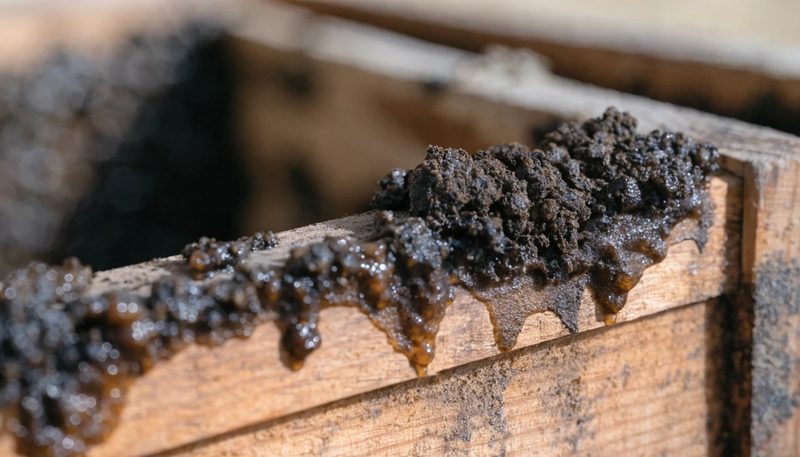
Propolis is the resinous material honey bees produce by mixing plant resins and exudates with wax and salivary secretions, used to seal and sterilise the hive. Its composition is highly variable, depending on the plant sources available to the colony - poplar-type propolis in temperate regions, and quite different chemistries elsewhere, such as Brazilian green propolis from Baccharis.
It is rich in flavonoids, phenolic acids and esters, and terpenes.
What it does
Antimicrobial and antifungal activity is well documented in laboratory settings, attributed to the flavonoid and phenolic content acting on microbial membranes and enzymes. Antioxidant activity is also well established. In crop use the rationale is a combination of direct antimicrobial activity and elicitor effects, with flavonoids and phenolics acting as signals that prime plant defence responses.
In Pollen Boost the positioning is around pollination rate, fruit set and shoot development rather than disease control, which suggests the intended contribution is elicitor and micronutrient support rather than antimicrobial.
The honest problem, and an ethical note
Propolis composition varies enormously by geography and season, and most material is not standardised to marker compounds. So evidence generated with one propolis does not transfer cleanly to another, and a product should ideally state origin and standardisation.
There is also a supply consideration worth naming: propolis is harvested from hives, and using a bee product as an agricultural input at scale raises questions about sourcing and about pollinator welfare that a company positioned around pollinator-safe agriculture should be able to answer. Not a safety issue - a coherence one.
What does propolis not do?
It is not a registered fungicide and should not be presented as disease control. Persistence is short. Efficacy claims from in vitro studies do not translate directly to field performance. And it is not a nutrient source at use rates.
Is propolis safe?
Low toxicity, with long food and traditional-medicine use. The notable exception is allergenicity: propolis is a recognised contact sensitiser, and people allergic to bee products or to poplar resins can react. Applicators with known bee-product allergy should avoid handling it.
References
Products containing propolis
Listed because this ingredient appears in each product's declared composition. This is a commercial link from a reference page; it is not a recommendation, and approved uses and availability vary by market.