


More Than One Door to Approval
Many young life sciences companies plan around one regulator, usually the FDA. It is the largest market and the most recognized approval, and it should stay the anchor. It should not be the only thing happening. Several other routes run in parallel, share work between regulators, or open buyers that the US market never reaches. This page maps them for developers, and explains why we design formulation and stability work to serve more than one dossier from the start.
The single-regulator habit
An FDA-only plan concentrates timing, cost and risk in one review. A delay or a request for more data stops everything. Planning several routes in parallel runs alongside the US filing and gives a program more than one path to its first approval and more than one source of milestones along the way.
Work-sharing between five regulators
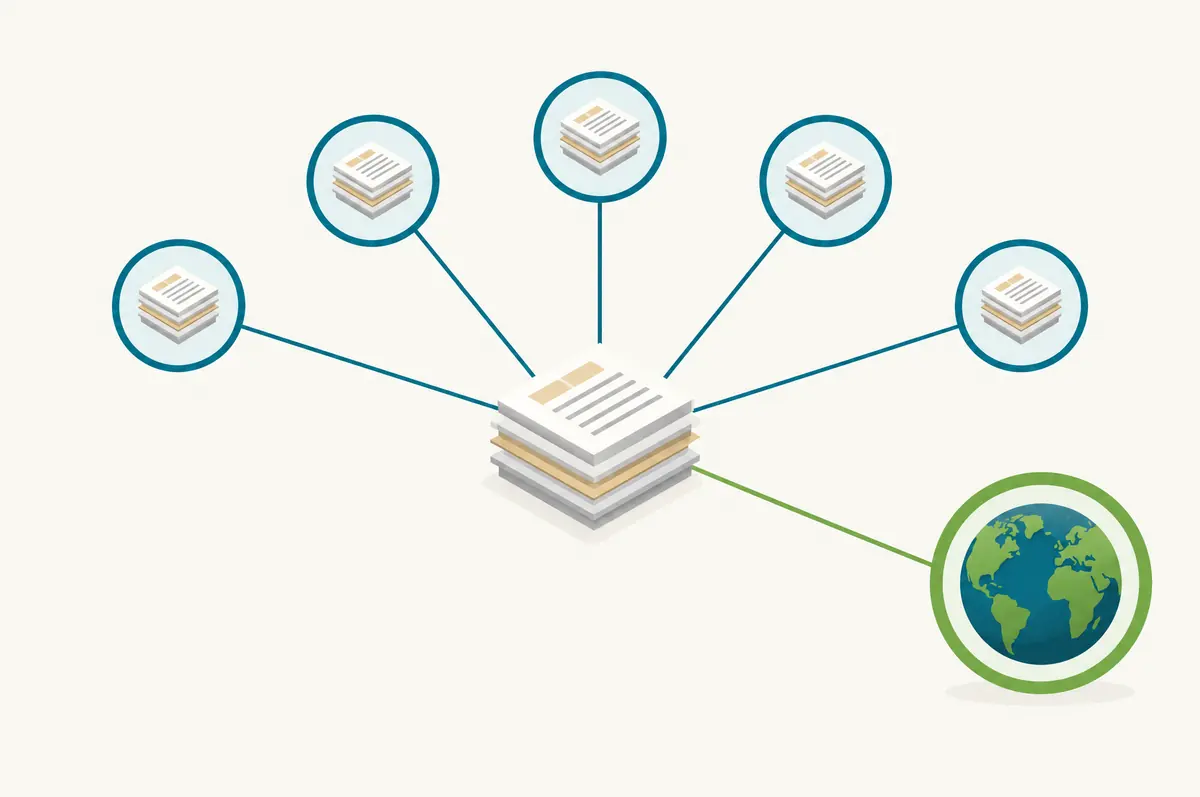
The Access Consortium brings together five regulators: the TGA in Australia, Health Canada, the Health Sciences Authority in Singapore, Swissmedic and the MHRA in the United Kingdom. It began in 2007 as a group of four and the MHRA joined in 2020. Under its work-sharing initiatives a company makes one coordinated submission, the regulators divide the assessment between them, and each still makes its own decision. Several markets move forward from one body of work instead of five separate reviews.
Europe's early dialogue
The European Medicines Agency's PRIME scheme supports medicines that address an unmet medical need. A product accepted into PRIME gets an early rapporteur, iterative scientific advice through development and confirmation of potential accelerated assessment at filing. Entry is competitive and usually happens once early clinical data exist. The practical value is that the regulator engages during development instead of only judging the dossier at the end.
Southeast Asia and beyond
Singapore's Health Sciences Authority is a respected reference regulator and a practical starting point for Southeast Asian markets. An approval there, particularly one reached through Access work-sharing, is a credible base for regional filings that a US-only company would rarely prepare on its own.
WHO prequalification and who buys
WHO prequalification is the assessment that UNICEF and other UN agencies rely on when they procure vaccines and medicines. It turns a product into something health ministries and global programs can buy at scale, independently of retail sales in any single country. For products designed for hot climates and long supply routes, this is often the most important buyer of all, and it rewards exactly the properties good formulation delivers: stability, simple storage and simple administration.
Where formulation fits
Every one of these routes asks for the same evidence at its core: a stable product, characterized consistently, with stability data that match the climate where it will be used. Hot and humid regions demand long-term stability data at 30 degrees Celsius and 75 percent relative humidity, which many programs planned for temperate markets never generate. We build that into formulation work from the first batch, so one data package can support several dossiers.
Key facts
- The Access Consortium comprises the TGA (Australia), Health Canada, Singapore's Health Sciences Authority, Swissmedic and the MHRA (UK); it formed in 2007 and the MHRA joined in October 2020 (TGA)
- Under Access work-sharing, regulators review jointly while each maintains independence for its own decision (TGA)
- EMA's PRIME scheme offers early appointment of a rapporteur, iterative scientific advice and confirmation of potential accelerated assessment for medicines addressing an unmet medical need (EMA)
- WHO vaccines prequalification is provided to UNICEF and other UN agencies that procure vaccines (WHO)
How our delivery technology applies
Vegalab SA is based in Zug, Switzerland, and Vegalab Inc operates in Canada, so two of the five Access regulators are our home authorities. What we contribute is a formulation and stability package designed from day one for more than one market, and the experience of working across Swiss, Canadian and Asian requirements.
Questions
Does Vegalab handle regulatory filings?
Vegalab delivers the formulation, stability and manufacturing package at the center of every dossier, designed from the start for several markets. Filings are made by the product's sponsor or its regulatory affairs partner.
Why does Vegalab's location matter?
Vegalab SA is based in Zug, Switzerland, and Vegalab Inc operates in Canada. Swissmedic and Health Canada are both members of the Access Consortium.
Related reading
Last updated: