

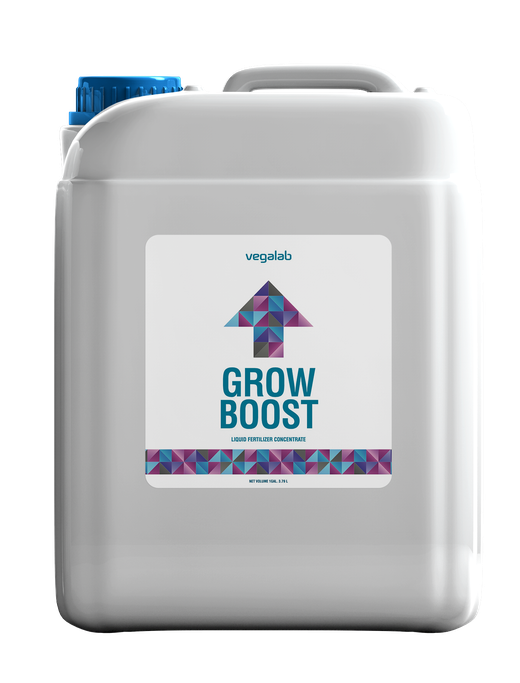
Grow Boost
Grow Boost is an amplified vegetative growth promoter that drives canopy development, microbial activity and stress immunity. Seaweed extract and amino acids with magnesium and citric acid stimulate growth and resilience during the vegetative phase.
Amplified vegetative growth promoter · Amino acid blend, Vegetative growth promoter.
- Zero REINo re-entry wait
- Zero PHIHarvest the same day
Amplified vegetative growth promoter from Vegalab Crop Science, powered by Seaweed extract · protein hydrolysate · citric acid · Mg sulfate. Grow Boost targets Vegetative growth, microbial activity, abiotic stress immunity.
Shipping $20 + $5 per gallon, calculated at checkout. Online orders up to 50 gallons; contact us for larger loads. Not available for delivery to Canada.
Secure checkout on Shopify. Each store keeps its own bag.
Cold mechanical extraction preserves the phytohormones, enzymes and amino acids found naturally in seaweed, and the hydrolyzed amino acids give the plant a ready energy substrate. Together they drive vegetative growth, support beneficial rhizosphere microbes and build tolerance to abiotic stress.
| Active | Seaweed extract · protein hydrolysate · citric acid · Mg sulfate |
|---|---|
| Targets | Vegetative growth, microbial activity, abiotic stress immunity |
| Dilution rate | 1:1,000 · 1 mL/L (3.8 mL/gal) · 0.5–0.75 L/ha (6.9–10.4 fl oz/acre) |
| Application | Foliar spray or soil drench, 3–4 times per season |
| Line · Category | Boost · Amplified vegetative growth fertilizer |
- Accelerates vegetative growth
- Increases biomass and leaf area
- Improves transplant establishment
| Nutrient | Content |
|---|---|
| Soluble Potash (K2O) | 2.00% |
| Magnesium (Mg) | 0.30% |
Derived from: Hydrolyzed protein · Potassium chloride · Mono-potassium phosphate
Contains: Free amino acids · Citric acid
Why focus on the vegetative phase?
The size and health of the canopy a crop builds during vegetative growth sets the ceiling for everything that follows - light capture, photosynthesis and ultimately yield. A strong, resilient vegetative foundation means more capacity to fill fruit and recover from stress later, which is why supporting this phase pays off across the whole season.
How does Grow Boost drive growth?
Grow Boost (0-0-2; K 2%) combines seaweed extract, protein hydrolysate, citric acid and magnesium sulfate. Seaweed-derived phytohormones stimulate cell division and shoot growth, the amino acids supply ready building blocks and energy, and the blend supports soil microbial activity and abiotic-stress immunity - together building a stronger, more resilient canopy.
When and how should it be applied?
- Transplant and active growthEstablishment
- Vegetative
- Pre-flower
- Flowering
- Fruit set
- Fruit development
- Ripening
- Harvest
Apply during Establishment and Vegetative.
- Method
- Foliar or soil
- Rate
- 1:1,000 · 1 mL/L · 0.5–0.75 L/ha1:1,000 · 3.8 mL/gal · 6.9–10.4 fl oz/acre · Work out your rate
- Frequency
- Repeat through active growth
- Pack sizes
- 3.8 L, 9.5 L1 gal, 2.5 gal
- Area treated
- 3.8 L treats 5-7.6 ha; 9.5 L treats 12.6-18.9 ha1 gal treats 12.5-18.7 acres; 2.5 gal treats 31.2-46.8 acres
- Pre-harvest interval
- Zero - harvest the same day
- Re-entry interval
- Zero - no re-entry wait
Always read and follow the applicable product label.
Apply foliar or to the soil during the vegetative phase, repeating through active growth to sustain canopy development and stress resilience. Applying around transplant and through early rapid growth, and ahead of known stress periods, makes the most of the biostimulant effect.
Which crops is it for?
Grow Boost has been tested on vegetables, vines, cereals and ornamentals - crops where strong early canopy and stress resilience translate directly into yield and quality. It suits both establishment and the main vegetative push.
How does it improve stress tolerance?
The amino acids and seaweed compounds in Grow Boost support the plant's own stress-response pathways and help maintain growth through heat, transplant shock and other stresses. Healthier microbial activity around the roots adds to that resilience, so the crop keeps developing rather than stalling under pressure.
Need a recommendation for your crop or pest?
Contact usCrop-specific solutions using this product
Frequently asked questions
What is the application rate for Grow Boost?
1:1,000 · 1 mL/L (3.8 mL/gal) · 0.5–0.75 L/ha (6.9–10.4 fl oz/acre) Application: Foliar spray or soil drench, 3–4 times per season.
Is Grow Boost suitable for natural or organic programs?
Grow Boost supplies Seaweed extract · protein hydrolysate · citric acid · Mg sulfate in a formulation designed to fit low-residue and IPM programs.
What does Grow Boost do?
Promotes vegetative growth and canopy development while supporting microbial activity and stress immunity.
What's in it?
Seaweed extract, hydrolyzed amino acids, citric acid and magnesium sulfate.
When should I apply it?
Through the vegetative phase, during active growth and around stress events.
Which crops is it for?
Vegetables, vines, cereals and ornamentals.
What is the analysis?
K 2% (NPK 0-0-2).
Problems addressed
Supports the root zone where these problems establish. Reference links only - see the label for approved uses.
Pest & disease library
See all plant pests & diseases →
Reference links to identification and management guides. Claims and product availability vary by jurisdiction - always read and follow the product label.
Last updated: