


What is a phytosome?
Last updated:
A phytosome is a plant compound complexed with phospholipids, most often phosphatidylcholine, at a defined molar ratio, also called a phyto-phospholipid complex1. The plant molecule binds by hydrogen bonds to the phospholipid's polar head, so it becomes part of the membrane rather than sitting inside a vesicle as in a liposome1. The goal is better solubility in gut fluids and better passage across membranes2.
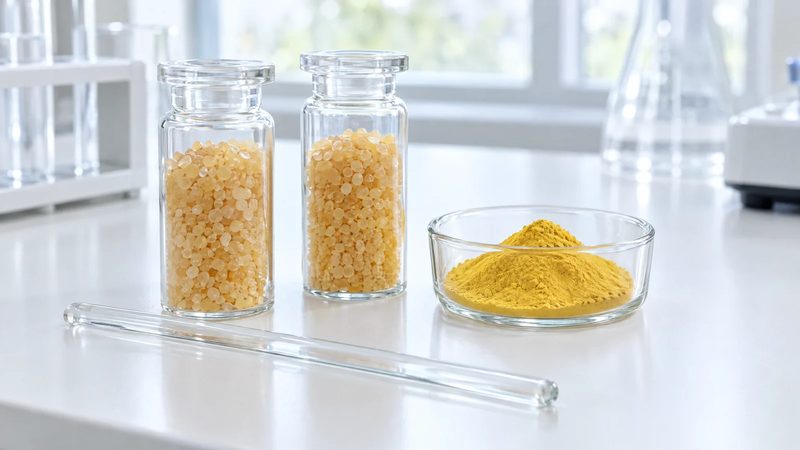
What is a phytosome made of?
The name joins "phyto", meaning plant, with "some", meaning cell-like3. A phytosome is made by complexing a plant-derived active compound with phospholipids at a defined molar ratio1. Phospholipids are abundant in egg yolk and plant seeds and are now produced industrially; phosphatidylcholine, phosphatidylethanolamine and phosphatidylserine are the main ones used, and phosphatidylcholine is the most common1. Phosphatidylcholine is amphipathic, so it is moderately soluble in both water and fats, and as an essential component of cell membranes it shows good biocompatibility and low toxicity1.
Ratios are usually set between 0.5 and 2.0 parts phospholipid to active compound on a molar basis. A 1:1 ratio is often considered the most efficient, but the best ratio varies by compound and has to be found experimentally1. Manufacturing has largely moved from aprotic solvents such as methylene chloride to protic solvents such as ethanol1.
Phospholipids show an affinity for polyphenols and form supramolecular adducts with a definite stoichiometry2. Inside the complex, the phospholipid's polar head anchors the plant molecule through hydrogen bonds, while the two fatty acid tails stay free and wrap the polar part in a lipophilic surface1.
How is a phytosome different from a liposome?
Both use phospholipids, and phytosomes diluted in water form small cell-like agglomerates that look somewhat like liposomes1. The key difference is where the active compound sits. In a liposome, the compound is dissolved in the watery core or held within the membrane layers; in a phytosome, it is an integral part of the membrane, bonded to the phospholipid heads1. Liposomes are closed vesicles of lipid bilayers that enclose a compound without chemically combining with it1.
That difference matters for labels. A product called liposomal and a product called phytosome are built on different principles, even though both list lecithin or phosphatidylcholine as an ingredient1,3.
| Feature | Phytosome (phyto-phospholipid complex) | Liposome |
|---|---|---|
| Where the active sits | Part of the membrane, hydrogen-bonded to phospholipid polar heads1 | In the watery core or within the bilayer1 |
| Structure | Complex formed at a defined molar ratio, often near 1:11 | Closed vesicle of one or more lipid bilayers1 |
| Typical composition | Plant compound plus phospholipid such as phosphatidylcholine1 | Phospholipids and cholesterol, 0.05 to 5.0 micrometers across3 |
| Main purpose | Raise solubility in gut fluids and passage across membranes2 | Encapsulate and carry a compound1,3 |
Why would a plant compound need a phytosome?
Many plant compounds work well in a dish and poorly in the body. Polyphenols often have multi-ring structures that are too large for passive diffusion, and poor water or fat solubility keeps them from crossing the outer membrane of gut cells1. Some, such as hesperidin, are too water-loving to cross membranes, while others, such as curcumin and rutin, are too fat-loving to dissolve in gut fluids1.
A phospholipid complex addresses both problems: it can raise the water solubility of lipophilic polyphenols and the membrane permeability of hydrophilic ones1. The phospholipids act as chaperones that help the compound across gut cell membranes, and complex formation improves the compound's oil and water partitioning1. Complexing can also protect polyphenols from hydrolysis, light damage and oxidation1. The approach is no longer limited to polyphenols and, in principle, can be applied to other molecules1.
Animal studies show the size of the effect. In rats, phospholipid complexes of ginkgo flavonoids raised exposure to quercetin, kaempferol and isorhamnetin by 2.42-fold, 1.95-fold and 2.35-fold compared with the plain extract, and a quercetin complex raised exposure about 3.98-fold1.
What does the evidence show for curcumin phytosome?
Curcumin is one of the best-studied phytosome ingredients. In a randomized, double-blind crossover study of 12 healthy volunteers, a curcumin phytosome produced 7.9-fold higher total curcuminoids in blood than unformulated curcumin4. In the same study, a formulation using a hydrophilic carrier, cellulose derivatives and antioxidants produced 5.8-fold more than the phytosome4.
A 2021 crossover study of 30 healthy adults compared five turmeric products, including a phytosome, and found that a dried colloidal suspension gave significantly higher total curcuminoid absorption than the phytosome5. Exposure to unconjugated curcuminoids varied widely within participants and did not differ significantly between any of the products5. Four of that study's authors worked for the company that makes the colloidal suspension5.
What is a berberine phytosome?
Berberine is a plant alkaloid found in the roots, rhizomes and stem bark of species such as Berberis, Coptis and Hydrastis, with a long history in traditional medicine6. It is very poorly absorbed: in rats, its absolute oral bioavailability was 0.36% in one study and 0.68% in another7,8. About half of an oral amount passed through the rat gut intact and the small intestine disposed of the other half, which makes intestinal first-pass elimination the main barrier7. Efflux by P-glycoprotein, a transporter that pumps absorbed compounds back into the gut, is thought to limit uptake as well6,8.
The berberine phytosome tested in humans is a solid dispersion of berberine extract with sunflower lecithin, pea protein and grape seed extract6. In laboratory tests it was 3 to 4 times more soluble than plain berberine extract in simulated gastric and intestinal fluids6. In a randomized crossover study in 12 healthy volunteers, it produced berberine exposure about 10 times higher than unformulated berberine on a molar basis, with exposure rising in line with the amount given6. All of that study's authors were employees of the company that makes the formulation6.
| Ingredient | Comparator | Reported result | Study notes |
|---|---|---|---|
| Curcumin phytosome | Unformulated curcumin | 7.9-fold higher total curcuminoids4 | 12 volunteers; another formulation was 5.8-fold higher than the phytosome4 |
| Curcumin phytosome | Four other turmeric products | Lower total absorption than a dried colloidal suspension5 | 30 adults; no difference in unconjugated curcuminoids5 |
| Berberine phytosome | Berberine chloride | About 10 times higher exposure on a molar basis6 | 12 volunteers; authors employed by the maker6 |
How should you judge a phytosome claim?
Ask what the comparator was. A fold increase is measured against a reference product, and the same phytosome can look strong against unformulated curcumin and weaker against another formulation4,5. Ask what was measured: many curcumin studies count total curcuminoids after enzymatic deconjugation rather than free curcumin4,5.
Check the species and the sponsor. Absolute bioavailability figures for berberine come from rats, while the human phytosome data come from a single study run by the manufacturer7,8,6. Finally, check whether the product describes a true phospholipid complex. Reviews list many marketed phytosomes, from silybin and ginkgo to hawthorn and green tea, and the interaction between phospholipid and plant compound is usually studied with NMR, infrared spectroscopy and mass spectrometry, which is how researchers show that a complex has formed3,1.
Key takeaways
- A phytosome is a plant compound complexed with a phospholipid, usually phosphatidylcholine, at a defined molar ratio.
- Unlike a liposome, a phytosome holds the active compound as part of the membrane through hydrogen bonds, not inside a vesicle.
- Phospholipid complexes can raise solubility in gut fluids and passage across membranes for poorly absorbed plant compounds.
- A curcumin phytosome gave 7.9-fold higher total curcuminoids than unformulated curcumin, yet other formulations have outperformed it.
- A berberine phytosome gave about 10 times higher exposure in a manufacturer-run study of 12 volunteers.
References
- Phyto-phospholipid complexes (phytosomes): A novel strategy to improve the bioavailability of active constituents
- Supramolecular phospholipids-polyphenolics interactions: the PHYTOSOME strategy to improve the bioavailability of phytochemicals
- Phytosomes as Innovative Delivery Systems for Phytochemicals: A Comprehensive Review of Literature
- Comparative absorption of curcumin formulations
- Pharmacokinetics of a Single Dose of Turmeric Curcuminoids Depends on Formulation: Results of a Human Crossover Study
- Development of an Innovative Berberine Food-Grade Formulation with an Ameliorated Absorption: In Vitro Evidence Confirmed by Healthy Human Volunteers Pharmacokinetic Study
- Extensive intestinal first-pass elimination and predominant hepatic distribution of berberine explain its low plasma levels in rats
- Bioavailability study of berberine and the enhancing effects of TPGS on intestinal absorption in rats
Frequently asked questions
Is Phytosome a brand name?
Is a phytosome the same as liposomal?
No. A liposome encloses a compound inside a closed lipid bilayer or within its layers, while a phytosome binds the compound to phospholipid heads so it becomes part of the membrane1.
What phospholipid is used to make a phytosome?
Can phytosomes be made from compounds other than polyphenols?
Yes. Phospholipid complexes have been made with non-polyphenol compounds from herbal extracts, such as evodiamine, and in principle the method can be applied to other molecules1.